CHUKS OLUIGBO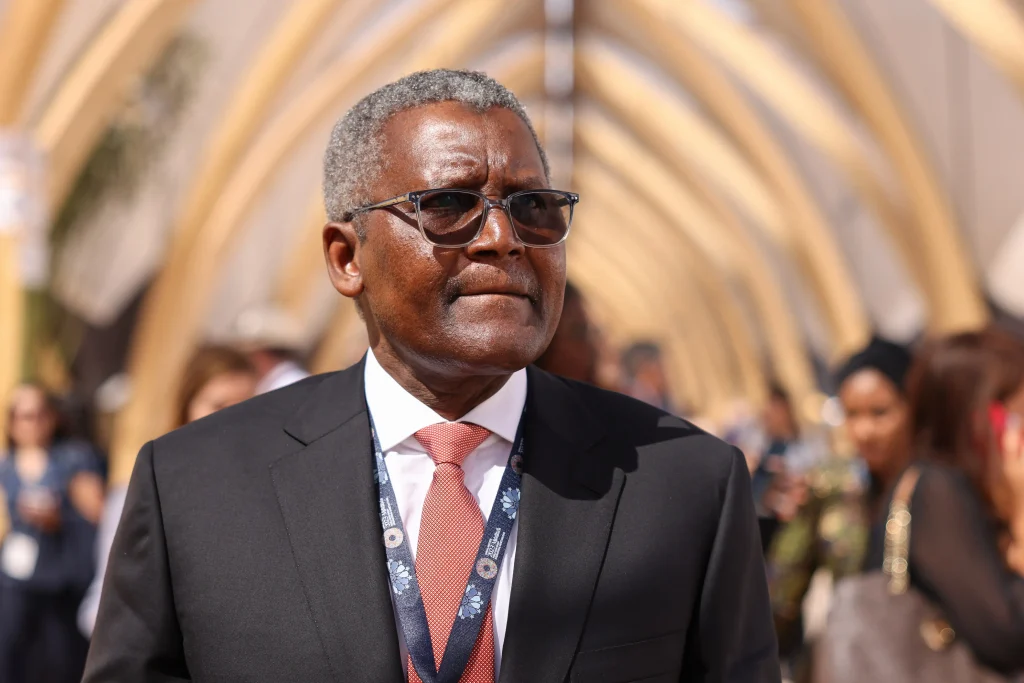
Aliko Dangote. Photo credit: Bloomberg.com
Africa’s richest man and President of Dangote Group, Aliko Dangote, is planning to develop an industrial zone in Nigeria’s south-west state of Ondo that is expected to strengthen the country’s industrial capacity while addressing one of its biggest business challenges: inadequate and unreliable power supply.
To be sited in Olokola, Ondo State, the proposed industrial and free trade zone is designed as a fully integrated investment hub with dedicated power supply, gas infrastructure, logistics facilities, and manufacturing support systems aimed at attracting local and international investors.
Construction for the project, conceived to be one of Nigeria’s largest industrial zones, is expected to commence in the last quarter of 2026.
This is part of Dangote’s renewed investment framework covering energy, cement production, industrial manufacturing, and infrastructure development. It is coming following improved conditions and stronger cooperation from the Ondo State Government after earlier efforts to develop projects at Olokola faced operational challenges.
More Than Just A Free Trade Zone
Dangote told Ondo State Governor Lucky Aiyedatiwa during a meeting in Akure, the state capital, that the Olokola project would move beyond the traditional free trade zone model by providing critical infrastructure that allows businesses to operate efficiently without major delays.
“We want to create the biggest free trade zone where investors can just come and plug in. We will generate power, provide infrastructure and remove the bottlenecks around doing business,” he said.
Why It Matters
Nigeria’s perennial electricity shortage continues to be a major obstacle to industrial growth, compelling many manufacturers to depend on costly alternative energy sources.
With constant grid failures hampering operations, energy expenses are estimated to gulp up to 40 per cent of manufacturers’ total operational costs.
The project’s promise to integrate dedicated power generation and gas infrastructure through an east-west gas corridor to support energy-intensive industries signals that it intends to eliminate this bottleneck, giving a boost to industrial growth, expanding manufacturing capacity, and increasing export opportunities.
Without a doubt, Nigeria’s south-west zone – more precisely, the Lagos-Ogun axis – has emerged the undisputed powerhouse of manufacturing and commerce, accounting for over 86 per cent of the country’s manufactured output. The proposed industrial zone in Ondo is strategically positioned to leverage this existing ecosystem, further cementing the south-west’s position as the country’s foremost industrial hub.
Ondo has several strategic advantages. According to Governor Aiyedatiwa, the state is located along the Lagos-Calabar Coastal Highway corridor. It has secured a deep seaport licence, meaning a potential to improve cargo movement and support large-scale industrial operations. It also boasts limestone deposits that have been found suitable for industrial use, creating opportunities for further expansion in cement and related industries.
The potential economic and social impact is immense. Beyond the obvious industrialisation of the state, the impact will be felt in job creation, increased investment inflows, export growth and foreign exchange earnings, and higher government revenue, as well as in poverty reduction, skills development, urban and infrastructure development, reduction in youth unemployment, and community development opportunities.
ESG and Sustainability Considerations
Dangote’s proposed industrial zone has the potential to become a catalyst for an industrial revolution in Ondo State, creating jobs, attracting investment, boosting exports, and transforming the state’s economic structure, with benefits that could potentially overflow into neighbouring states.
But the project requires investor acceptance, regulatory approval, and community support to fly. Its ability to secure these – indeed, its long-term success – will depend heavily on its compliance with Environmental, Social and Governance (ESG) principles that critical stakehoders are increasingly demanding. Promoters of the project must therefore view ESG compliance as a foundation for long-term competitiveness and social legitimacy rather than as a regulatory obligation.
Firstly, environmental stewardship must be embedded into the design and operation of the zone through efficient resource use, responsible waste management, emissions reduction, biodiversity protection, and a clear pathway towards cleaner energy sources. It is also important to ensure that industrial growth does not come at the expense of local livelihoods, public health, or ecosystem integrity.
Secondly, from a social perspective, communities want meaningful stakeholder engagement. They want dialogue. They want transparent mechanisms to effectively air their grievances. They want fair and transparent compensation, especially for residents whose livelihoods will be affected by the project. They expect jobs, both direct and indirect. They expect occupational safety. They expect skills development, and they expect that local businesses will participate in the value chain. These are issues that the zone must prioritise. Communities would only see themselves as stakeholders when they experience tangible benefits from the investment.
Lastly, strong governance demands transparency and accountability, ethical business practices, regulatory compliance, risk management, and ESG oversight. The project must factor these as they are essential for attracting investors, securing public trust, and meeting global sustainability expectations.
Closing Thoughts
For a project of the scale and magnitude of Dangote’s proposed industrial and free trade zone, ESG compliance cannot be an optional add-on, more so in an era when investors, regulators, and communities increasingly judge projects by their environmental and social footprint.
Dangote has said he is working closely with the government and has requested the appointment of a state representative to the industrial zone’s board to ensure effective coordination. Africa’s foremost industrialist is not new to these processes. The government also says it has set up a technical committee to work with Dangote Group on land, legal, community, and operational arrangements.
These signals are in order – and must be sustained. But signals alone are not enough. As the project gets set to take off, verbal commitments must translate to actionable documents with measurable outcomes.
In the end, the project’s success will not be measured by the sheer size and scale of investment or industrial output, or even just by the economic value it is able to deliver. Its ultimate legacy will depend on how well it balances economic ambitions with environmental protection, community welfare, and strong governance practices. This is what investors, regulators, and communities are increasingly asking for – a development model that combines industrial growth with sustainability and social inclusion. And it is not too much to ask.
[give_form id="20698"]