Nigeria Launches National Poverty Intelligence Lab to Strengthen Data-Driven Poverty Reduction
 ONYINYECHI NWAIGBA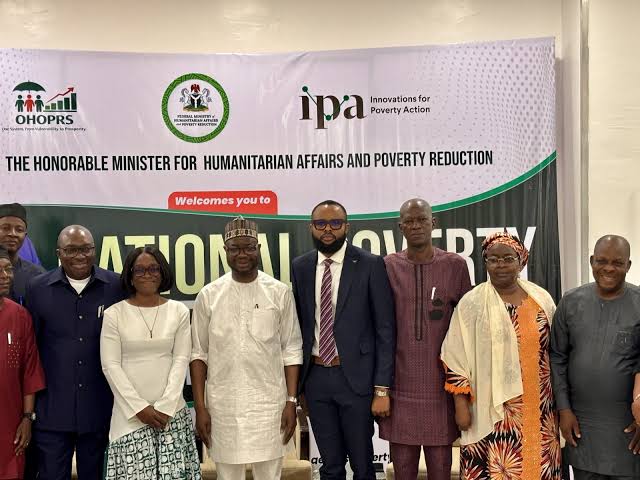
The Federal Government has launched the National Poverty Intelligence Lab (NPIL), a new initiative aimed at improving the design, implementation, and monitoring of poverty reduction programmes through the use of data, technology, and evidence based decision making.
The initiative represents a significant step towards strengthening Nigeria’s fight against poverty by ensuring that social interventions are informed by reliable data and targeted at the individuals and communities that need them most.
Rather than relying on broad assumptions or fragmented information, the National Poverty Intelligence Lab is expected to provide policymakers with real time insights into poverty trends, helping government institutions develop more effective strategies for reducing inequality and improving the impact of public investments.
The launch reflects a growing recognition that sustainable development requires not only increased funding but also better information to guide policy decisions and measure results.
A New Approach to Tackling Poverty
Poverty remains one of Nigeria’s most pressing development challenges, affecting millions of households across urban and rural communities.
Related: World Bank Report and Nigeria’s Poverty Crisis.
While successive governments have introduced various social intervention programmes over the years, questions have often been raised about the effectiveness, coordination, and long term impact of these initiatives.
The National Poverty Intelligence Lab seeks to address these challenges by creating a central platform where poverty related data can be collected, analysed, and used to support informed policy decisions.
By integrating information from multiple sources, the lab is expected to help government agencies better understand the drivers of poverty, identify vulnerable populations, and monitor the effectiveness of interventions over time.
This data driven approach aims to ensure that poverty reduction efforts are based on measurable evidence rather than estimates, ultimately improving the efficiency and accountability of public programmes.
Harnessing Data for Better Decision Making
Reliable data has become an essential tool for solving complex development challenges.
Through the National Poverty Intelligence Lab, policymakers will have access to more accurate information that can support planning, budgeting, and programme implementation.
The initiative is expected to generate insights into poverty patterns, employment trends, household welfare, access to basic services, and other socioeconomic indicators that influence living standards.
Such information can help governments allocate resources more effectively, reduce duplication of interventions, and identify communities where support is needed most.
By strengthening data systems, Nigeria also positions itself to monitor progress more effectively against national development priorities and international commitments such as the Sustainable Development Goals (SDGs).
Improving the Effectiveness of Social Programmes
One of the biggest challenges facing poverty reduction initiatives is ensuring that assistance reaches the intended beneficiaries.
Without accurate and up to date information, social programmes risk excluding vulnerable populations or directing resources to areas where they may have limited impact.
The National Poverty Intelligence Lab seeks to improve programme targeting by providing evidence that can guide decision makers in identifying priority groups and designing interventions that respond to actual needs.
Whether the focus is on food security, education, healthcare, youth employment, financial inclusion, or livelihood support, better data can help ensure that public resources deliver greater social impact.
The initiative is also expected to strengthen monitoring and evaluation processes, allowing policymakers to assess what is working, identify gaps, and make necessary adjustments over time.
Supporting Transparency and Accountability
Data driven governance is increasingly recognised as an important component of transparency and accountability.
By providing measurable indicators and evidence on poverty trends, the National Poverty Intelligence Lab can help improve public confidence in government interventions while promoting more informed public discussions on development priorities.
The availability of reliable information also supports stronger oversight by enabling policymakers, development partners, researchers, and civil society organisations to evaluate the effectiveness of poverty reduction programmes.
Greater transparency can contribute to more responsible public spending and encourage continuous improvement in programme delivery.
Strengthening Collaboration
Addressing poverty requires collaboration across multiple sectors.
The National Poverty Intelligence Lab is expected to serve as a platform that brings together government institutions, development partners, academic researchers, private sector organisations, and civil society groups working on poverty alleviation and sustainable development.
Through improved information sharing and coordination, stakeholders can better align their efforts, avoid duplication, and maximise the impact of available resources.
Collaborative approaches also encourage innovation by allowing different institutions to contribute expertise, technology, research, and financing towards shared development objectives.
Advancing Sustainable Development
The launch of the National Poverty Intelligence Lab aligns with Nigeria’s broader commitment to achieving sustainable and inclusive development.
Reducing poverty contributes directly to several Sustainable Development Goals, including ending poverty in all its forms, promoting decent work and economic growth, improving education and healthcare outcomes, reducing inequalities, and strengthening institutions.
By supporting evidence based policymaking, the initiative can help ensure that development interventions generate lasting social and economic benefits.
Better targeted programmes also improve the efficient use of public resources, making it possible to achieve greater impact even within constrained budgets.
Technology as a Development Tool
The National Poverty Intelligence Lab also demonstrates the growing role of technology in public policy and governance.
Digital platforms, data analytics, and modern information systems are becoming increasingly important for addressing complex development challenges.
When combined with sound policy and effective implementation, these tools can improve the quality of decision making while enabling governments to respond more quickly to changing socioeconomic conditions.
Technology also makes it easier to monitor programme performance, identify emerging risks, and generate evidence that supports continuous policy improvement.
Why It Matters
Poverty reduction is about more than increasing financial assistance. It requires understanding why poverty exists, where it is most severe, and which interventions produce the greatest results.
The National Poverty Intelligence Lab represents an important shift towards evidence based governance by recognising that reliable data is essential for designing effective public policies.
If successfully implemented, the initiative could strengthen the quality of social investments, improve coordination among stakeholders, and ensure that poverty reduction programmes are more inclusive, transparent, and impactful.
For development partners, investors, businesses, and civil society organisations, access to better poverty data can also support more informed planning and stronger partnerships that contribute to national development.
Looking Ahead
As Nigeria continues to confront the challenges of poverty, unemployment, and inequality, the National Poverty Intelligence Lab has the potential to become a valuable resource for improving development planning and strengthening the impact of public policy.
Its success will depend not only on the quality of the data collected but also on the willingness of institutions to use evidence in shaping decisions and evaluating outcomes.
By embracing data driven governance, Nigeria is taking an important step towards building more effective poverty reduction strategies capable of delivering measurable improvements in people’s lives.
Ultimately, the National Poverty Intelligence Lab represents more than a new government initiative. It reflects a growing commitment to ensuring that sustainable development is guided by evidence, accountability, collaboration, and informed decision making.
[give_form id="20698"]