Nigeria Pushes Utility-Scale Mini-Grids to Unlock Electricity Access for Underserved Communities
 CHUKS OLUIGBO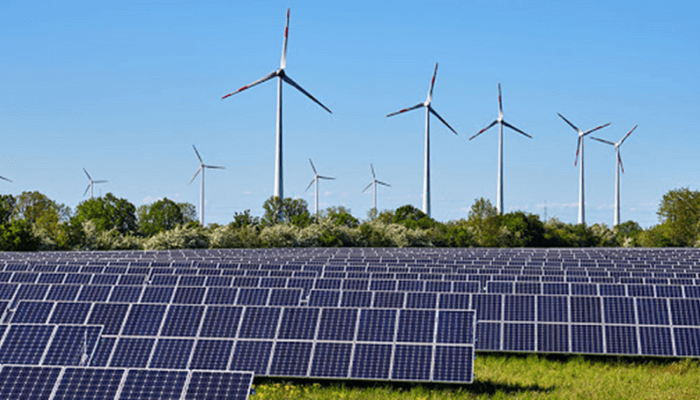
Nigeria is taking a giant step that has the potential to unlock electricity access for millions of its citizens while advancing the country’s clean energy transition.
The Federal Government, through the Rural Electrification Agency (REA), says it is supporting the development of utility-scale renewable energy networks capable of serving entire localities independently of the national grid. This is aimed at tackling persistent blackouts and expanding electricity access across the country.
“We at REA are developing something called the RESCOs, Renewable Energy Service Companies, that will rival the DisCos in the next 10 to 15 years,” Managing Director of the agency, Abba Aliyu, said at a conference in Lagos on Thursday.
Aliyu, speaking through his representative, the Executive Director, Corporate Services at REA, Gboyega Ayoade, said the RESCos will offer consumers an alternative to conventional electricity distribution companies (DisCos) by providing 24-hour clean energy through interconnected mini-grids powered by solar energy and battery storage.
From Single to Utility-Scale Mini-Grids
Nigeria’s renewable energy growth has been concentrated in distributed, small-to-medium mini-grids.
The Federal Government wants to change that model.
Rather than encouraging single isolated mini-grid projects, the REA wants to support developers to build utility-scale renewable energy networks capable of serving entire localities independently of the national grid.
“We’re encouraging developers now to build utility-scale mini-grids so one developer can own the entire community and build about 20 mini-grids to 50 mini-grids,” Aliyu said.
He said the RESCos would afford consumers a clean energy alternative to the conventional thermal power.
Expanding Electricity Access
Over 80 million Nigerians lack access to electricity. The country’s rural areas are the worst affected. Expanding electricity access is therefore both imperative and urgent for economic inclusion, poverty reduction, and social development.
And that mandate to promote, coordinate, and provide reliable electric power access to unserved and underserved rural communities sits with the Rural Electrification Agency.
The coming of the RESCos and the development of utility-scale mini-grids, championed by the REA, has the potential to move the needle in this regard.
To clear the path, Aliyu said mini-grid developers and DisCos have already reached agreements in some areas where DisCos have little or no presence.
“Under the Distributed Access for Renewable Energy Scale-Up, we are building a lot of mini-grids across the country. In those communities where these developers need to build interconnected mini-grids, they’re liaising directly with the DisCos and saying, ‘Hey, you don’t supply this area. Can we take this area off you and supply them?’” he said.
But the RESCos can also build their own electricity infrastructure where DisCos are absent, subject to approval from the Nigerian Electricity Regulatory Commission (NERC).
“In some areas where the DisCos are not supplying electricity at all, the RESCos are building their own transmission lines. Once you build a grid, you can build your own transmission line and supply those communities. It just has to go to NERC, which has to give you exclusivity rights to ensure that you own that infrastructure in that area and you’re able to supply,” he said.
Avoiding the Pitfalls of the Past Is Imperative
Nigeria’s electricity sector is not lacking in reforms. But decades of reforms, investments and policy interventions have yielded no significant value and inadequate power supply continues to constrain the country’s economic ambitions.
For national grid system, the problem lies in the disconnect between power generation, transmission and distribution.
While Nigeria’s installed electricity generation capacity is approximately 13,625 MW, the highest power ever successfully generated and delivered to the national grid has been 5,801.84 MW. Power generation companies complain of inadequate offtake, and DisCos battle with weak infrastructure.
For the RESCos to function effectively, this is one issue that must be resolved. Will the RESCos rely on DisCos’ distribution network or will they build their own electricity infrastructure? The latter may be the surest bet for the RESCos.
Another major challenge that the RESCos must resolve is metering. The DisCos have lagged in this area. Only about 6.9 million (or 58.5 per cent) of Nigeria’s over 12 million active electricity consumers are metered. The rest are subjected to estimated billing, a situation that continues to generate disputes between customers and DisCos.
Conclusion
The REA’s push for utility-scale renewable energy networks instead of isolated mini-grid projects is a great move. Scaling up utility-scale mini-grids means bypassing the problematic national grid to deliver reliable, clean electricity to unserved and underserved communities. It also advances Nigeria toward is clean energy transition goal.
But for this to succeed, the REA must work with the RESCos to ensure the decades-old challenges holding the power sector down do not resurface to haunt the emerging system.
[give_form id="20698"]