Nigeria’s Refinery Reset: Tinubu Promises Return to Operation, but Timeline Remains Unclear
 ONYINYECHI NWAIGBA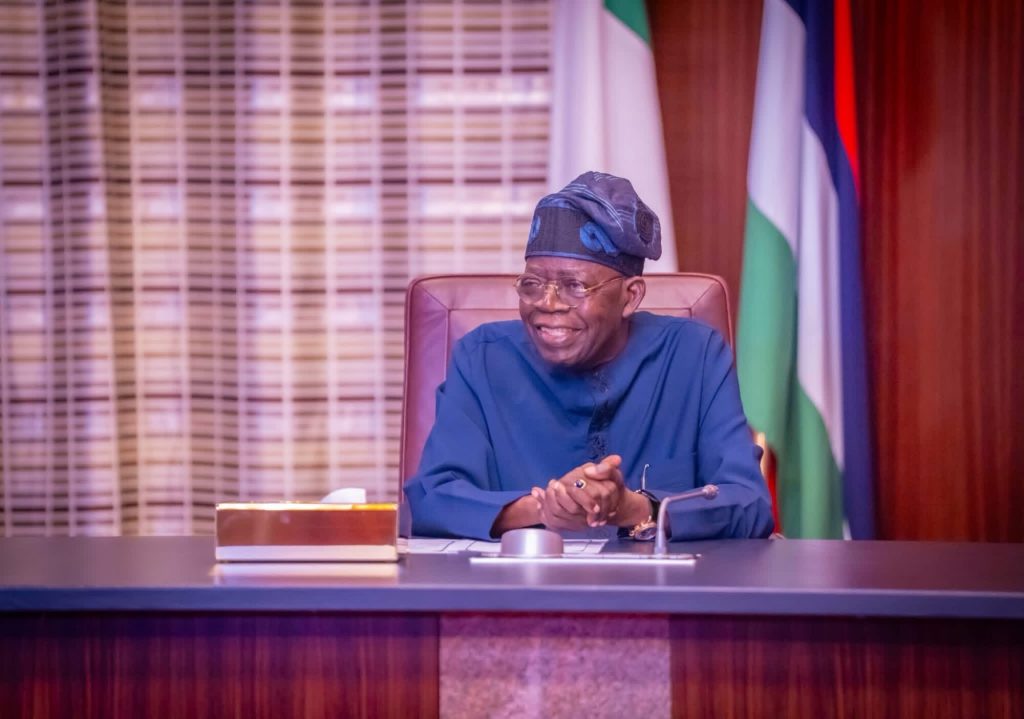
President Bola Ahmed Tinubu has renewed the Federal Government’s commitment to bringing Nigeria’s state owned refineries back into operation, saying the facilities will undergo a deeper structural and economic reset designed to make them commercially viable.
The President gave the assurance on August 13, 2026, while receiving the national leadership of the Nigeria Union of Petroleum and Natural Gas Workers (NUPENG) at the State House in Abuja. However, while the administration has promised that the refineries will return to work, it has not provided a specific timeline for when Nigerians should expect operations to resume.
The latest commitment comes as Nigeria continues to grapple with the long-running challenge of maintaining functional government-owned refineries despite years of rehabilitation efforts and significant public investment.
Government Wants a Different Approach
According to the President, the next phase will not be another temporary intervention aimed simply at getting the facilities running.
Instead, the government plans to undertake detailed research, technical assessments and structural reviews to understand the operational, financial and managerial challenges affecting the refineries.
Tinubu said the objective is to create a system that can deliver sustainable value rather than one that simply produces fuel for the sake of demonstrating activity.
The President acknowledged that the Federal Government inherited both the assets and liabilities associated with the country’s refineries and said his administration has accepted responsibility for addressing the challenges.
This represents an important shift in the conversation around the facilities. The question is no longer simply whether the refineries can be restarted, but whether they can operate efficiently enough to justify the investment required to keep them running.
Why the Refineries Matter
For Nigeria, the importance of functional refineries goes beyond the petroleum industry.
The country remains a major crude oil producer but has historically depended heavily on imported refined petroleum products because of weaknesses in domestic refining capacity. A reliable domestic refining system could strengthen energy security, reduce exposure to international supply disruptions and support greater stability across the downstream petroleum sector.
It could also create opportunities across the wider economy, including transportation, manufacturing, logistics and employment.
For workers in the petroleum sector, functional refineries could also provide more opportunities for technical and industrial employment. NUPENG has continued to push for the revival of the facilities, arguing that a stronger domestic refining industry would reduce dependence on imported petroleum products and improve Nigeria’s energy security.
But having a refinery operating on paper is not enough.
The bigger challenge is ensuring that the facilities are financially sustainable, properly managed and consistently supplied with crude.
From Rehabilitation to Sustainability
Nigeria’s experience with its state-owned refineries has demonstrated why simply announcing rehabilitation projects does not guarantee long-term success.
The country has repeatedly invested in repairing and restarting its refineries, only for operational challenges to emerge again.
That history makes the latest commitment particularly important.
The Federal Government’s emphasis on restructuring the economics of the refineries suggests that the administration is looking beyond physical repairs. Technical rehabilitation may restore equipment, but it does not automatically solve problems relating to management, crude supply, financing, maintenance, efficiency or profitability.
A sustainable refinery requires all of these pieces to work together.
This is also where the conversation becomes relevant to the broader governance and sustainability agenda.
Public infrastructure should not only be measured by how much money is spent on it or whether it is officially commissioned. It should ultimately be measured by the value it delivers to citizens.
The Accountability Question
The absence of a clear timeline, however, leaves an important question unanswered.
When exactly will Nigerians see these refineries return to sustained operations?
The government has said the facilities will come back, but Nigerians have heard similar assurances about refinery rehabilitation at different points over the years.
This means the success of the latest reset will ultimately depend on measurable outcomes.
There needs to be transparency around the condition of the facilities, the cost of rehabilitation, the management structure, crude supply arrangements, expected production capacity and the benchmarks that will determine whether the refineries are actually performing.
Without such measures, another rehabilitation programme could easily become another cycle of expenditure without sustainable results.
The President’s emphasis on profitability is therefore significant. A refinery that produces fuel but consistently requires extraordinary public funding to remain operational cannot necessarily be described as a successful commercial asset.
For the government’s latest approach to be credible, Nigerians will need to see evidence that the economic model behind the facilities has changed.
A Wider Energy Security Conversation
The refinery discussion is also taking place within a broader effort to reshape Nigeria’s energy landscape.
The administration has continued to promote compressed natural gas (CNG) as an alternative fuel for transportation, with the President recently calling for greater participation by NUPENG and urging stakeholders to ensure that the benefits of the programme reach ordinary commuters.
This highlights a wider challenge for Nigeria: improving energy security requires more than increasing petroleum production.
It requires investment across the energy value chain, stronger infrastructure, efficient transportation systems, responsible resource management and policies that translate into tangible benefits for households and businesses.
Domestic refining can play an important role in that equation, but only if the facilities are genuinely productive and economically sustainable.
What Happens Next?
The Federal Government now has an opportunity to demonstrate that the latest refinery intervention will be different from previous attempts.
The planned research and technical assessments could provide a clearer understanding of what has gone wrong and what needs to change. But the process will need to be accompanied by transparency, realistic timelines and clear performance indicators.
For Nigerians, the expectation should not simply be to see smoke coming out of refinery stacks.
The real test will be whether the facilities can operate consistently, process crude efficiently, generate value, support jobs and reduce the country’s dependence on imported refined petroleum products.
President Tinubu has made it clear that his administration intends to take responsibility for fixing the assets it inherited.
Now, the focus shifts from the promise to the implementation.
Nigeria’s refineries have been the subject of major investments, repeated rehabilitation efforts and numerous revival promises. The latest reset will only mark a meaningful change if it produces something that has been missing for years: consistent, commercially viable and accountable operations.
For an economy that continues to depend heavily on petroleum, getting that right is not simply about bringing old facilities back to life. It is about ensuring that critical national assets can finally deliver sustainable value to the people they were built to serve.
[give_form id="20698"]