This Business is Protecting Oil Assets and Investing in Nigeria’s Niger Delta People
 ROSEMARY IMOBHIO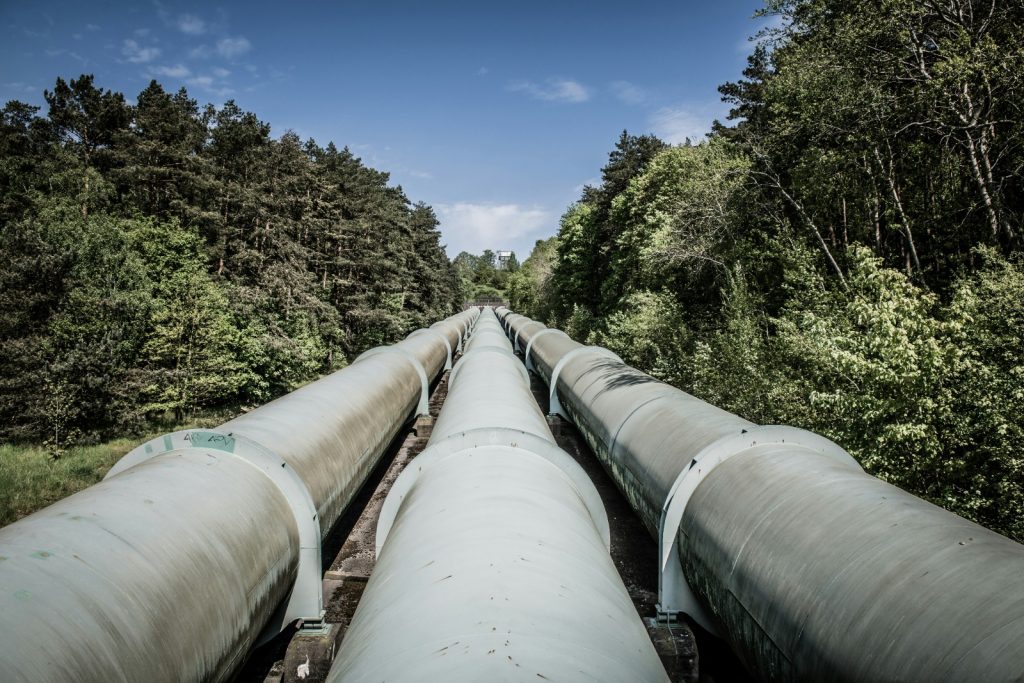
For Tantita Security Services Nigeria Limited, protecting Nigeria’s oil assets increasingly means more than securing pipelines. The company is linking oil security with community development across the Niger Delta. Its initiatives include potable water, solar lighting, roads, education, livelihoods and other social infrastructure.
That approach reflects a growing understanding of the region’s security challenges. Poverty, unemployment and limited access to basic services can create conditions that make communities more vulnerable to insecurity.
Therefore, investing in host communities can complement conventional security operations.
Taking Community Development Beyond CSR
Tantita operates across the Niger Delta, where it provides security for critical oil and gas infrastructure. Its wider approach focuses on community engagement alongside pipeline surveillance. The company has argued that protecting oil infrastructure must include attention to the welfare of people living around those assets.
That thinking was highlighted during a study tour by the Nigerian Army Resource Centre in Delta State. The delegation examined Tantita’s pipeline security model and its emphasis on community participation. The approach is particularly relevant as Nigeria works to increase oil production.
Recent data from the Nigerian Upstream Petroleum Regulatory Commission showed that crude oil and condensate production averaged 1.735 million barrels per day in June 2026. Crude production alone reached 1.56 million barrels per day. Consequently, protecting infrastructure remains critical to the national economy.
However, sustainable security requires more than surveillance. It also requires stronger relationships between operators and host communities.
Solar Projects Address Everyday Needs
One recent example is in seven Delta State communities. Through its subcontractor, Grosvenor Global Services Limited, Tantita supported the commissioning of solar-powered boreholes and streetlights in Ajomata, Ikweghwu, Ibada-Amukpe, Ibada-Elume, Oyohen, Amukpe and Adagrassa.
Solar streetlights were installed in Ajomata, Ikweghwu and Ibada-Amukpe. Meanwhile, solar-powered boreholes were provided in Ibada-Elume, Oyohen, Amukpe and Adagrassa. Although these projects may appear straightforward, they address basic needs that directly affect daily life.
Streetlights can improve visibility and movement at night. They can also support safer roads and public spaces. Similarly, access to a reliable water source can reduce the burden on residents who struggle to find potable water.
During the commissioning, Tantita’s Community Relations Manager, said the projects were designed to improve living conditions in communities connected to the company’s operations. He also urged residents to protect the facilities.
That message highlights a critical part of community development. Infrastructure can only deliver lasting value when communities help maintain and protect it.
Creating Alternatives for Young People
Infrastructure, however, is only one part of the company’s community strategy. Youth employment has also become a major focus. In July 2026, Tantita, Maton Engineering Nigeria Limited and the Africa’s Hub for Skill and Enterprise Development had empowered more than 5,000 young people in Delta and Bayelsa states.
The Project SSE initiative focuses on vocational skills, entrepreneurship, employability and life skills. Its wider objective is to address unemployment and create economic opportunities for young people in the Niger Delta. That matters because unemployment has long been associated with insecurity in the region.
For some young people, limited economic opportunities can increase exposure to illegal oil activities. Skills development can therefore provide an alternative pathway to income. A job or sustainable business may not solve every security problem. Nevertheless, economic opportunity can reduce some of the pressures that contribute to instability.
Agriculture Provides Another Path For The Niger Delta
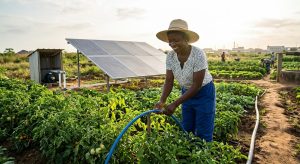
Tantita has also explored agriculture as an alternative source of livelihood. Its Sustainable Rice Farming Programme in Torugbene was developed with Stakeholders Development Network and Ecosus Pro Nigeria Limited. The initiative aims to create legal employment for youths who may otherwise become involved in illicit oil-related activities.
The project initially focused on 25 hectares and was designed to expand over time. Tantita said it planned to invest ₦2.53 billion during the first three years in land preparation, infrastructure, processing facilities and farm equipment. Women and young people are also expected to participate in the programme.
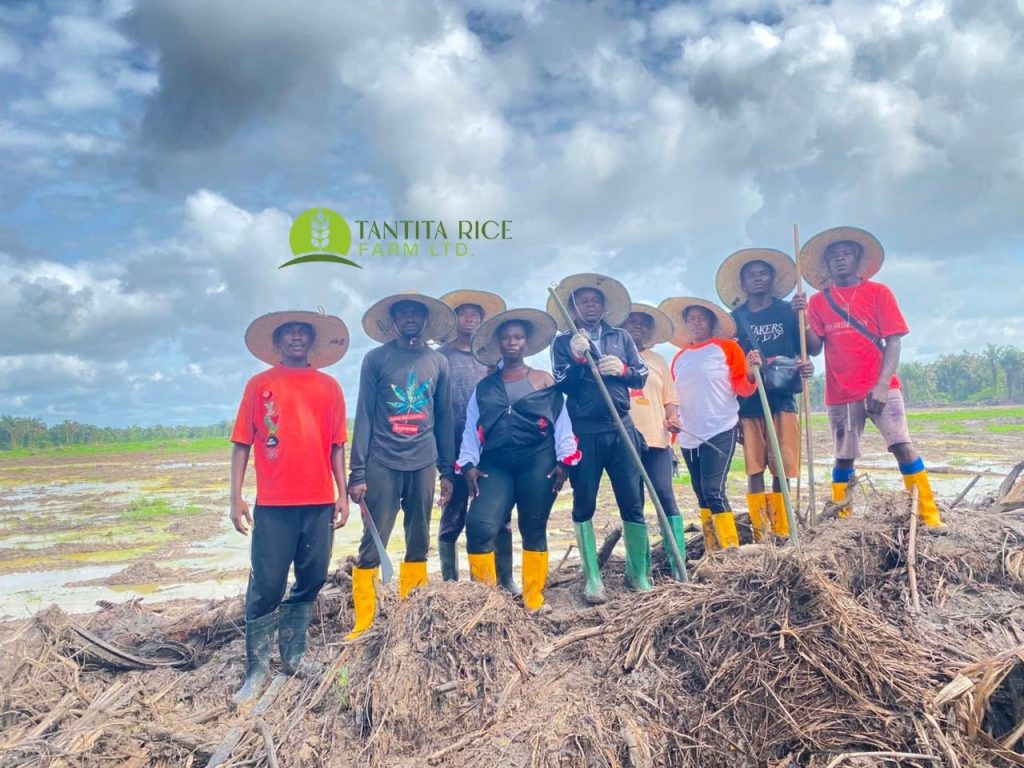
The significance goes beyond rice production. Agriculture provides an opportunity to diversify local economies that have historically depended heavily on petroleum activities. It can also create jobs while strengthening food production and household incomes.
For the Niger Delta, such alternatives can become increasingly important as communities seek more sustainable economic opportunities.
Education and Public Safety
Tantita’s community investments have also extended to education and public infrastructure. The company has supported educational institutions with technology and solar equipment. In 2024, it donated ICT equipment to the Federal University of Petroleum Resources, Effurun.
It also supported the Delta State College of Nursing Sciences with solar power equipment, a bus and computers. In addition, Tantita funded the rebuilding and commissioning of the Ugborikoko Divisional Police Station in Delta State. These projects connect community development with education and public safety.
Better educational infrastructure can improve access to learning and skills. Meanwhile, functional security facilities can strengthen local capacity to respond to crime and other threats. As a result, the company’s community interventions cut across several areas of development rather than focusing on one type of project.
The Bigger Security Question
Nigeria’s improving oil production makes the relationship between security and development even more important. NUPRC reported that production increased steadily between February and June 2026. The regulator attributed the June improvement largely to stable production and the absence of major pipeline outages.
At the same time, government agencies are placing greater emphasis on community engagement as part of oil and gas infrastructure protection. This points to an important shift.
Oil security is no longer simply about putting more personnel around pipelines. It increasingly involves understanding the social and economic conditions surrounding those pipelines.
Communities with better economic opportunities may have stronger incentives to protect legitimate economic activity. Likewise, residents who trust security operators may be more willing to provide information about threats. Therefore, community development can become part of the wider security equation.
Sustainability Will Be the Real Niger Delta Test
Still, the success of such initiatives should not be measured only by the number of projects commissioned. The more important question is what happens several years later.
Can communities maintain the boreholes and solar lights? Will young people continue earning from the skills they acquire? Can agricultural projects remain commercially viable? These questions determine whether CSR creates lasting development or provides temporary relief.
The Niger Delta also faces major environmental challenges. Oil pollution, damaged waterways and contaminated land continue to affect communities across the region. Consequently, environmental protection must remain part of any serious development strategy.
For fishing communities, clean waterways can be as important as roads and electricity. For farmers, productive land is an essential economic asset.
Stability Beyond the Pipeline
The Niger Delta’s experience shows that oil security and community development cannot easily be separated. A protected pipeline can support national production. However, lasting stability also depends on the people living around that infrastructure.
Tantita’s recent initiatives reflect this broader approach. Its activities combine pipeline surveillance with infrastructure, skills development, agriculture, education and community engagement. The strategy does not remove the need for strong security operations.
Instead, it adds another layer to them. For CSR in the Niger Delta, the bigger opportunity may therefore lie in creating communities that are safer, more economically resilient and less dependent on illegal oil activities.
Nigeria can protect its petroleum infrastructure with surveillance, technology and personnel. Yet, lasting peace will require communities to see development as part of that security effort. That may ultimately be the stronger path to protecting both Nigeria’s oil assets and the people who live around them.
[give_form id="20698"]