EKWEMUKA IFEANYI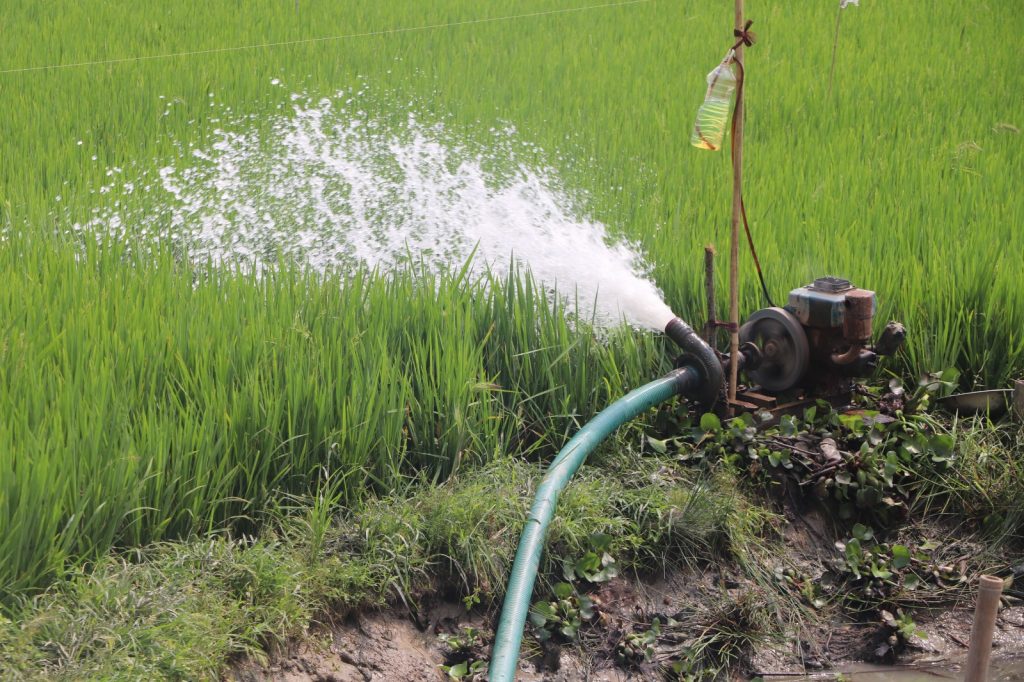
Agricultural experts are calling for greater investment in irrigation and year-round farming as Nigeria continues to confront food security challenges. The argument is straightforward. Farmers cannot depend entirely on rainfall when food production must continue throughout the year.
Improved irrigation could allow farmers to produce crops during dry periods. It could also increase farm utilisation, create additional income opportunities and strengthen domestic food supply. The issue is particularly important as Nigeria faces persistent food-price pressures. Agriculture remains central to the country’s economy, livelihoods and food supply.
Previous agricultural assessments have identified irrigation as an important requirement for expanding year-round production. Experts have also called for the rehabilitation of river basin infrastructure across the country.
Why Year-Round Production Matters
Nigeria’s agricultural calendar remains heavily influenced by rainfall. Farmers in many areas face a long dry season that limits production opportunities. Irrigation can help reduce this dependence. Farmers with reliable water supplies can potentially cultivate crops during periods when rain-fed agriculture becomes difficult.
This can increase the number of production cycles possible within a year. It can also create more consistent supplies for consumers and food processors.
Research on agricultural production in Nigeria has identified year-round farming as a potential source of additional employment and income. Irrigation can allow farmers to remain productive during dry seasons.
The benefits extend beyond farmers. Higher production can support food processors, transport operators, traders and other businesses within agricultural value chains.
Year-round production can therefore contribute to a broader rural economy. It can also reduce some seasonal pressures affecting food availability.
However, irrigation alone cannot solve Nigeria’s food security challenges. Farmers also need access to finance, inputs, storage, markets, extension services and reliable transport.
Nigeria’s Irrigation Infrastructure Needs Attention
One of the major challenges is the condition of irrigation infrastructure. Nigeria has river basins and irrigation facilities that could support agricultural production.
However, some infrastructure has remained underutilised or poorly maintained. Previous reporting has highlighted calls for the government to rehabilitate river basin facilities to support all-year farming.
This creates an opportunity for stronger public-private partnerships. The government can provide infrastructure and policy support while private investors contribute technology, financing and operational expertise.
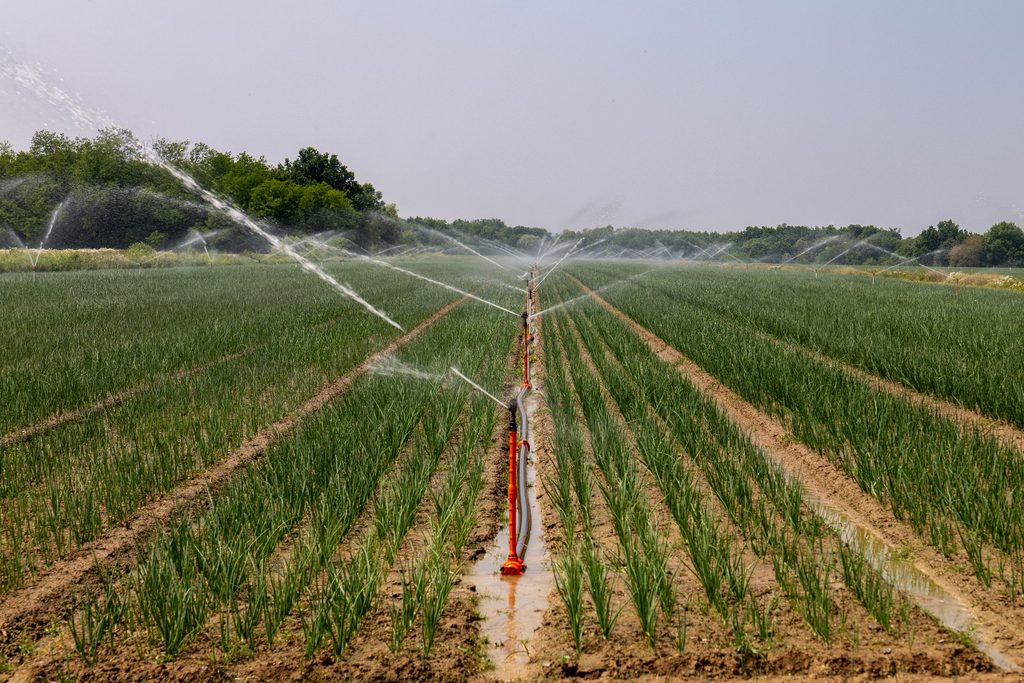
Modern irrigation systems could also improve water efficiency. Drip irrigation and other efficient technologies can deliver water more precisely to crops. That matters because agriculture is already one of the world’s largest users of freshwater. Poorly managed irrigation can create additional environmental problems.
Sustainable agricultural expansion therefore requires careful water management. Increasing production should not come at the cost of exhausting water resources.
Climate Change Makes Irrigation More Important
Climate change adds another layer of uncertainty to agricultural production. Rainfall patterns are becoming more difficult to predict in many regions. Farmers can face droughts, floods and changes in growing seasons. These conditions create risks for food production and farm incomes.
Irrigation cannot eliminate climate risks. However, reliable water infrastructure can provide farmers with greater control over production during dry periods. Climate-smart agriculture should therefore combine irrigation with other measures. These include improved seeds, soil management, water conservation and better weather information.
The objective should be resilience rather than simply increasing output. Agricultural systems need to remain productive while reducing pressure on natural resources. This is where sustainability becomes central to Nigeria’s food security strategy. Food production must increase without creating new environmental problems.
The CSR Opportunity for Agribusiness
The private sector can contribute significantly to year-round farming. Agribusinesses can invest in irrigation, farmer training and market access. Food-processing companies can also develop relationships with farmers producing crops throughout the year. These partnerships can provide farmers with more predictable markets.
Companies can support farmers through technical assistance and responsible financing. Such programmes can form part of broader CSR and ESG strategies. For example, an agribusiness could measure the number of farmers supported. It could also track changes in farm income, production volumes and water efficiency.
This approach creates measurable social impact. It also strengthens supply chains by improving the resilience of agricultural suppliers. Banks and financial institutions have another role. Agricultural finance can support irrigation equipment, storage facilities and other investments that farmers may struggle to finance independently.
Food Security Is Also a Business Issue
Food insecurity affects more than households. It can create risks across the wider economy. Higher food prices can reduce household purchasing power. Businesses may also face increased labour costs when employees struggle with rising living expenses.
Food shortages can also increase pressure on government finances. Authorities may need to spend more on interventions designed to stabilise prices or support vulnerable households. Strengthening domestic agricultural production can therefore support economic resilience. More reliable food supply can help reduce some of the pressures created by seasonal shortages.
However, production must be connected to storage and distribution. Increasing farm output without reducing post-harvest losses can limit the benefits. Nigeria therefore needs to approach food security as a complete value-chain issue. Irrigation is important, but it is only one part of the system.
Lessons for Nigeria
The call for year-round farming highlights several priorities for policymakers. First, irrigation infrastructure requires sustained investment and maintenance. Existing facilities should be assessed and rehabilitated where economically viable.
Second, farmers need access to appropriate technology. Efficient irrigation systems can improve water use while supporting production. Third, agricultural finance needs to support long-term infrastructure. Farmers and agribusinesses should have access to financing suited to the realities of agricultural investment.
Fourth, government should strengthen agricultural extension services. Farmers need practical information about water management, climate adaptation and sustainable production. Finally, private-sector participation should be encouraged. Agribusinesses can provide markets, financing, technology and technical support.
Why This Matters Beyond Agriculture
Nigeria’s food security challenge has direct implications for sustainable development. Agriculture supports millions of livelihoods and provides income for rural communities.
More resilient farming systems could strengthen rural economies. They could also create opportunities for young people and women within agricultural value chains.
Year-round production could support employment beyond farming itself. Processing, transportation, storage, packaging and retail could all benefit from more consistent agricultural supply.
There are also environmental considerations. Irrigation projects must be properly designed to avoid water depletion, soil degradation and other unintended consequences.
This means Nigeria should pursue sustainable year-round farming, rather than simply farming throughout the year. The distinction is important. Increased production must be accompanied by responsible water management and climate-smart practices.
A Long-Term Food Security Strategy
The call for year-round farming reflects a larger issue facing Nigeria’s agricultural sector. The country needs to move from seasonal production systems toward more resilient agricultural value chains. That transition requires infrastructure, financing, technology and stronger coordination.
Government has an important role in creating the enabling environment. Businesses can complement that role by investing in farmers, infrastructure and supply chains. Communities should also be involved in designing irrigation projects. Local knowledge can help determine how water resources are used and how benefits are distributed.
For CSR and ESG professionals, agriculture presents significant opportunities. Supporting farmers can generate measurable social impact while strengthening business supply chains. The ultimate goal should be a food system capable of producing reliable supplies while protecting the resources needed for future generations.
For Nigeria, year-round farming should therefore be viewed not simply as an agricultural strategy, but as part of a wider plan for food security, climate resilience and inclusive economic development.
What does Nigeria need to make year-round farming work? From irrigation and climate-smart agriculture to finance and stronger value chains, the path to food security requires action across the system. Follow CSR Reporters for more insights on sustainability, responsible business and development across Nigeria and Africa.
[give_form id="20698"]