Eche Munonye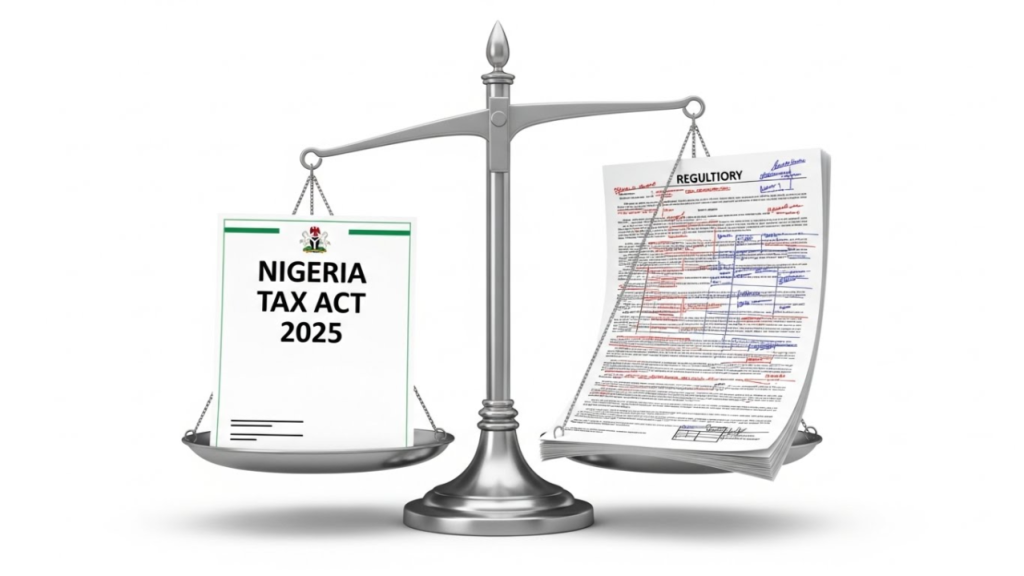
The Fifth Schedule Loophole: How “Donations” Become Tax Write-Offs
When a company gives ₦100 million to a good cause, who really pays? A plain-language look at how corporate giving meets the tax system in Nigeria, what the new law changes, and the questions we should all be asking.
Picture a Thursday morning in a community hall. Plastic chairs in neat rows, a banner with a company logo hanging slightly crooked, a generator humming outside. The community leader is in his best attire. A cheque, or perhaps the keys to a new classroom block, changes hands while photographers crouch for the right angle. The MC speaks warmly about a company that “cares.” People clap, and they mean it.
This scene is imagined, a composite of events most of us have attended.
The applause is deserved, because the classroom is real. But there is a conversation the hall never has. Depending on how the gift was structured, part of that money may come back to the company through its tax bill. The company gives, and the government, which means all of us, quietly shares the cost.
That is not a scandal. In most cases it is the law doing exactly what it was designed to do. Still, I have spent years watching the distance between what companies announce and what communities experience, and I have come to believe this corner of the tax system deserves more daylight than it gets. So let us walk through it slowly, in plain language.
How the old system worked
For decades, the rule sat in the Companies Income Tax Act and pointed to a list called the Fifth Schedule. If a company gave money to a body named on that list, it could deduct the gift when working out its taxable profit. If the body was not on the list, there was no deduction, however worthy the cause.
A few conditions came with it. The recipient had to be established in Nigeria. The deduction could not exceed 10% of the company’s profits for the year. And payments where the company received something of value in return did not count as donations at all.
Getting on the list was an administrative journey. An organisation applied to the Minister of Finance, historically through the Federal Inland Revenue Service, and had to meet a published set of requirements. The Minister could then add it by order.
The thinking behind all this is easy to respect. Government cannot build every school or fund every clinic. A tax incentive nudges private money toward public needs, and a list keeps that money flowing to institutions that are at least on the record.
What changed in 2026
The Nigeria Tax Act 2025, signed in June 2025 and in force from January 2026, replaced much of that landscape. On donations, three things stand out.
- Capital gifts now count. Deductions used to be generally confined to revenue-type gifts. Companies can now also deduct capital donations, such as equipment or infrastructure, still within a cap of 10% of profit before tax.
- Gifts in kind have a valuation rule. A non-cash donation is valued at the lower of its market value or what the company paid for it.
- Paperwork matters more. Proper documentation must go to the tax authority, and without records a deduction can be disallowed, however good the intention.
The recipients that qualify are described in broad categories: public funds, statutory bodies, and religious, charitable, educational or scientific institutions established in Nigeria. Bodies recognised under the Diplomatic Immunities and Privileges Act qualify too, as do efforts to respond to pandemics, natural disasters and other public emergencies. Individuals, by contrast, cannot deduct their own charitable gifts from personal income tax.
One illustration published by BusinessDay shows the scale of the shift. Imagine a company with ₦2 billion in profit that donates ₦500 million of equipment to a statutory body. Under the old rules that gift would not have been deductible. Under the new Act it can be, up to ₦200 million, provided the paperwork holds.
A word of honesty about what we do not yet know. The Act keeps the principle that a recipient must fall within an eligible category. How approval and listing will work day to day under the new tax administration, where the Nigeria Revenue Service succeeds the FIRS, is something we are still tracking. If you are relying on any of this for a decision, check the gazetted text with a qualified tax adviser.
The arithmetic that rarely makes the press release
Let us make this concrete with a made-up company. Say it earns ₦1 billion in profit before tax and, in a generous year, gives away ₦100 million. That is the ceiling, 10% of profit.
| A hypothetical company | Amount |
| Profit before tax | ₦1,000,000,000 |
| Largest deductible donation (10% cap) | ₦100,000,000 |
| Approximate tax saved at 30% | ≈ ₦30,000,000 |
| Company’s approximate net cost of the gift | ≈ ₦70,000,000 |
Illustration only. Real savings depend on a company’s size, tax position and other levies. Large companies are taxed at 30% under the new Act.
Roughly ₦30 million of that ₦100 million gift is tax the government would otherwise have collected. The company feels ₦70 million. The public purse feels the rest.
I want to be fair here. Nothing about this is improper, and the company is still giving up ₦70 million it could have kept. Incentives work this way in many countries. But it changes what corporate giving is. It is partly the company’s money and partly ours, and money that is partly ours deserves a little more openness than a photograph and a headline.
A donation can be entirely lawful and still leave the public with unanswered questions.
So where is the loophole?
I use the word carefully. Claiming a permitted deduction is not evasion, and I am not suggesting anyone is breaking the law. The loophole, if we want to call it that, is a gap in what gets checked. The tax system asks a narrow set of questions: is the recipient eligible, is the amount within the cap, are the records in order? Most of us, hearing the word “donation,” assume a different question: did this actually help anyone?
Those two questions drift apart in a few places.
Eligibility is not impact
A body being eligible tells us it qualified. It does not tell us whether its classrooms are full, its clinics stocked, or its beneficiaries better off a year later. The deduction attaches to the recipient, not to the result.
When a gift buys something
The old Act drew a sensible line: payments made for value received were not donations. A gift that buys a logo on a stage, a captive audience and a warm headline is, in part, a marketing bill. Sponsorships and donations can look alike from the outside, and when a company reports them together as one number, no reader can tell them apart. How the new regime draws this line is worth watching closely.
Giving in a circle
Many companies run their own foundations. The company funds the foundation, and the foundation runs programmes the company designs, brands and reports on. That can be perfectly sound, and some of the best work I have seen comes this way. But when donor, conduit and storyteller are the same organisation, nobody outside is positioned to say how it went.
What the public can and cannot see
The amount announced is easy to find. Much harder to find is how the gift was treated for tax, whether the recipient was an eligible body or a sponsorship counterparty, and what the recipient later reported. Without those pieces, a reader cannot tell generous giving from tax-efficient giving, or from both at once. And there is a quieter question underneath: does a company’s giving follow the needs it sees, or the ceiling the law allows?
A gift that is harder to check
The 2026 rules welcome equipment and infrastructure, which is good news for communities that need boreholes, transformers and laboratories more than they need cash. But a cheque is easy to verify and a truckload of equipment is not. The new valuation rule, lower of market value or cost, is a sensible safeguard. Whether it is applied consistently is a question for the years ahead.
Why this matters more here
In places where trust is fragile, CSR does heavy lifting. It earns goodwill, smooths relationships with regulators and communities, and shapes how a company is seen long after the banner comes down. When the same spending also appears as a line in a tax computation, the story told on the stage and the story told in the ledger are two different stories, and only one of them gets audited.
Ask anyone who lives beside a plant, a mine or a terminal. Many of them have heard big numbers announced. What they want to know is who checks whether the promised work got done, and they are right to want to know it. A school is a school. It is also, in the accounts, a deduction. Both things can be true, and we should be comfortable saying so.
The fair case for companies
It would be lazy to skip the other side, so here it is. Companies would say that using an incentive the state created is prudent, not improper. That many would give less without it, so the public cost is repaid in social benefit. That vetting recipients and keeping records already carry real compliance costs. And that a 10% ceiling is a genuine limit, not a generous one.
Those arguments have weight, and I do not dismiss them. They simply answer a different question. Nobody here is asking whether companies may claim deductions. We are asking whether the public can see enough to judge whether the deal is a fair one.
What better looks like
Transparency, not prohibition, is what closes the gap. For companies, five habits would go a long way.
- Separate the lines. Report donations to eligible bodies, event sponsorships and commercial partnerships as different items.
- Say how it was treated for tax. State how much giving was claimed as a deductible donation and how much was treated as an ordinary business expense.
- Name the recipients. Say who received what, and for which purpose, especially for capital and in-kind gifts.
- Report results, not just spend. Use recognised frameworks such as GRI 203 on indirect economic impacts and GRI 413 on local communities, and seek independent assurance for headline claims.
- Declare giving to related parties. If the recipient is the company’s own foundation, say so and show what leaves it.
For regulators, the matching request is a public, searchable list of eligible bodies with light-touch periodic reporting. The records already exist to satisfy the tax authority. Making part of that trail public would let civil society, journalists and communities follow it too.
Three questions for the next big announcement
- Who received it, and can that body be independently verified?
- Was it claimed against tax, and by how much?
- What will be reported back, and by whom?
If the answers are vague, the giving may still be generous. But generosity we cannot examine is hard to trust, and trust is the thing this sector has least of.
At CSR Reporters, we are putting these questions to work in our press-release scrutiny series, where every company we write about receives a right of reply before we publish. We also run awards and rankings, which sit inside the very ecosystem of recognition we examine, so we hold ourselves to the same standard.
Giving is good, and I hope companies give more. I would simply like us to be able to see it.Responsible leadership has to be earned, tested and accountable. A donation is only as credible as its disclosure.
[give_form id="20698"]