ROSEMARY IMOBHIO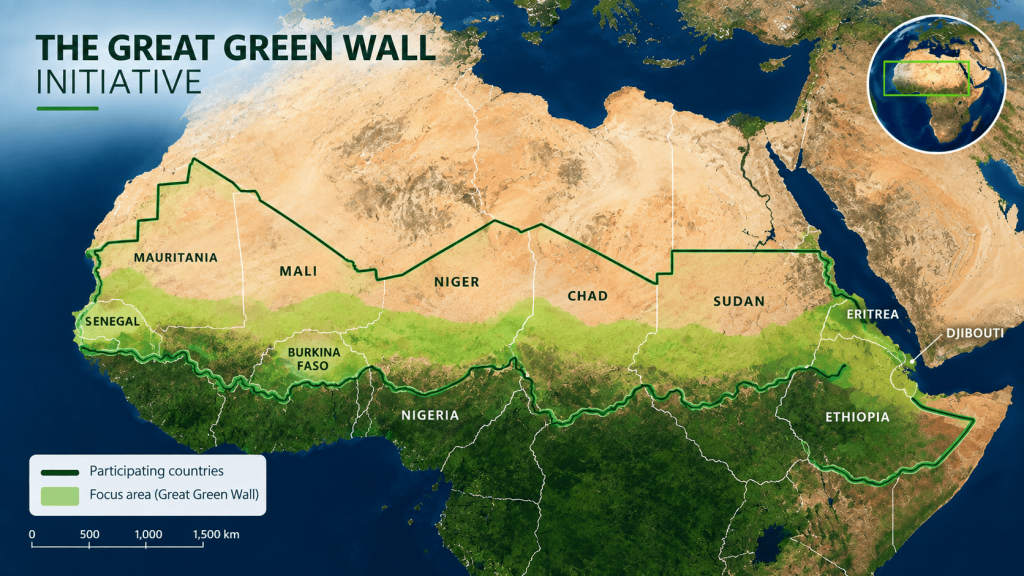
For years, Africa’s degraded drylands were treated largely as an environmental crisis. Now, they are attracting a different kind of attention: climate finance.
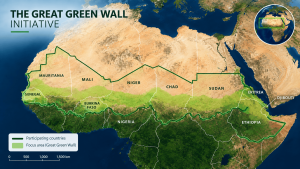
In December 2025, the Food and Agriculture Organization (FAO) and the Pan-African Agency of the Great Green Wall launched a $222 million programme to strengthen resilience across eight Sahelian countries. The programme, known as SURAGGWA, includes $150 million in Green Climate Fund grants and $72 million in co-financing.
Nigeria is among the participating countries. Together, the programme aims to restore 1.3 million hectares of degraded land, improve resilient livelihoods for 5.7 million people and sequester 65 million tonnes of carbon equivalent.
However, the bigger story is not simply that another climate programme has secured funding. Instead, it is the growing effort to turn land restoration into an investment proposition.
From Degraded Land to Economic Opportunity
Africa’s drylands sit at the intersection of several major economic risks. Degraded land can undermine agricultural productivity, weaken rural incomes and increase vulnerability to drought. Consequently, restoring it can deliver benefits far beyond the environmental gains usually associated with tree planting.
The World Bank has already backed this broader approach. In 2021, it announced plans to invest more than $5 billion across 11 African countries to restore landscapes, improve agricultural productivity and strengthen livelihoods. The programme covered areas stretching from Senegal to Djibouti and included food security, resilient infrastructure, renewable energy and job creation.
That approach is now becoming more visible within the Great Green Wall itself. At the African Development Bank’s high-level dialogue during UNCCD COP17 in August 2026, development institutions and partners discussed how to turn restoration commitments into bankable projects capable of attracting investment at scale. The discussion identified water, renewable energy, resilient ecosystems, green infrastructure, agriculture and economic development as key investment areas.
That language is revealing. The conversation is moving from how much land can be restored to how restoration can be structured, financed and measured as a development investment.
Why Climate Finance Is Looking At Land
Climate finance has a practical reason to care about degraded landscapes. Restoration can strengthen ecosystems while helping communities adapt to climate stress. Healthier soils can support agriculture, while better water retention can reduce some of the effects of drought. At the same time, restoration can support livelihoods and create demand for local services.
There is also a carbon dimension. SURAGGWA alone expects to sequester 65 million tonnes of carbon equivalent. Meanwhile, the broader Great Green Wall targets 100 million hectares of restored land, 10 million green jobs and 250 million tonnes of CO₂ equivalent sequestered by 2030.
Still, carbon should not become the only measure of value. For communities living on degraded land, the more immediate questions are often practical. Can farms become more productive, households earn more and young people find work? Can communities withstand another difficult season?
Those outcomes can make restoration economically meaningful even when no carbon credit changes hands.
Read Also: Nigeria’s Carbon Market Which Industries Gain First?
The Investment Model Is Evolving
There are signs that financial markets are beginning to test new ways of funding restoration. In April 2026, the World Bank priced a $120 million Spekboom Restoration Outcome Bond in South Africa. The transaction mobilised $25 million in private capital for a 50,000-hectare restoration expansion in the Eastern Cape. That project is expected to create 11,000 local jobs while generating carbon removal units linked to the restoration work.
The South African transaction is separate from the Great Green Wall. Nevertheless, it illustrates the direction of travel. Investors are being presented with structures where environmental outcomes, carbon revenues and development objectives can interact with financial returns.
In this case, Amazon agreed to purchase a large share of the project’s expected carbon removal units under a long-term arrangement, helping create greater visibility around future revenues.
That model remains specialised. Yet it shows why restoration is increasingly entering conversations that once belonged almost exclusively to governments, donors and environmental organisations.
The Real Test Is What Happens On The Ground
More money, however, does not automatically mean more impact. The Great Green Wall Accelerator’s five-year review, published by the UN Convention to Combat Desertification in 2026, reports progress in land restoration, jobs and resilience. At the same time, it identifies continuing challenges around incomplete data, coordination and the time required to translate financial commitments into results on the ground.
That matters for investors as much as it does for governments. Capital needs credible projects. Donors need evidence that money is producing results. Communities need to see tangible improvements in their livelihoods. Meanwhile, companies looking to support nature and climate initiatives increasingly need reliable ways to demonstrate impact.
Therefore, the next phase of Africa’s restoration agenda will depend on more than securing large commitments. It will depend on proving what those commitments achieve.
Nigeria Has A Stake In The Transition
Nigeria’s inclusion in SURAGGWA places the country directly inside this emerging financing story. The programme provides an opportunity to connect land restoration with rural livelihoods, climate resilience and economic activity. Yet, the value for Nigeria will ultimately depend on how projects are designed and implemented at community level.
That means measuring more than hectares restored. For businesses and investors, useful indicators could include jobs created, enterprises supported, agricultural productivity, income improvements, ecosystem recovery and the durability of the results. Such measures can also help distinguish a project that produces a strong headline from one that creates lasting value.
The wider opportunity is significant. Africa’s drylands are no longer being discussed only as places where climate change creates problems to solve. Increasingly, they are being viewed as landscapes where restoration can support resilience, livelihoods, food systems and new forms of green investment.
Yet the investment case will have to earn its credibility. As more climate finance moves toward Africa’s drylands, the question is becoming less about how much money can be announced and more about how much lasting value can be created.
Stay with CSR Reporters for more stories on the business and impact behind Africa’s sustainability transition.
[give_form id="20698"]