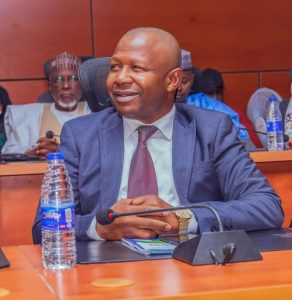
Nigeria’s Sustainability Problem Is Implementation, Not Legislation – Dr Eustace Onuegbu
 ROSEMARY IMOBHIO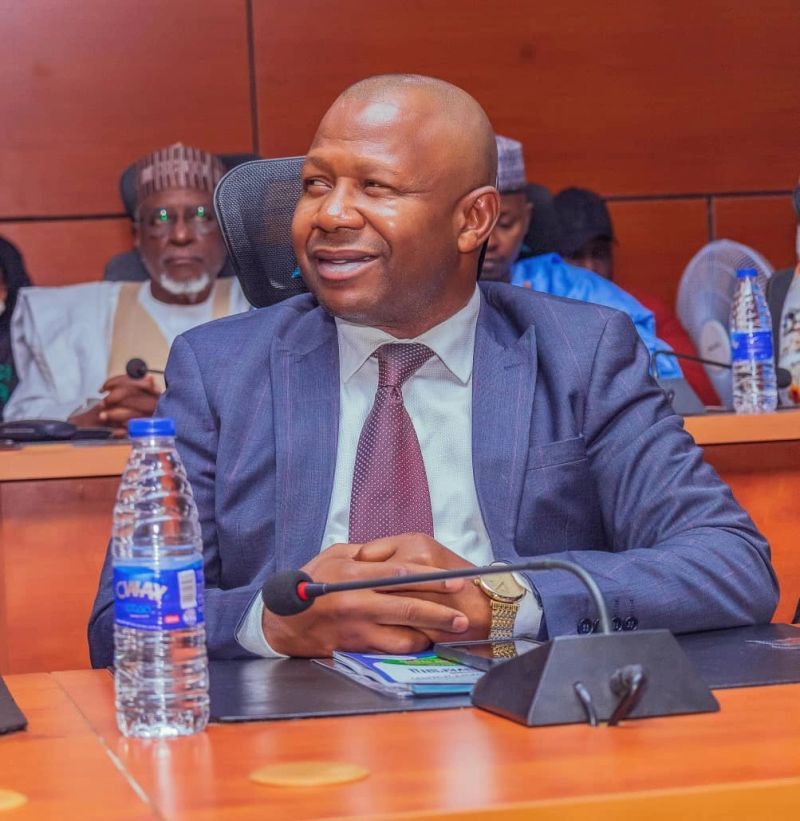
Sustainability is often mistaken for charity, and reporting is often mistaken for practice. Dr. Eustace N. Onuegbu pushes back on both. He is President and Lead Consultant of the International Network for Corporate Social Responsibility (IN-CSR), a hybrid organisation that promotes responsible business practice in Sub-Saharan Africa. A board-level management consultant and accredited ISO management systems auditor, he also serves on the Global Advisory Group on Business and Human Rights and is Vice Chair of the Executive Council of the Sustainability Professionals Institute of Nigeria (SPIN).
In this interview with CSR Reporters, Onuegbu explains why giving back is not the same as operating responsibly, why the Financial Reporting Council should regulate reporting and leave the practice to practitioners, how the banking sector is faring, and what artificial intelligence means for data, privacy and sustainability reporting.
Many people describe sustainability as giving back to the people. Is that an accurate way to see it?
Giving back is only one aspect. Sustainability is quite different from social performance. We have a number of concepts across the industry, and they confuse many people, partly because most practitioners did not come into the field with the mindset of working in sustainability. They studied something else and trained themselves later.
CSR involves a great deal, but what people often describe when they say CSR is corporate philanthropy, a concept that is not well understood. Many companies presented philanthropy as CSR. It became so popular that people now think the two are the same thing.
Let me give you an example. Suppose an organisation uses child labour to run its business, makes $100 billion in profit and gives 99.9 per cent of that money to charity. That organisation is still not responsible. But if it puts processes in place to avoid child labour, to avoid infringing on people’s rights and to safeguard workers and other stakeholders, then whatever it gives back to charity from its profit is philanthropy.
How, then, do philanthropy, CSR, sustainability and ESG differ?
Philanthropy is giving back to society, irrespective of how you made the money. Whether you used child labour or polluted the environment, it does not matter. You are giving back.
CSR is ensuring that you integrate the principles that provide for responsibility, to create value across the entire shareholder and stakeholder ecosystem, at least in line with ISO 26000. You are creating value for everybody: shareholders, workers, host communities, customers, even the public, government and NGOs.
Sustainability is about providing for your needs today without compromising the ability of future generations to provide for theirs. Once you have created value, you continuously improve on it through measurement, analysis and review of your safeguards, policies, procedures and competencies. Do this over time and you begin to optimise value across the whole stakeholder ecosystem, not just create it. That is where you can say you are becoming sustainable. You do not wake up overnight and become sustainable. It is a work in progress.
ESG, on the other hand, is not actually practice. It is a risk measurement framework meant for investors and markets. When people say they are an ESG practitioner, I ask whether they are a sustainability practitioner or an ESG practitioner, because an ESG practitioner is really just a risk manager for sustainability.
Sustainability is also not limited to any profession. Whatever you studied, whether chemical engineering, computer science or English language, there is an aspect of sustainability that speaks to it. It cuts across every action in life, from your bedroom to your kitchen to the office.
Tell us about your own path into the field, and the work of IN-CSR.
I started out in my previous life outside the country, helping organisations that employed minority workers to align with ethical standards and human rights requirements. We put safeguards in place so that workers’ rights were not infringed and their welfare was provided for. I later did my master’s in international human rights law in Birmingham. I also hold two bachelor’s degrees, one in marketing from Nigeria and one in international business management from a school of business in the Netherlands, plus a number of international certifications, including ISO standards, SMETA and SA 8000. That is how I got into sustainability, because business and human rights is an aspect of sustainability.
IN-CSR is a hybrid organisation, a combination of a nonprofit and a profit-making entity. We help civil society, corporates and public sector bodies to function responsibly. If their processes, procedures and ethical standards are provided for, that organisation will be sustainable in the long run. I do not mean only durability, although that is part of it. I mean providing for the three pillars of sustainability: the environment, society and the economy. That means proactively ensuring that their operations, actions and inactions do not harm those pillars. Giving back is reactive, so it is not sustainability in itself.
What was the market like when you returned to Nigeria?
It was not yet mature for the integration of business and human rights. It was focused on philanthropy, and I met a lot of pushback from practitioners who had started before me. There were still very few of them, and about 90 per cent were focused on CSR reporting, which is supposed to be an output of what you have done in an organisation.
Having worked for auditing companies in Europe, I looked at it differently: what have you actually implemented before you start reporting? Reporting is communication to your stakeholders about what you have done over the year. In many cases, nothing had been done. I got a lot of pushback because the money was in reporting and I refused to follow that route. I focused on implementation and standardisation.
That is also why I partnered with reputable bodies such as PECB, the Professional Evaluation and Certification Board of Canada. To be certified, you need to have implemented. There is another challenge in certification providers who sit in the comfort of their homes and certify companies remotely. The journey has not been very smooth, but many organisations are beginning to understand what standardisation means to them and how it creates value for their stakeholders.
You have said the frameworks in Africa are not where they should be. Can you expand on that?
I would not say the problem is the frameworks. Take Nigeria as a case study. It is a signatory to almost every international law, treaty, bilateral and multilateral agreement. Our problem is not that we lack legislation. Sometimes it may not be well articulated, but there are pieces of legislation that, if implemented effectively, would provide the necessary safeguards. We do not implement them. It is about making sure that the people who go out to check are doing their job, and sometimes even those people may not have the competence.
Our weak regulatory framework has been a challenge. I have worked with a number of companies, banks included. When you tell them something does not align with global best practice, they say the state or federal regulators have just been here and approved it. And I say, sorry, this is an international standard we are talking about.
SPIN has raised concerns about the Financial Reporting Council’s approach to IFRS S1 and S2. Why does the distinction between regulating reporting and regulating practice matter?
I was one of the people who pointed out, early last year, that there is an issue with how the FRC is trying to implement the framework around reporting. Sustainability is not only reporting. Reporting is not the practice. It is communication to your stakeholders: look at my emissions data, look at my social safeguards, look at where I have gone wrong and what I intend to do. That is not the practice itself. I raised this at an event in Abuja where the FRC participated.
I should say I did not start out interested in reporting. I started because of IFRS S1, and it is now a big part of the services we provide. IFRS did something other international standards did not: it recognised the importance of implementation. You conduct a gap analysis, implement, constitute a governance framework that oversees sustainability, and then report. But the reporting areas are more focused on environmental safeguards, and on governance they cover only a piece. If you compare them with implementation frameworks such as SA 8000 and ISO 26000, the social components of ISO 26000 are so detailed and broad that I do not think IFRS will reach that level in the next five years.
IFRS is good, and I think it is much better than GRI on environmental issues. But GRI is much better on stakeholder management, and you cannot do sustainability without stakeholder engagement, both internal and external.
SEE ALSO: When the Referee Wants to Play: SPIN, FRC, and the Battle for Sustainability’s Soul
Why does the social emphasis matter in the African context?
In Africa, our reality is social. But the money many of us are chasing comes from overseas, from multilateral organisations, and it is environmental money. Everybody follows the money. Is that impacting our society? Not directly.
I am not saying we should ignore environmental issues. You cannot separate them, and social, environmental and governance are all risk metrics. The question is whether we have the social safeguards that would help develop our own society: reducing poverty, getting children into school, improving education standards, and providing access to good roads, water and electricity. IFRS does not provide for that.
So the FRC should stick to regulating reporting, and make it clear in its training and communication that this is all about reporting. The practice itself should be left to those trained as sustainability practitioners. I can prepare my books, but I can never introduce myself as an accountant. I can conduct a risk assessment for my company, but I cannot present myself as a risk manager. They should know their limitations.
Which sector is doing best on sustainability in Nigeria?
The banking industry, and the reason is that the Nigerian Sustainable Banking Principles were initiated by the Central Bank of Nigeria several years ago, so the banks are presently leading. But if you ask whether they are actually applying the principles, my answer might be different.
Recent reports suggest banks do not apply these principles much when it comes to lending.
That is what I am saying. I have told them at one of their events that I am not a fan of any policy or framework that involves a tick-box exercise. The principles need to be reviewed. Banks need to assess risk exposures across their operations, services and stakeholders.
It is not enough to request an EIA, an ESIA or a sustainability report from a customer and then go back and sit in the comfort of your office. You need to be able to assess risk effectively from one location to the other. Stakeholders differ, the environment differs, even the physical location differs, and these are all components of risk. There are also opportunities, depending on what they bring to the table.
What would it take to get this right?
We need to stop copying frameworks from multilateral organisations in their countries of origin and stop thinking that because company ABC in the US, the UK, Australia or Canada did it a certain way, that is how we will do it. What we need now is local competence, and that is where SPIN comes in. I sit on its Learning and Development directorate.
We have people who go on the internet, download one material, read another and think they are experts. If I ask you a question, I can tell that you picked up that information online. That does not carry authority, because anybody can publish. Competence comes through proper training, not through picking up information here and there. The worst part is that some of them will argue with you. Structures need to be put in place where competence is treated as very important. I think a number of people heading CSR departments do not even understand the job description very well, let alone the requirements of the job.
You teach as well. Are you affiliated with any universities?
I teach in many places. If I am not in the field, I am in the classroom. I have organised conferences with the Faculty of Law at the University of Lagos since about 2015 or 2016, and we are affiliated with some universities overseas. Once in a while they send one or two people to me. But I do not intend to go into academia for now. Let me stick to training professionals.
I tell my students every time that I am not interested in the certificates. I have clients from overseas, including the United Arab Emirates and the United States, but I am more interested in whether you can walk into an organisation and implement what we discussed in the classroom. I have about 13 certifications, and I train and implement on all of them. The focus is how they come together to help an organisation achieve sustainable practices, unlike someone doing quality just to meet standard requirements, or compliance just to meet regulatory requirements.
Everyone is talking about AI. How should we think about its use in sustainability, and the risks it poses?
You cannot do without AI now. Last year I hosted an international event with the United Nations at the National Human Rights Commission in Abuja, with the people in charge of digital regulatory frameworks in Nigeria present. My focus was that an integral part of sustainability is data management and information security. We call it corporate digital responsibility: you must be mindful and responsible about how you collect information, store it, use it and dispose of it.
If you give me your data in a store and I sell it to someone to pitch insurance to you, you have the right to sue. That is misuse. So when AI accesses information like that, does it understand corporate digital responsibility? It is walking a very fine line. And remember, what AI gives you is information someone has put in there. It does not manufacture information.
AI has a good side. It makes life and work easier and helps fast-track development. But our privacy has become far more exposed. Pick up your phone, search for a Samsung or an iPhone, put it down, and the next day you start seeing ads. Google has a privacy policy, and so do other companies, but this technology cannot easily be controlled in what it does.
Who will regulate it?
It is cross-border. You can access information located in the US from Nigeria, and information in Nigeria from Canada. Sincerely, I do not think the United Nations can do it very well. This is my own opinion. It can provide a framework, as it did with the UN Guiding Principles on Business and Human Rights, but implementation will be left to individual countries and organisations. Companies cannot avoid AI, but they need to know where to draw the line.
And for sustainability reporting specifically?
AI will make things a lot easier. Before now, when it was time to report, many companies would email different departments asking for information, and some of those people did not have it. That is why you see well-scripted reports that contain no real information. You can now use AI to run quick checks on your reports.
A good double materiality assessment could take two or three weeks. If you use software to collect data from internal and external stakeholders, and you are an experienced practitioner, you can do the initial assessment yourself and then do the enhanced assessment with the software. That can be reduced to about one week. But if you get the initial assessment wrong, do not expect a miracle. The information you provide is what comes out.
So you are advocating responsible use of AI, and saying the human factor cannot be removed.
No, it cannot. People say AI will take their jobs, but the ones actually at risk are those doing the regular things, such as “prepare me a cover letter” or “prepare me a list of items.” If you are an expert and very good at what you do, AI can never replace you. It can make your work easier, but it cannot replace you.
Finally, what does credible practice look like when you audit it?
Standardisation is straightforward. As an auditor, I ask: have you done this? If you say yes, show me how, with documented evidence. I will go outside and ask one of your stakeholders. I will look for direct implementation and observations, everything that tells me what you are saying is true.
Say you claim to have reduced your energy use. Did you carry out an energy audit that became your baseline? Then I compare that baseline and its parameters with what is there today. If I doubt anything, my team does a spot check. I do not need to start referencing papers that may have no relevance to that environment. Do I reference documents when I write? I do, but they have to be relevant.

Stay with CSR Reporters for deeper conversations shaping responsible business in Nigeria.
[give_form id="20698"]