Competence or Kinsmen? The 2027 Election Choice Nigerians Say They’ve Already Made
 Eche Munonye Founder and Chief Strategist, CSR Reporters
Competence or Kinsmen? The 2027 Election Choice Nigerians Say They’ve Already Made
As Nigerians prepare for 2027, the real divide is not between governance and tribe, but between promises and proof.
Ask Nigerians what should decide the 2027 general elections and the answer arrives almost without hesitation: competence. Light that stays on. Roads that last. Children who can walk to school safely. A naira that buys something. Few people will tell you, in a survey, at a market or over a meal, that they want a leader because of whose son he is.
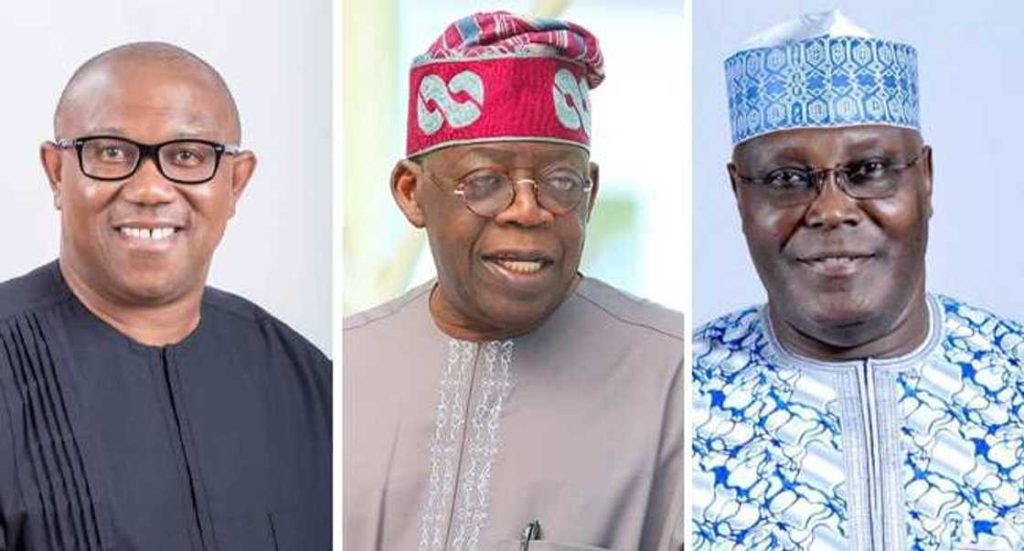
And yet the argument returns every four years, louder each time, that Nigeria votes its identity. With the presidential and National Assembly elections now fixed for 16 January 2027, after INEC brought the date forward from 20 February following the enactment of the Electoral Act 2026, and with campaigns open since 19 August, the country is just over three months from finding out which instinct prevails.
This article makes a simple argument. The choice between “responsible governance” and “tribal sentiment” is a false one. Nigerians do not prefer kinsmen to competence. They fall back on kinsmen when competence has been promised too often and verified too rarely. Tribal sentiment is less a rival to governance than a symptom of its failure: a trust shortcut for citizens who have learned that manifestos expire on swearing-in day.
What we say, and what we do
The evidence for the uncomfortable half of this story is real and should not be waved away. A 2024 multivariate study of the 2023 presidential vote, by Aminu, Adigun and Zaman, found that regional and religious identities shaped how Nigerians voted in ways that overshadowed socioeconomic grievances, with clear differences between the Muslim-majority North and the Christian-majority South. A 2026 briefing in the Review of African Political Economy reaches a related conclusion: ethno-religious ties remain central to voter mobilisation, reinforced by elite narratives and the promise of state patronage, with behaviour driven less by ideology than by competition for state control and economic advantage.
So identity matters. But look at the rest of the 2023 numbers before concluding that Nigerians are tribal voters. The winner was declared with 36.61% of the votes cast. Of 93.47 million registered voters, only 24.9 million voted: a turnout of 26.72%, the lowest since the return to democracy in 1999 (other tallies put it at about 29%, against 69% in 2003 and 53% in 2011). The National Peace Committee, co-convened by Gen. Abdulsalami Abubakar and Bishop Matthew Hassan Kukah, pointed to a trust deficit as a key driver.
The largest bloc in 2023 was not tribal. It was absent.
Nearly three in four registered voters stayed home. That is not the behaviour of a people who have settled into identity politics. It is the behaviour of a people who have stopped believing that the ballot connects to delivery.
| 26.72% turnout in the 2023 presidential election, the lowest since 1999 | ~72% trusted the president “not at all” or “just a little” (2022) | 90% rated the government poorly on fighting corruption (2024) | 27%–91% range of multidimensional poverty across states (2022) |
Why identity persists: it is a rational response
Voters rely on whatever signals they can verify. In a country where public trust is thin, the ethnic or religious community becomes a community of trust, a concept explored in UNU-WIDER research on trust in elected officials in urban Nigeria.
The trust data explain why. In Afrobarometer’s 2022 survey, about 72% of Nigerians said they trusted the president “not at all” or “just a little.” In its 2024 survey, 90% rated the government’s performance on fighting corruption as fairly or very bad, and only a few believed people could report corruption without fear of retaliation. In 2020, most Nigerians said one must be very careful in dealing with others. When citizens cannot trust institutions, and cannot easily trust one another, the person who shares your language, faith or home town is the one signal that feels checkable. That is not prejudice. It is risk management.
It is also worth saying plainly that many identity-based concerns are not irrational. Debates over zoning, rotation and federal character reflect real worries about who gets a fair share in a system where proximity to federal power is widely believed to determine access to resources. Dismissing every such concern as “tribalism” is lazy, and it makes the problem worse by telling aggrieved citizens that their grievances are illegitimate. The better response is to fix what identity is compensating for: a state that distributes fairly and can show its work.
Nigerians are not prisoners of ethnicity
Research on Nigerian identity points the same way. Peter Lewis’s Afrobarometer working paper found identity in Nigeria to be fluid and contingent, with institutions, and the character of elections in particular, shaping how intensely people identify along ethnic lines. The 2020 Afrobarometer survey found that 62% of Nigerians feel equally attached to their national and ethnic identities, and that nine in ten are tolerant of people from different religions, ethnic groups, nationalities and political parties.
A peer-reviewed 2022 study by Brigevich and Oritsejafor, using Afrobarometer Round 7 data, found that trust in state and local government and assessments of economic performance predicted satisfaction with democracy more strongly than a dominant ethnic identity, and read this as a decline in the salience of the ethnic cleavage.
Put those findings beside the voting patterns and one conclusion emerges. Identity is strongest where performance has been weakest or least verifiable, and it loosens where citizens can see and judge delivery, especially at the state and local levels they live under.
Poverty does not check your tribe
Consider what the identity-first bet has actually bought. The National Bureau of Statistics’ 2022 Multidimensional Poverty Index found that 63% of Nigerians, about 133 million people, are multidimensionally poor. State-level incidence ranged from 27% in Ondo to 91% in Sokoto, and 65% of the poor lived in the North. No region was untouched and no ethnic group insulated. Even the lowest figure in the country is more than a quarter of the population.
This is the core accountability question for 2027. A kinsman in high office is a symbol. A functioning clinic, a paved road and a school with teachers are outcomes. Communities are right to want representation. They are wrong, and often wronged, when representation is offered in place of delivery.
The same gap we see in boardrooms
At CSR Reporters, our work starts from the gap between promise and impact. In corporate Nigeria it shows up as CSR announcements that celebrate spend rather than outcomes, the argument of our feature “The Grassroots Gap,” on why corporate giving clusters around visibility, not need. In politics the gap takes the same shape: promises that are loud on the day and unverifiable afterwards.
The test we apply to companies is not complicated. Is the claim specific? Is it measured against a named standard? Is it independently verified? Has the institution shown its work, including when the results are unflattering? Those seeking public office should expect nothing less than we ask of a company seeking a social licence to operate.
Cash-for-votes is the worst version of the same failure. After the 2024 Ondo governorship election, Yiaga Africa described vote buying as becoming a permanent feature of the electoral process and held parties and candidates responsible. After the Edo election the same year, its executive director said the major parties had been seen buying votes. A voter who sells a ballot for a few thousand naira has made a trade in a system that has taught them the ballot buys nothing else.
What would make competence real by 16 January
Voters cannot audit a government in three months. But they can change the terms of the contest. Five questions, put to every candidate and party, would move the conversation from identity to evidence:
- What exactly will you deliver, by when, and at what cost? Specific, dated, costed commitments beat slogans.
- Who is accountable for delivery? Named responsibility, not collective promises.
- What was delivered the last time you or your party held office? Check it against budget implementation reports and audited accounts, not speeches.
- How will citizens track progress? A published baseline and a commitment to report against it.
- Whom does this plan serve beyond your base? Governance that works for one group is patronage. Test the plan in communities that did not vote for you.
Responsibility does not rest with voters alone:
- Parties and candidates: publish costed manifestos with measurable targets and baselines.
- Media and civil society: build public scorecards now, and revisit them at 100 days and at one year.
- Business and investors: governance is the “G” in ESG. Treat the quality of delivery plans as a material risk question, and fund civic education and independent monitoring rather than campaign visibility.
- Voters: confirm your registration status and turn out. Nearly three in four registered voters did not in 2023.
The choice we say we have made
Nigerians have already told every pollster, pulpit and market square what they want. The question for 2027 is not whether we believe in competence. It is whether we will demand the evidence of it, and whether leaders will be made to supply it. Identity will not disappear from our politics, and it need not: a diverse country will always carry its differences into the ballot box. What must change is that identity stops being the only thing voters can verify.
Responsible leadership must be earned, tested, and accountable. In the boardroom, and at the ballot box.
| From promises to proof CSR Reporters works with corporates, investors and institutions that want credible, context-aware sustainability strategy, ESG advisory and impact intelligence grounded in African realities. If your organisation is ready to measure what it says it delivers, we would like to hear from you. Email: enquiries@csrreporters.com Call or WhatsApp: +234 803 401 2198, +234 803 209 8499, +234 903 329 6374, +234 903 254 1168 |
About the author. Eche Munonye is the Founder and Chief Strategist of CSR Reporters, a pan-African independent accountability and sustainability intelligence platform, and the author of Purpose 2035: The Future of Corporate Responsibility in a Changing World (2025).
SOURCES AND NOTES
Election timetable: INEC revised timetable, reported by AllAfrica (26 Feb 2026) and Channels Television (26 Feb 2026). Presidential and National Assembly elections 16 Jan 2027; campaigns from 19 Aug 2026.
2023 turnout and results: INEC figures as reported by ICIR, Dataphyte and Zikoko; National Peace Committee findings as reported by Arise TV. Turnout is 26.72% by the INEC-based calculation and about 29% in other tallies.
Aminu, N., Adigun, O. W. and Zaman, A. (2024). Regional Dynamics in Nigerian Politics: Voting in the 2023 Presidential Elections. AfricArXiv. Related briefing in Review of African Political Economy, vol. 53, issue 188 (2026), pp. 269-279.
Afrobarometer Round 9, Nigeria 2022 (n=1,600), Q37A. The ~72% figure is computed from published frequencies: 736 responding “not at all” plus 411 “just a little.” Source: World Bank Microdata Library.
Afrobarometer Round 10, Nigeria (2024) on corruption, via NOIPolls. Afrobarometer 2020 tolerance and identity findings (n=1,599), via NOIPolls.
Lewis, P. (2007). Identity, Institutions and Democracy in Nigeria. Afrobarometer Working Paper No. 68. Brigevich, A. and Oritsejafor, E. (2022). Ethnic versus national identity and satisfaction with democracy. Regional & Federal Studies. UNU-WIDER Working Paper 2017/126 on trust in elected officials in urban Nigeria.
National Bureau of Statistics, Nigeria Multidimensional Poverty Index Survey 2022, press release of 17 November 2022.
Yiaga Africa statements on the 2024 Ondo and Edo governorship elections, as reported by TheCable and others.
[give_form id="20698"]