Discoloured Yam: What Lagos Consumers’ Concerns Reveal About Food Quality and Consumer Protection
 ONYINYECHI NWAIGBA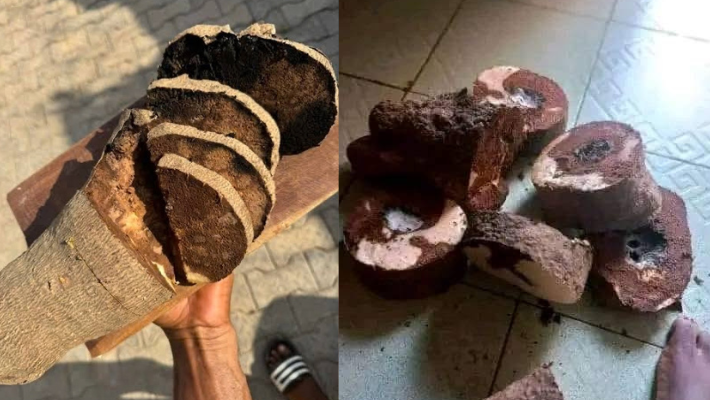
For some Lagos consumers, buying yam has become a gamble.
From the outside, the tuber may look perfectly normal. But after taking it home and cutting it open, some buyers are finding dark or brown flesh inside, a condition popularly referred to as “chocolate yam”.
The concern is not simply about appearance.
Consumers who spoke to the News Agency of Nigeria said they often discover the discoloration only after purchasing the yam, leaving them with food they may be unwilling or unable to consume and money they cannot recover.
That creates a less obvious problem in Nigeria’s food system: what happens when consumers cannot reasonably determine the quality of what they are buying until after they have paid for it?
Recent reports from markets in Lagos have brought renewed attention to the issue, with consumers, traders and suppliers offering different explanations for the discoloration.
But one thing remains unclear.
There is currently no laboratory evidence establishing that the affected yam is unsafe to eat or confirming any particular cause of the discoloration.
That distinction matters.
The Problem Begins Before the Yam Reaches the Kitchen
A Festac resident, Divine-Favour Johnson, described the experience as financially frustrating, particularly because she had saved money to buy the food before discovering the discoloration.
Another consumer in Oshodi, Samuel Arowojolu, said he had encountered the problem several times and that buyers often have no practical way of knowing what is inside a yam before purchasing it.
Unlike some packaged food products, consumers cannot easily inspect the internal condition of an intact yam without cutting it open.
That leaves the buyer carrying much of the risk.
If the yam turns out to be unsuitable after purchase, the consumer may have to spend again to replace it.
For households already dealing with high food costs, that may appear like a small loss on an individual purchase, but repeated losses across thousands of households represent a broader consumer protection concern.
It also raises questions about food waste.
A tuber that has been transported from a farming community to a major urban market, purchased by a household and then discarded because its quality is uncertain represents wasted food, money, labour and transportation resources.
What Is Causing the Discolouration?
This is where the conversation needs caution.
Consumers interviewed in Lagos offered different theories. Some raised concerns about storage, preservation practices, fertilizer use and farming methods. One consumer suggested that different yam varieties could also be responsible.
Traders provided another perspective.
Aminat Omotolani, a yam supplier with 15 years of experience, said consumers who are unfamiliar with different varieties may struggle to distinguish between them.
She also said some coloured varieties sell for less than the non-discolored variety, which she referred to as “efuru yam”.
Another trader, Iya Islamiat, said she does not sell the discolored variety and instead sources white yam from Ado-Ekiti and Kwara.
These accounts show that the term “chocolate yam” may be covering different situations, including varietal differences and possible quality deterioration.
But they do not establish the scientific cause.
That is why claims that the discoloration is caused by fertilisers, preservatives or harmful chemicals should not be presented as fact without testing.
The bigger issue is that consumers currently have limited information with which to distinguish between a naturally different variety, post-harvest deterioration and a genuine food-safety problem.
Where Consumer Protection Comes In
Food safety is not only about what happens inside a kitchen.
It begins much earlier, from production and harvesting to transportation, storage, market handling and sale.
At every stage, poor practices can affect the quality of food eventually consumed by households.
This makes the yam concerns relevant beyond individual market transactions.
If consumers are repeatedly purchasing produce whose quality cannot be reasonably assessed, there is a need for clearer information and stronger oversight across the agricultural supply chain.
Nigeria already has institutions with responsibilities relating to food safety and agricultural production.
Recent clarification from the National Agency for Food and Drug Administration and Control (NAFDAC) highlighted an important distinction: fresh agricultural produce sold in open markets falls primarily under the Federal Ministry of Agriculture and Food Security, while NAFDAC is responsible for areas including the regulation of pesticide formulations, safety standards, label compliance and maximum residue limits.
That division of responsibility makes coordination particularly important.
A consumer does not necessarily care which agency has jurisdiction over a particular stage of the food chain. They simply expect the food they purchase to be properly handled and safe.
The Information Gap Is Also a Food-System Problem
One of the clearest problems emerging from the yam complaints is an information gap.
Consumers may know that a yam looks good externally, but that does not necessarily tell them what is happening inside the tuber.
Farmers and traders, meanwhile, may have more knowledge about the varieties they handle, their sources and how the produce has been stored.
Bridging that gap could reduce unnecessary waste and help consumers make better purchasing decisions.
This could include clearer information for consumers about yam varieties, proper storage conditions and signs of deterioration.
It could also involve stronger guidance for farmers and traders on post-harvest handling and the conditions that can affect yam quality.
For agricultural authorities and market associations, recurring complaints should provide an opportunity to investigate rather than simply dismiss the issue as consumer misunderstanding.
Why This Matters More When Food Prices Are High
The timing of the complaints is significant.
Food remains one of the biggest pressures on Nigerian households, making the loss of purchased food more than an inconvenience.
When a household spends money on a staple food and discovers that part or all of it cannot be used, the financial impact is immediate.
The consumer pays once for the original product and potentially pays again to replace it.
For lower-income households, repeated losses can make already expensive food budgets even more difficult to manage.
There is also a wider food-security dimension.
Food security is not only about producing enough food.
It is also about ensuring that food reaches consumers in an acceptable condition, remains available and affordable, and does not experience avoidable losses between the farm and the household.
A food system that produces large quantities of crops but loses significant value through poor handling, inadequate storage or weak quality assurance still has a structural problem.
The Responsibility Cannot Rest Entirely With Consumers
Consumers are often advised to “be careful” when buying food.
That advice has value, but it cannot be the entire solution.
A consumer cannot reasonably be expected to identify every internal quality problem in an intact yam.
Nor should consumers be expected to determine whether a particular farming or preservation practice has introduced a safety risk.
Responsibility must be distributed across the value chain.
Farmers need access to appropriate agricultural knowledge and extension services.
Traders and suppliers need to maintain proper handling and storage practices.
Market associations can help establish and enforce quality expectations among sellers.
Government agencies need effective monitoring, clear standards and accessible channels for consumer complaints.
And where a food-quality concern becomes widespread, authorities should be able to investigate it scientifically and communicate the findings to the public.
That final part is particularly important.
In the absence of credible information, rumours can quickly fill the gap.
What Should Happen Next?
The current concerns deserve investigation rather than speculation.
Agricultural and food-safety authorities should determine whether the discoloration being reported is primarily linked to particular yam varieties, post-harvest handling, storage conditions, disease or another factor.
Where chemical use is suspected, appropriate testing would be necessary before drawing conclusions about consumer safety.
The findings should then be communicated in language that ordinary consumers can understand.
For traders, clearer guidance on identifying and separating affected produce could help reduce complaints and prevent avoidable losses.
For consumers, practical information about yam varieties and signs of deterioration could make purchasing decisions easier.
And for policymakers, recurring food-quality complaints should be treated as signals about weaknesses within the broader food supply chain.
Beyond “Chocolate Yam”
The conversation around discolored yam may appear small compared with Nigeria’s larger food and economic challenges.
But it illustrates an important principle of responsible food systems: consumers should not have to discover quality problems only after their money has been spent.
The immediate question is not whether every discolored yam is dangerous. There is not enough evidence to make that claim.
The more important question is whether the agricultural supply chain provides enough transparency, quality control and consumer protection to ensure that people know what they are buying.
Until the cause of the discoloration is properly established, consumers, traders and authorities should resist unsupported claims.
What is clear, however, is that food quality cannot be left entirely to chance.
From farm practices and post-harvest handling to market oversight and consumer information, every stage matters.
Because when a family buys food, they should be paying for nourishment not discovering a problem only after they get home.
[give_form id="20698"]