Nigeria Looks to Ethiopia’s Farming Model, but Can Mechanization Deliver Food Security?
 ONYINYECHI NWAIGBA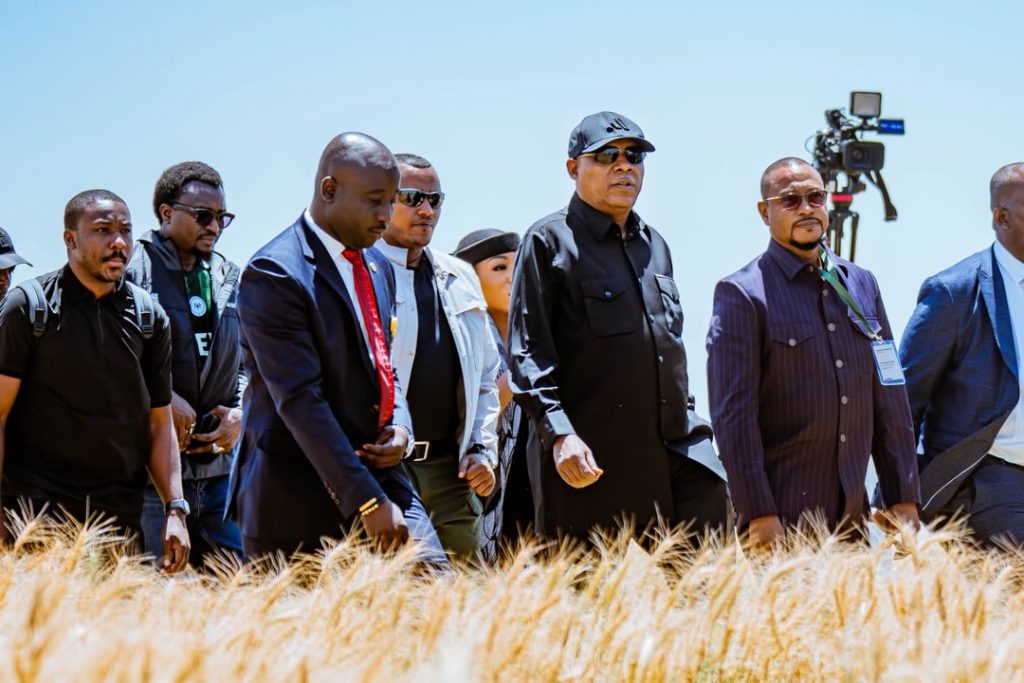
Nigeria plans to draw lessons from Ethiopia’s agricultural transformation, with improved seeds, mechanized farming and climate-smart practices among its priorities. The bigger challenge is ensuring that smallholder farmers can access the tools, financing and infrastructure needed to benefit.
Nigeria’s plan to draw lessons from Ethiopia’s agricultural transformation has renewed attention on a longstanding question: what will it take to turn the country’s agricultural potential into a more productive and reliable food system?
During a visit to Ethiopia’s Oromia region as part of the Ethiopia–Nigeria Leadership Exchange, Vice President Kashim Shettima said Nigeria intends to adopt elements of the country’s approach to agricultural development, particularly mechanization, improved seeds and climate-smart farming.
The delegation toured farms and agricultural facilities to examine practices that could inform Nigeria’s efforts to expand domestic food production, reduce dependence on imported food and strengthen agricultural value chains.
Shettima pointed to Ethiopia’s progress in wheat production, noting that the country had moved from importing approximately $1 billion worth of wheat annually to achieving domestic self-sufficiency and exporting surplus production to neighboring countries.
He also highlighted Ethiopia’s progress towards rice self-sufficiency and its wider efforts to modernize agricultural production.
The proposed approach comes as Nigeria continues to confront challenges involving food production, agricultural costs, supply chains and access to essential farming resources.
For CSR Reporters, however, the significance of the development goes beyond the adoption of new farming techniques. It raises questions about how agricultural modernization can improve farmers’ livelihoods, strengthen rural economies and make food systems more resilient.
The central issue is not simply whether Nigeria can replicate Ethiopia’s farming model, but whether it can adapt the relevant lessons to its own agricultural realities.
Why Nigeria Is Looking at Mechanized Agriculture
Agriculture remains an important source of livelihoods in Nigeria, supporting farmers, traders, processors, transport operators and other businesses throughout the food value chain.
Yet the ability to produce food efficiently depends on more than the availability of farmland. Farmers also need suitable equipment, quality seeds, financing, water, storage facilities and reliable routes to market.
Where farming relies heavily on manual labor and access to machinery is limited, preparing land and carrying out essential farm operations can be time-consuming and costly. These constraints can affect the area farmers cultivate, the timing of planting and their ability to increase production.
Mechanization can help address some of these challenges through equipment used for land preparation, planting, harvesting and other agricultural activities.
When appropriately deployed, machinery can improve the speed and efficiency of farm operations, reduce dependence on certain forms of manual labor and support cultivation on a larger scale.
However, owning a tractor is not the same as having a productive mechanized farming system. Equipment requires operators, fuel, maintenance, spare parts and access to suitable land. Farmers must also be able to afford the service or financing arrangements through which they obtain machinery.
This distinction matters for Nigeria because the success of agricultural mechanization will depend on whether the necessary support systems are available alongside the equipment itself.
What Ethiopia’s Experience Offers Nigeria
Ethiopia’s agricultural experience provides an opportunity to examine how investment in production systems, improved seeds and coordinated agricultural development can contribute to greater domestic food production.
According to figures cited during the Nigerian delegation’s visit, Ethiopia previously spent approximately $1 billion annually on wheat imports but has since achieved wheat self-sufficiency and generated substantial export earnings from the crop.
The country has also expanded production and exports of agricultural commodities, including coffee, bananas and avocados. During the visit, Oromia Regional State President Shimelis Abdisa highlighted Ethiopia’s agricultural diversity and its cooperation with the Dangote Group on fertilizer production for farmers.
These examples point to several areas Nigeria could examine: improving the availability of agricultural inputs, investing in production infrastructure, strengthening local supply chains and creating conditions that encourage private-sector participation.
Ethiopia’s experience also suggests that agricultural transformation involves more than introducing technology. Production must be supported by systems that enable farmers to obtain inputs, manage their farms efficiently and move produce to buyers.
Nevertheless, Ethiopia’s experience should not be treated as a ready-made formula that Nigeria can reproduce without adaptation. The countries differ in their agricultural conditions, infrastructure, production patterns and institutional arrangements.
The relevant lesson is to identify which approaches have worked, understand the conditions that supported them and determine how similar principles could be applied within Nigeria’s own agricultural system.
Smallholder Farmers Must Be Part of the Transition
One of the most important questions surrounding mechanization is who will be able to access it.
Large commercial farms may be better positioned to purchase tractors and other equipment directly. Smallholder farmers, particularly those cultivating relatively small plots, may struggle to justify the purchase and maintenance costs of machinery.
If mechanization programmes primarily benefit farmers and businesses that already have access to capital, the gains could be unevenly distributed.
One possible approach is to expand access to shared equipment through agricultural cooperatives, mechanization service providers and arrangements that allow farmers to pay for machinery when they need it.
Under such systems, farmers would not necessarily need to own a tractor to benefit from mechanized land preparation or harvesting services.
Affordable financing, transparent service charges and reliable access to equipment would be important to making these arrangements effective.
There is also a role for farmer training and agricultural extension services. Introducing new machinery or improved seeds without adequate guidance can limit their effectiveness, particularly when farmers lack information about appropriate use, maintenance and complementary farming practices.
For women farmers and young people entering agriculture, access to technology, training and financing could help reduce some barriers to participation. However, these opportunities will require deliberate attention to affordability and accessibility rather than an assumption that the benefits will reach every group automatically.
The social value of agricultural modernization should therefore be assessed not only by the number of machines deployed or hectares cultivated, but also by how many farmers can access the resulting services and improve their livelihoods.
Mechanization Alone Will Not Solve Food Insecurity
Although mechanization can improve farm productivity, it cannot independently resolve Nigeria’s food security challenges.
Farmers need quality seeds suited to local conditions, appropriate fertilizer, water management and timely access to other inputs. They also need roads, storage facilities and processing capacity to ensure that harvested crops can reach consumers without unnecessary losses.
A farmer may increase production through mechanization but still struggle financially if poor roads prevent produce from reaching markets or if storage limitations force sales under unfavourable conditions.
Similarly, higher production does not automatically translate into more affordable food for households. Transportation, processing, storage, market conditions and other costs influence the final price consumers pay.
This means Nigeria’s approach must connect improvements on the farm with the wider food supply chain.
Climate resilience is another essential consideration. Climate-smart agriculture can support better management of water and soil, help farmers respond to changing weather conditions and reduce some risks associated with agricultural production.
The combination of suitable machinery, improved seeds, climate adaptation and reliable infrastructure is therefore more likely to deliver lasting benefits than a narrow focus on equipment acquisition.
For the Federal Government, the challenge is to ensure that these complementary priorities are reflected in implementation plans, financing arrangements and cooperation with state governments.
Building on Nigeria’s Existing Mechanization Plans
Nigeria is not approaching agricultural modernization without an existing policy framework.
In August 2026, the Federal Government announced a National Agricultural Mechanization Policy and a National Agricultural Mechanization Investment Strategy. It also outlined plans for a tractor assembly plant with an intended annual production capacity of between 2,000 and 4,000 units.
These measures indicate that mechanization is already part of the country’s broader agricultural development agenda.
The engagement with Ethiopia can therefore be viewed as an opportunity to identify practical lessons that may strengthen existing efforts, including approaches to equipment access, agricultural infrastructure, input supply and private investment.
The next stage will be implementation. Policy announcements and production targets need to be accompanied by clear funding arrangements, timelines, maintenance systems and mechanisms for assessing results.
Coordination between federal and state governments will also be important because agricultural needs vary across locations. Effective programmes must respond to local farming conditions rather than assume that one approach will work equally well everywhere.
Private-sector participation could support equipment supply, fertilizer production, processing, storage and other areas of the agricultural value chain. However, investment must be supported by an environment in which businesses can operate sustainably and farmers can afford the services being provided.
Measuring Success Beyond Harvests
The long-term value of Nigeria’s proposed approach will depend on whether agricultural modernization produces measurable benefits for farmers and communities.
Relevant indicators include changes in farm productivity, access to mechanization services, the cost of production, post-harvest losses and farmers’ incomes. Assessments should also examine whether smallholder farmers can access the new systems and whether improvements are sustained over time.
Food security outcomes matter just as much. Increased domestic production is important, but progress should also be considered in relation to food availability, affordability and access to nutritious meals.
Transparent reporting can help establish whether public investment is producing the intended results and identify areas where programmes need adjustment.
Farmers themselves should be involved in evaluating these initiatives. Their experiences can reveal whether machinery is affordable, whether equipment arrives when needed and whether access to improved inputs translates into better harvests and more reliable earnings.
Without this evidence, it would be difficult to determine whether adopting elements of Ethiopia’s agricultural model is producing the intended impact.
From Agricultural Ambition to Sustainable Impact
Nigeria’s engagement with Ethiopia offers an opportunity to learn from another African country’s experience in expanding agricultural production and developing its agrifood sector.
The proposed emphasis on mechanization, improved seeds and climate-smart farming could contribute to stronger food production, more efficient farming operations and new opportunities across agricultural value chains.
But the benefits will not arise from copying a model alone. They will depend on whether Nigeria builds the infrastructure, financing systems, technical capacity and accountability mechanisms required to make modern agriculture accessible and productive.
For farmers, the real measure of progress will be whether they can cultivate more efficiently, reduce avoidable costs, protect their livelihoods and reach markets. For households, it will be whether a stronger domestic food system contributes to more reliable access to affordable, nutritious food.
Ultimately, agricultural transformation is not simply about bringing more machinery onto farms. It is about building a system in which technology, investment and public policy work together to support farmers and the communities that depend on them.
Nigeria’s experience with Ethiopia may offer valuable lessons. Turning those lessons into lasting food security will require consistent implementation, inclusive access and evidence that the promised improvements are reaching people on the ground.
[give_form id="20698"]