

Nigeria’s Passport Ranking Raises Questions About Global Mobility and Economic Opportunities
 ONYINYECHI NWAIGBA
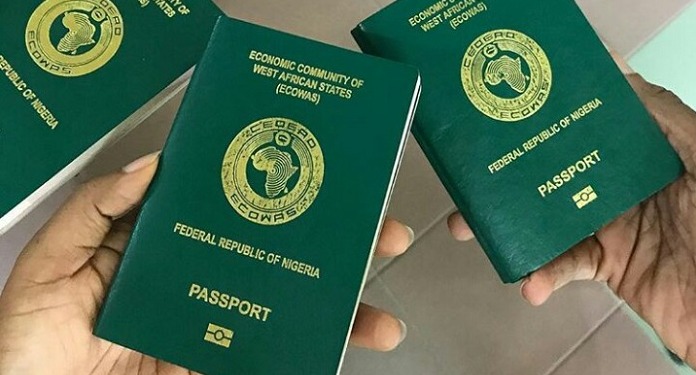
Nigeria’s passport has come under renewed scrutiny following a new assessment that placed it 181st out of 196 countries in the IziVisa Passport Ranking Index. The assessment lists 24 destinations Nigerian passport holders can visit without obtaining a visa in advance, alongside 16 destinations offering visas on arrival and 43 accessible through electronic visas.
The figures have drawn attention to the travel restrictions Nigerians face when seeking opportunities outside the country. However, the reported position requires careful interpretation because different passport indexes use different methods to assess international travel access.
The July 2026 Henley Passport Index placed Nigeria 90th out of 199 passports, with a score of 44 destinations accessible without obtaining a visa before travel under its methodology. This is not directly comparable with the latest IziVisa ranking. The two indexes differ in their destination coverage and how they count travel permissions, meaning the figures do not establish that Nigeria has simply fallen 91 places or lost 20 visa-free destinations between the two assessments.
Nevertheless, the latest figures bring an important question into focus: what does limited international mobility mean for Nigerians, their businesses and the country’s economic prospects?
How passport access affects opportunities for Nigerians
A passport is more than a document used at an airport. The travel permissions associated with it can influence how easily citizens participate in international education, professional development, business activities and cultural exchange.
For Nigerians seeking opportunities abroad, visa requirements can introduce additional steps before a journey can take place. Depending on the destination, applicants may need to complete forms, provide supporting documents, demonstrate financial capacity, pay application fees and wait for a decision.
These requirements do not automatically prevent people from traveling. Nigerians can and do obtain visas for many destinations. However, the application process can increase the time, cost and uncertainty involved in planning international activities.
For a student who has received an invitation to an international academic programme, for example, delays in obtaining travel approval could complicate preparations. A professional invited to a conference may need to begin the application process well before the event. An entrepreneur seeking to meet a prospective client may have to account for additional travel arrangements and expenses.
The implications can be particularly important when opportunities arise at short notice or when organizers have limited resources to support participants.
What it could mean for businesses and entrepreneurs
International mobility can play a role in business growth. Companies seeking new markets may need to meet distributors, attend trade fairs, negotiate contracts or build relationships with potential investors in other countries.
When travel arrangements become more complicated, businesses may face additional administrative work and costs. Smaller companies and early-stage entrepreneurs can be especially constrained if they cannot easily absorb travel expenses or uncertainty around visa decisions.
For Nigerian businesses trying to build international relationships, these barriers may affect how quickly they can pursue opportunities. They do not necessarily prevent cross-border trade, since many business activities can take place online. However, in-person meetings can still be valuable for negotiations, relationship-building and activities that require physical presence.
The effects are not limited to private companies. Researchers, nonprofit organisations, sustainability professionals and development practitioners may also need to travel to participate in international programmes, share knowledge or establish working relationships.
For organisations working on social impact and sustainable development, access to international networks can help facilitate knowledge exchange, training and collaboration. Limited mobility can make participation more difficult, particularly for people who lack the financial resources to manage lengthy application processes.
Education and professional development are also at stake
International education remains an important route through which students and professionals acquire new skills, build networks and gain exposure to different working environments.
Visa requirements are only one part of the process. Tuition fees, living expenses, admission requirements and access to scholarships also determine whether a person can study abroad. Still, travel restrictions and uncertainty can create another hurdle for applicants who have secured admission or funding.
The same applies to professional development. Some international fellowships, training programmes, competitions and conferences require participants to travel within specific time frames. When obtaining travel permission is uncertain, applicants may have to make additional preparations or risk missing an opportunity.
For young Nigerians trying to develop careers in technology, business, research, sustainability and other fields, these experiences can provide access to professional networks and knowledge that may be useful at home.
At the same time, international mobility should not be treated as the only route to success. Local training, remote learning, virtual conferences and cross-border online collaboration can also help Nigerians develop their skills. The goal is to expand opportunities, not suggest that meaningful professional growth can happen only outside the country.
Why the ranking needs to be understood correctly
Passport rankings can provide a useful snapshot of international travel access, but they are not a complete measure of a country’s economic strength, global reputation or the potential of its citizens.
Different indexes may assess different numbers of destinations and apply different rules when counting visa-free entry, visas on arrival, electronic visas and other travel authorizations.
A visa-free destination generally allows eligible travelers to enter without obtaining a visa before departure, subject to the destination’s entry conditions. A visa on arrival usually means the traveler obtains permission at the destination, while an electronic visa requires an application through an online process. An electronic travel authorization may be a separate category, depending on the rules used by a particular index.
These distinctions matter because a destination that requires an electronic visa is not necessarily equivalent to one that allows visa-free entry. Equally, a ranking position alone does not tell readers whether a country has recently withdrawn access to particular destinations.
For this reason, Nigeria’s position in one index should be compared with earlier editions of that same index before conclusions are drawn about changes over time. The number of destinations accessible under the same methodology is also important.
A careful reading of the figures allows the public to understand the restrictions Nigerian travelers face without overstating what the data proves.
What can Nigeria do to improve global mobility?
Improving passport access is not something Nigeria can achieve through a single policy announcement. Visa requirements are determined by destination countries, which make decisions based on their own immigration laws, diplomatic relationships and assessments of travelers.
However, Nigeria can pursue measures that support stronger international relationships and make legitimate travel easier to facilitate.
Diplomatic engagement is one possible route. Through bilateral discussions and reciprocal arrangements, governments can explore ways to reduce travel barriers for eligible citizens. Such agreements require negotiations and consideration of the interests of both countries.
Nigeria can also strengthen the systems that support international travel, including passport administration, identity verification and the processing of travel documents. Efficient, reliable services can reduce avoidable difficulties for citizens, although better passport administration alone does not guarantee visa-free access to other countries.
Building international trust is another important consideration. Consistent diplomatic engagement, effective cooperation on security and migration matters, and credible travel documentation can contribute to the broader environment in which countries make decisions about entry requirements. These factors do not guarantee a particular ranking outcome, but they form part of the wider policy landscape.
The government can also improve public access to accurate information about visa rules, application requirements and travel documentation. Clear guidance can help citizens plan appropriately, avoid preventable application errors and identify legitimate opportunities for international participation.
Any strategy should be assessed against measurable outcomes, including changes in visa access, the number of bilateral mobility agreements secured and the practical ease with which Nigerians can complete legitimate travel processes.
The bigger question is access to opportunity
Nigeria’s passport ranking has renewed attention on a challenge that affects students, professionals, entrepreneurs and organisations seeking to participate in international activities.
The latest IziVisa figures highlight the limited number of destinations Nigerians can enter without obtaining a visa in advance. However, the difference between its ranking and the Henley Passport Index ranking must not be mistaken for a directly measured decline.
The more important discussion is what Nigeria can do to expand legitimate travel opportunities and strengthen the international relationships that support education, trade, professional development and collaboration.
For citizens, the issue is not simply how high the Nigerian passport ranks. It is whether people can access worthwhile opportunities without facing unnecessary obstacles. For policymakers, the challenge is to pursue practical diplomatic and administrative measures that can improve mobility over time.
A passport ranking cannot capture the full ability or potential of a country’s people. But it can draw attention to barriers worth examining and to the need for policies that help Nigerians participate more easily in the wider world.
DON’T JUST ANNOUNCE YOUR IMPACT. PROVE IT.
CSR REPORTERS helps organisations verify, assess, document and communicate the real impact of their CSR and sustainability initiatives.
Project Verification | Beneficiary Feedback | Impact Assessment | Impact Storytelling | Stakeholder Engagement
Have an initiative worth documenting? Let us verify it. Document it. Tell the story.
Talk to CSR REPORTERS
enquiries@csrreporters.com
📞 Call/WhatsApp: 0803 401 2198 | 0903 329 6374 | 0905 024 4468 | 0803 209 8499
www.csrreporters.com