ROSEMARY IMOBHIO
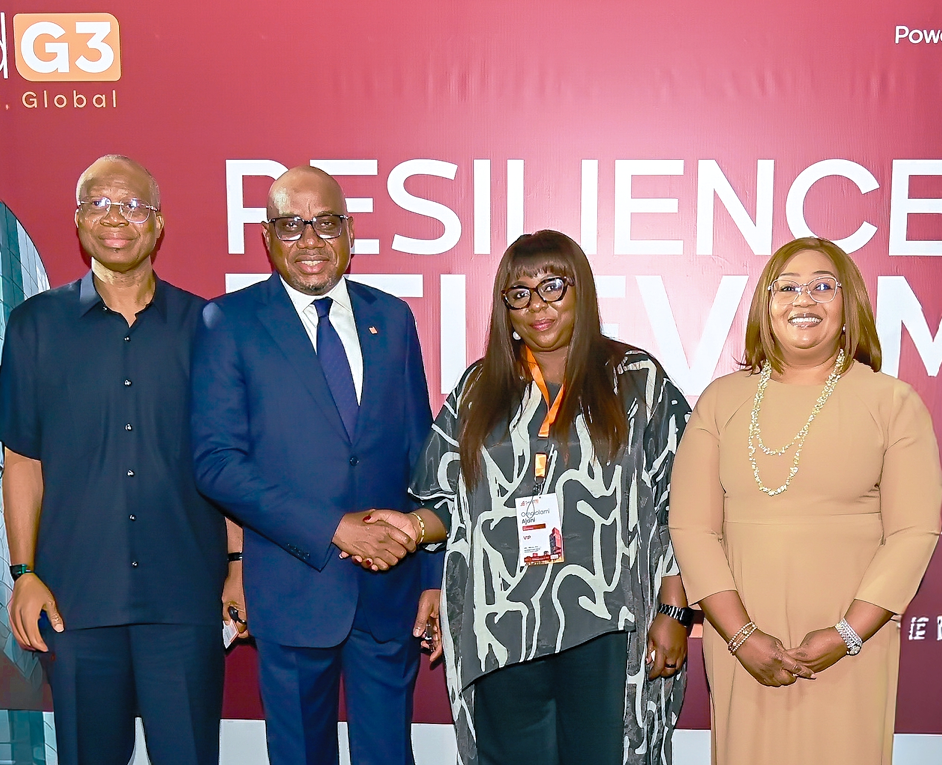
L-R: Julius Agenmonmen, Chairman, Board of Trustees, Stanford Seed Network, Nigeria, and GMD / CEO Brandlife Limited; Omolola Ajani, President, Stanford Seed Network, Nigeria; Innocent C. Ike, Group Managing Director/CEO, Access Holdings Plc; and Mrs. Feyisola Abiru, Member, Board of Trustees, Seed Network Nigeria, at the Stanford Seed G3 Conference in Lagos, recently.
African businesses seeking to expand across markets must strengthen their governance, leadership and risk management systems to ensure growth translates into lasting value, Innocent C. Ike, Group Managing Director and Chief Executive Officer of Access Holdings Plc, has said.
Speaking at the Stanford Seed G3 (Growth, Grit and Global) 2026 conference in Lagos, Ike argued that business expansion alone does not make an organisation globally competitive. Instead, its ability to make sound decisions, build effective institutions and maintain stakeholder trust determines whether growth can endure.
His remarks raise an important question for African businesses: are their institutions strong enough to manage the risks and responsibilities that accompany expansion?
Ike delivered the keynote address, “The Mindset of a Global CEO,” at the two-day conference held on October 14 and 15 at the Landmark Event Centre, Lagos. The gathering brought together entrepreneurs, investors, corporate leaders and policymakers to discuss the growth and transformation of African businesses.
Growth Does Not Automatically Create Lasting Value
Expansion can help businesses enter new markets, attract investment, increase revenue and reach more customers. However, Ike cautioned that scale does not automatically produce better business outcomes.
He urged leaders to evaluate what expansion would improve for customers, investors, employees and other stakeholders before committing resources.
“Scale is a platform for value creation. It is not the value itself,” he said.
This distinction is important for companies pursuing aggressive growth strategies. Although expansion can increase market reach, it can also introduce new regulatory requirements, operational pressures and financial risks.
Consequently, businesses must assess whether their governance systems, workforce capabilities and internal controls can support their ambitions. Companies that expand faster than their institutions can manage may struggle to sustain performance.
For African businesses competing in increasingly complex markets, the challenge is therefore not simply to become larger. It is to develop the capacity to remain resilient, accountable and commercially viable as operations grow.
Why Governance Must Grow With the Business
Ike described the transition from founder-led growth to institution-led value creation as a defining stage in an enterprise’s development. In founder-led organisations, decisions and relationships may depend heavily on one individual’s experience and personal involvement. While this can support early growth, it may become a limitation as operations expand.
Businesses eventually need clear decision-making structures, capable leadership teams and systems that support consistent performance beyond the involvement of one individual. “The enterprise becomes globally scalable when success no longer depends on the continuous presence of one individual,” Ike said.
This principle places corporate governance at the centre of sustainable growth. Effective governance establishes how decisions are made, who holds responsibility and how leaders are held accountable.
Furthermore, strong oversight can help businesses manage conflicts of interest, monitor risks and maintain confidence among investors, employees, customers and regulators.
Leadership succession is equally important. Companies that develop capable leaders at different levels are better positioned to maintain continuity when executives leave or new markets demand different expertise.
For boards and senior executives, the implication is clear: institutional strength must develop alongside commercial ambition, rather than become a corrective measure after problems emerge.
Capital Allocation and Risk Management
Ike emphasised that every growth ambition eventually becomes a decision about how an organisation deploys its resources. These include financial capital, people, technology, regulatory capacity, reputation and management attention. Leaders must assess whether an opportunity offers sufficient value relative to the risks and resources involved.
In practice, this requires businesses to look beyond projected revenue and market share. They must also consider operational resilience, expected returns and regulatory requirements.
For investors and other stakeholders, disciplined capital allocation provides a basis for evaluating management decisions. Ambitious expansion plans are only as credible as the assumptions, safeguards and accountability mechanisms supporting them.
Moreover, responsible allocation requires leaders to establish clear priorities rather than pursue expansion for its own sake. Ike’s message suggests that sustainable growth depends on the quality of decisions behind it, not simply the scale of investment.
Technology and Institutional Trust
Technology presents another challenge for businesses seeking to operate across markets. Although digital systems can improve efficiency, they also introduce risks requiring effective oversight.
Ike summarised the relationship between technology, leadership and reputation by stating: “Technology accelerates scale. Artificial intelligence amplifies judgement. Brand converts performance into trust.”
He called for responsible artificial intelligence adoption and stronger cybersecurity across every market in which an institution operates.
As organisations integrate AI into operations and decision-making, inadequate safeguards can expose them to data breaches, operational disruptions and reputational damage. Therefore, businesses must establish clear technology governance, protect sensitive information and ensure that the pursuit of efficiency does not weaken accountability.
Cybersecurity also requires executive attention because digital threats can affect business continuity, customer confidence and regulatory compliance. Ultimately, technological capability can support growth, but trust depends on how responsibly organisations use it.
What Sustainable Growth Means for Stakeholders
Ike’s message also raises broader questions about the relationship between business expansion and stakeholder value. Companies contribute to economic development through employment, investment, innovation and access to goods and services. However, these benefits depend partly on how businesses manage their responsibilities as they grow.
For employees, strong institutions can support clearer career pathways, consistent policies and organisational continuity. For customers, they can improve service reliability and protect their interests.
Investors need confidence that management decisions reflect sound governance and credible risk assessments. Regulators, meanwhile, expect businesses to understand and comply with the requirements of every market in which they operate.
Communities also have a stake in business expansion. Growing companies can create opportunities for local suppliers, workers and surrounding economies. However, lasting benefits depend on responsible conduct and consideration of wider social impacts.
This is where corporate responsibility intersects with business strategy. Responsible growth requires organisations to consider not only the returns they generate but also how their decisions affect employees, customers, communities and other stakeholders.
For African businesses with international ambitions, this means maintaining accountability across different markets while responding to local needs.
Read: How Ayodeji Lawal Is Turning Sustainability Into Measurable Outcomes at Access Holdings
Building African Businesses for the Long Term
Ike outlined six disciplines of a global chief executive: thinking beyond geography, allocating capital objectively, building institutions rather than empires, competing against global standards, balancing opportunity with risk, and optimising for sustainable value.
He also highlighted priorities for African businesses, including establishing governance structures before complexity increases, building credibility with regulators, developing leadership depth and standardising processes across markets while adapting to local conditions.
These priorities reflect the demands businesses face as they move beyond local success. Expansion requires more than financial resources and market opportunities. It also demands capable leadership, reliable systems and a commitment to accountability.
The Stanford Seed G3 conference was convened by Seed Transformation Network, Nigeria, as part of a gathering focused on African entrepreneurship and business growth. The network forms part of the Stanford Seed Transformation Program, established by Stanford University’s Graduate School of Business to strengthen the leadership and operational capabilities of established small and medium-sized enterprises in emerging markets.
Ike concluded by challenging leaders to assess whether their growth plans would improve customer outcomes, strengthen institutional resilience, create lasting social value, reinforce responsible conduct and generate sustainable shareholder returns.
“African businesses do not need smaller ambitions. They need stronger institutions around those ambitions,” he said.
For African companies, the broader lesson is that growth and responsibility must advance together. Expansion creates opportunities, but governance, accountability and sound leadership determine whether those opportunities translate into lasting value for businesses and the societies in which they operate.
| DON’T JUST ANNOUNCE YOUR IMPACT. PROVE IT. CSR REPORTERS helps organisations verify, assess, document and communicate the real impact of their CSR and sustainability initiatives. Project Verification | Beneficiary Feedback | Impact Assessment | Impact Storytelling | Stakeholder Engagement Have an initiative worth documenting? Let us verify it. Document it. Tell the story. Talk to CSR REPORTERS enquiries@csrreporters.com 📞 Call/WhatsApp: 0803 401 2198 | 0903 329 6374 | 0905 024 4468 | 0803 209 8499 www.csrreporters.com |