From Firewood to Electricity: How Clean Cooking Is Transforming School Kitchens in Africa
 ONYINYECHI NWAIGBA
A clean cooking initiative supporting schools in Tanzania and Uganda is demonstrating how access to modern energy can improve school meal delivery, reduce operating costs and protect kitchen workers from harmful smoke. With measurable results emerging from Tanzania, the programme offers important lessons for African countries seeking to connect clean energy investment with education, public health and environmental sustainability.
For many schools across Africa, preparing meals for hundreds or even thousands of pupils requires more than food supplies and kitchen staff. It requires large quantities of cooking fuel, long hours of preparation and working conditions that can expose cooks and other workers to smoke, excessive heat and other health risks.
In schools that depend on firewood and charcoal, cooking can also consume a significant portion of limited operating budgets. Money spent purchasing fuel is money that could otherwise support food supplies, classroom materials, infrastructure and other essential needs.
This is the challenge a clean cooking initiative in Tanzania and Uganda is seeking to address.
Through the Modern Energy Cooking Services (MECS) programme, co-led by Loughborough University, schools are being supported to replace traditional biomass cooking methods with electric cooking appliances. The initiative is part of a wider effort to improve access to modern energy while reducing the health, environmental and financial costs associated with polluting cooking fuels.
The programme’s first phase is supporting 36 schools in Tanzania and 110 schools in Uganda. In Tanzania alone, more than 13,000 pupils receive meals across the participating schools.
While the transition is still being developed and expanded, results from one participating school in Dar es Salaam are already offering a practical demonstration of what cleaner cooking can achieve.
The experience raises an important question for African governments and education authorities: could improving the energy systems in school kitchens become an important part of strengthening school feeding programmes?
The Hidden Cost of Cooking with Firewood
School feeding programmes are an important part of education and child welfare across many African countries. Beyond providing meals, they can help improve nutrition, encourage school attendance and support children’s ability to participate in learning.
However, the systems used to prepare these meals often receive less attention than the food itself.
In many schools, particularly those with limited infrastructure, firewood and charcoal remain common cooking fuels. Preparing meals for large numbers of pupils can require substantial quantities of biomass, leaving schools exposed to fluctuating fuel costs and the challenges of sourcing enough wood.
The financial implications can be significant.
When schools spend a considerable portion of their budgets on cooking fuel, fewer resources remain available for food purchases and other educational needs. Cooking schedules can also become unpredictable when firewood is wet, unavailable or difficult to transport.
There is a human cost as well.
Cooks working over traditional fires may spend several hours in kitchens filled with smoke, heat and poor ventilation. Children and other school staff can also be exposed when cooking takes place close to classrooms or shared school spaces.
The environmental consequences extend beyond individual schools. Continued dependence on firewood can contribute to pressure on forest resources, particularly where wood harvesting is not managed sustainably. Burning biomass also produces emissions and pollutants that affect air quality.
The World Health Organization estimates that household air pollution from polluting cooking fuels and technologies was responsible for approximately 2.9 million premature deaths globally in 2021. Although this figure covers household exposure rather than school kitchens alone, it illustrates the wider public health consequences of relying on polluting cooking methods.
The challenge is therefore not simply finding another way to prepare meals. It is creating cooking systems that are safer, more efficient and financially sustainable for the institutions responsible for feeding children.
What Changes When Schools Switch to Electric Cooking?
The MECS programme is supporting schools through more than the provision of electric appliances.
The transition involves upgrading kitchen infrastructure, installing appropriate cooking equipment, improving electricity and water connections, and training cooks to operate the new systems.
This is important because replacing a firewood stove with an electric appliance is not enough on its own. Schools need suitable kitchens, reliable electricity, appropriate equipment and the technical support required to keep the systems functioning.
Kibasila Primary School in Dar es Salaam, Tanzania, became a model for the programme’s school electric cooking transition.
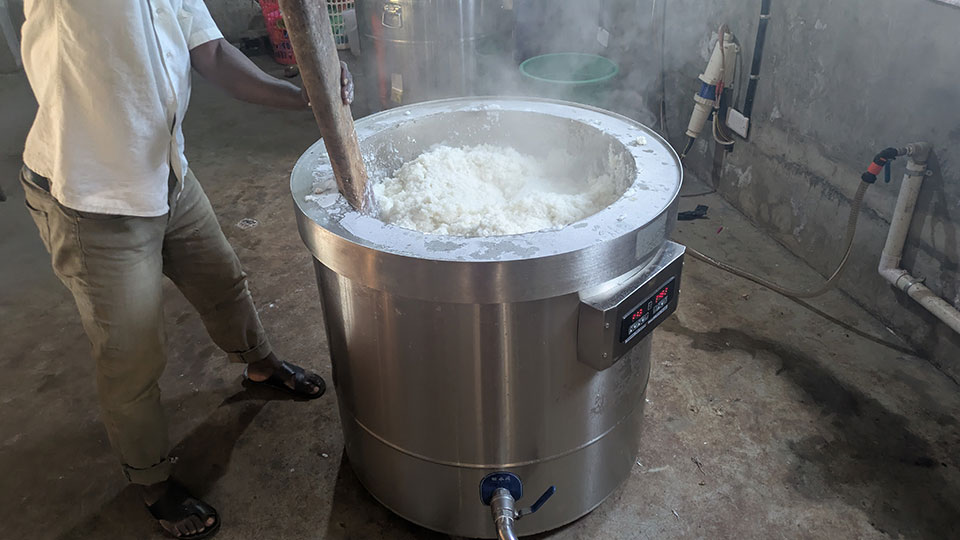
Its kitchen underwent a comprehensive refurbishment, including the installation of four electric pressure cookers, electrical and water infrastructure improvements and upgrades to the working environment.
The results provide a useful illustration of how clean cooking can create benefits beyond reducing smoke.
According to Loughborough University’s November 2026 update, the school has recorded an approximately 40 per cent reduction in daily energy costs. Before the transition, it spent around TZS 20,000 daily on firewood alone. Following the switch, electricity for cooking and other school needs costs approximately TZS 10,000–12,000 per day.
The savings have been redirected towards purchasing more food.
Cooking time has also reduced by approximately 55 per cent. The school’s daily cooking cycle, which previously took around five and a half hours, now takes approximately two and a half hours.
This improvement has helped the school prepare and serve meals more reliably.
The number of pupils receiving meals has also increased from approximately 340 to more than 450 daily, with school management attributing the improvement to better kitchen reliability and performance.
These figures are significant because they demonstrate how an energy intervention can influence the delivery of an essential school service.
The benefits are not limited to the school’s budget. Cooks who previously worked outdoors over firewood fires, exposed to smoke, heat and rain, now work inside a refurbished electric kitchen.
For workers who spend several hours preparing meals every day, improved working conditions represent an important social benefit.
Why This Is More Than an Environmental Project
The transition from firewood to electricity is often discussed as an energy or climate issue. However, its implications for schools demonstrate why clean cooking should also be considered a public health, education and social development priority.
Children’s nutrition and welfare
When schools spend less on cooking fuel, they may have more resources available for food purchases. At Kibasila, the reported savings have been redirected towards buying more food.
The increase in the number of pupils receiving meals also demonstrates how improved kitchen operations can support school feeding capacity.
This does not automatically mean that every electric cooking programme will improve nutrition. Food quality, availability, school budgets and the design of feeding programmes remain important. However, reducing the cost and time required to prepare meals can help schools manage their resources more effectively.
Healthier working conditions
School cooks are often overlooked in discussions about school infrastructure. Yet they perform essential work, frequently under difficult conditions.
Reducing exposure to smoke and excessive heat can improve the environment in which they work. Moving cooking indoors into properly designed kitchens can also provide greater protection from rain and other weather conditions.
The transition should therefore include appropriate ventilation, safe electrical installations, training and occupational health considerations.
Environmental protection
Reducing the use of firewood and charcoal can lower demand for biomass fuels and reduce emissions associated with their combustion.
Electric cooking can also support wider efforts to reduce dependence on polluting cooking fuels. However, the overall climate benefit depends partly on how the electricity is generated. In countries where electricity comes predominantly from fossil fuels, the emissions savings may be smaller than in systems with a cleaner electricity supply.
This is why clean cooking policies should be considered alongside renewable energy development and improvements in electricity infrastructure.
Better use of school resources
The Kibasila experience also demonstrates the financial potential of improving cooking efficiency.
Lower daily energy expenditure can create room for other priorities, particularly in schools operating with limited budgets.
However, the savings achieved at one school should not be assumed to apply everywhere. Electricity tariffs, appliance efficiency, meal sizes, school infrastructure and local fuel prices all influence the financial outcome.
The Challenges of Taking Electric Cooking to More Schools
Despite the benefits, expanding electric cooking across African schools will require more than distributing appliances.
The first challenge is electricity access and reliability.
Schools need a dependable power supply capable of supporting cooking equipment, particularly when large quantities of food must be prepared within limited periods. In communities where electricity supply is unreliable, institutions may need additional investments in grid connections, solar power, battery storage or other supporting infrastructure.
The second challenge is the initial cost of the transition.
Electric pressure cookers and other institutional cooking appliances require investment. Schools may also need new wiring, upgraded electrical connections, kitchen refurbishment and staff training.
For institutions already struggling to fund basic operations, these costs can become a significant barrier.
Financing arrangements will therefore be important. Governments, development institutions and private-sector partners can explore grants, concessional financing, appliance leasing and other models that reduce the initial financial burden on schools.
The MECS programme is already exploring different approaches to making the transition more affordable. In Tanzania, its second phase includes developing a proposed revolving Schools Trust Fund, while work in Uganda is examining more affordable electricity tariffs and carbon financing.
There is also the question of maintenance.
Electric cooking appliances need to remain functional over time. Schools require access to technicians, spare parts, repairs and replacement equipment. Without a reliable maintenance system, an expensive appliance could become unusable, forcing schools to return to traditional fuels.
This is why the development of local supply chains and technical skills should form part of any large-scale clean cooking programme.
The transition must also consider the types of food schools prepare, the number of pupils they serve and the cooking practices of local communities. Solutions should be selected according to actual institutional needs rather than assuming that one appliance or cooking system will work everywhere.
What Nigeria Can Learn from Tanzania and Uganda
The programme offers useful lessons for Nigeria, where clean cooking remains an important energy, environmental and public health issue.
Many households and institutions still depend on firewood and charcoal, while schools in rural and underserved communities can face significant infrastructure and funding constraints.
For Nigerian schools operating feeding programmes, the cost of preparing meals can be a major operational concern. Transitioning to more efficient cooking systems could potentially reduce fuel expenditure, improve kitchen conditions and support more reliable meal delivery.
However, Nigeria cannot simply replicate the Tanzanian model without considering its own electricity challenges.
Frequent power interruptions, electricity tariffs, differences in school infrastructure and the availability of suitable appliances could affect whether electric cooking is financially and operationally practical.
A school in an area with reliable electricity may benefit from electric pressure cookers, while another school with weak electricity infrastructure may require a different clean cooking solution.
This makes careful assessment essential.
Government authorities could begin by identifying schools with suitable electricity connections, large cooking requirements and significant spending on firewood or charcoal. Pilot programmes could then compare operating costs, cooking time, food output, maintenance requirements and emissions before wider expansion.
Nigeria could also explore partnerships with renewable energy companies, clean cooking businesses, development organisations and financial institutions to support the transition.
Importantly, the objective should not be to replace every traditional cooking system with electricity regardless of local conditions. It should be to help schools adopt the cleanest, safest and most affordable cooking options available to them.
The Role of Government and the Private Sector
Scaling clean cooking in schools will require coordinated action.
Governments have a responsibility to integrate clean cooking into education, energy and environmental policies. School infrastructure planning should consider not only classrooms and sanitation facilities but also the energy systems needed to prepare meals safely.
Education authorities can collect information on how much schools spend on cooking fuel, the number of meals prepared daily and the condition of existing kitchens. This would help identify where cleaner cooking investments could deliver the greatest benefits.
Development partners can provide technical support, finance pilot projects and help governments evaluate their results.
The private sector also has an important role to play.
Energy companies, appliance manufacturers, renewable energy providers and financial institutions can help develop affordable products and financing models suited to institutional cooking.
Businesses involved in clean cooking should also consider after-sales support, product durability, energy efficiency and access to spare parts. Supplying appliances without building the systems required to maintain them will not create a sustainable transition.
Corporate social responsibility programmes could support school kitchen upgrades, clean energy installations and training for cooks, particularly in underserved communities.
However, such interventions should be designed around clearly defined needs and measurable outcomes. The number of appliances donated is not enough to establish impact. What matters is whether schools continue to use them, whether operating costs improve and whether children and workers experience lasting benefits.
Building Better School Feeding Systems Through Clean Energy
The experience of Kibasila Primary School demonstrates that sustainability interventions can deliver practical benefits when they respond to everyday institutional challenges.
A change in cooking technology has helped the school reduce its reported energy costs, shorten meal preparation time, increase the number of pupils receiving meals and improve the working environment for its cooks.
The wider programme in Tanzania and Uganda is an opportunity to test how these benefits can be extended to more schools and supported by financing, infrastructure and technical capacity.
There are still challenges to address, particularly electricity reliability, upfront costs, maintenance and the need to adapt solutions to local conditions. But the initiative shows that clean energy can contribute to social development in ways that extend beyond electricity access.
For African countries, the lesson is clear: school feeding, clean energy, environmental protection and public health should not be treated as separate development priorities.
A school kitchen is an important part of the infrastructure that supports children’s welfare and education. Making it safer and more efficient can improve how schools use limited resources while reducing the environmental and health costs associated with traditional cooking fuels.
The real measure of a clean cooking transition is not simply how many schools replace firewood with electricity. It is whether children receive meals more reliably, workers enjoy safer conditions, schools manage their budgets more effectively and the environmental benefits can be sustained over time.
If Africa is serious about building healthier, more inclusive and sustainable education systems, the energy used to prepare school meals deserves far more attention.
[give_form id="20698"]