Ghana’s Waste Crisis: How Global Fashion and Electronic Consumption Are Endangering Communities and the Environment
 ONYINYECHI NWAIGBA
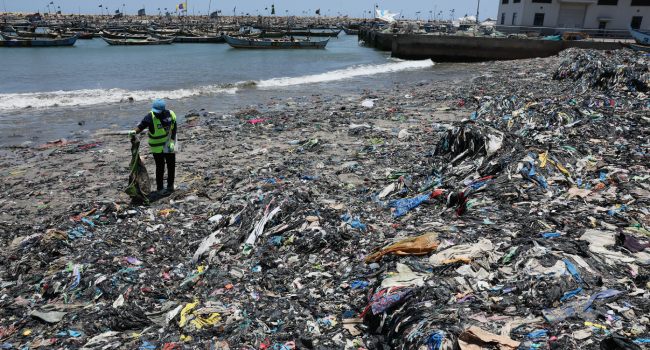
Millions of used garments and discarded electronic devices enter Ghana every year, creating livelihoods for informal traders and recyclers but leaving communities to contend with mounting waste, pollution and health risks. As the country begins a major cleanup of Agbogbloshie, questions are growing about who should take responsibility for the environmental cost of global consumption.
A discarded television, an old refrigerator or a piece of clothing that no longer sells may appear to have little value once it leaves its original owner. But for communities that receive, sort, dismantle, burn or dispose of these materials, the consequences can extend far beyond the waste itself.
In Accra, Ghana, the Agbogbloshie area has become a striking example of this challenge. For years, the area around the Korle Lagoon has been associated with the accumulation and informal processing of electronic waste, scrap metals, discarded clothing and other materials. What provides income for thousands of people has also created serious environmental concerns, exposing workers and nearby residents to potentially harmful substances.
The situation has attracted renewed attention following a report on the environmental and public health concerns surrounding the area. Excavators are now removing accumulated rubbish as part of a government-led cleanup, while environmental campaigners are calling for stronger controls on the international trade in unusable clothing and electronic waste.
At the centre of the issue is a difficult contradiction: global consumption creates enormous quantities of unwanted products, but the environmental and health consequences of disposing of them are often experienced by communities with limited waste-management infrastructure and fewer resources to manage the risks.
For Ghana, the challenge is not simply removing accumulated rubbish. It is addressing the systems that allow waste to move across borders, protecting the people whose livelihoods depend on recovering valuable materials and ensuring that environmental recovery does not leave vulnerable communities worse off.
The Hidden Waste Behind the Global Fashion Industry
The second-hand clothing trade is an important part of Ghana’s economy. Markets such as Kantamanto in Accra support traders, transporters, tailors, repairers, recyclers and other small businesses whose livelihoods depend on the movement and resale of used garments.
For many consumers, second-hand clothing also provides access to affordable fashion at a time when purchasing new garments may be financially difficult.
However, the growing volume of imported clothing is creating a serious waste-management challenge.
According to Greenpeace Africa, approximately 15 million used garments enter Ghana every week. While traders recover and resell clothing that remains usable, a substantial proportion cannot find buyers or be reused.
The organisation estimates that roughly half of the garments entering the country ultimately become what it describes as “dead waste”, ending up in dumpsites, beaches, open spaces or being burned.
This is a significant problem for a country of approximately 35 million people, particularly when waste collection and recycling systems are already under pressure.
The issue is not that every second-hand garment imported into Ghana is unwanted. Many pieces remain useful and provide affordable options for consumers. The concern is that the trade can also become a channel through which large volumes of low-quality, damaged or unusable clothing are transferred into countries that must then manage their disposal.
Greenpeace’s investigations have also raised concerns about the materials used in these garments. In its 2024 investigation, the organisation found that 89 per cent of 164 discarded garments tested contained synthetic fibres, including polyester.
Unlike natural fibres, many synthetic materials do not readily biodegrade. As they break down, they can release microplastic particles into the environment. When burned, some synthetic textiles can also release hazardous pollutants.
This means the environmental cost of a garment does not necessarily end when its first owner stops wearing it. Its materials, disposal route and the conditions under which it is handled can continue to affect communities long after it has left the original market.
Electronic Waste Adds Another Layer to the Crisis
The challenge extends beyond clothing.
Discarded televisions, refrigerators, computers, mobile phones, batteries and other electronic equipment contribute to Ghana’s growing waste burden.
Electronic waste, commonly called e-waste, contains valuable recoverable materials such as copper, aluminium and other metals. This makes discarded equipment an important source of income for informal collectors and recyclers.
At Agbogbloshie, workers dismantle appliances and recover materials that can be sold. Some devices are repaired or refurbished, while others are broken down for valuable components.
However, the methods used to recover these materials can be dangerous.
In the absence of appropriate equipment and formal recycling facilities, workers may burn insulated cables to extract copper, dismantle appliances by hand or handle batteries and other components without adequate protection.
These activities can release lead, mercury, cadmium, soot and other hazardous substances into the air, soil and surrounding water systems.
A Greenpeace policy brief published in March 2026 estimated that Ghana receives approximately 150,000 tonnes of electronic waste annually, including legally and illegally imported materials. It also highlighted the dependence of tens of thousands of people on informal electronic waste recycling in Accra.
The environmental challenge is therefore closely connected to the economic realities of the people working within the sector.
For many collectors, the materials recovered from discarded electronics provide daily income. Abandoning these activities without providing safer alternatives could remove an important source of livelihood while leaving the underlying waste problem unresolved.
The more sustainable approach is to improve how electronic products are collected, dismantled, repaired and recycled, with proper environmental controls and safer working conditions.
The Human Cost: When Waste Becomes a Public Health Concern
Behind the environmental statistics are people who live and work in close proximity to accumulated waste.
Informal waste collectors are particularly vulnerable because their daily activities can involve direct contact with hazardous materials, smoke, contaminated dust and sharp objects.
Workers who burn cables or dismantle electronic devices without protective equipment may be exposed to harmful substances through inhalation, skin contact and accidental ingestion.
The problem also extends to people who do not work directly with waste. Residents, traders, food sellers and children living or operating around contaminated sites may experience exposure through polluted air, soil, water and food pathways.
A particularly troubling account in the recent report involved a 14-year-old girl selling bottled water near the dumpsite. She described frequent coughing and said she sometimes noticed blood when spitting.
Her experience illustrates the human vulnerability surrounding informal waste activities, although an individual account cannot establish that pollution caused a specific medical condition.
Indeed, epidemiologist Reginald Quansah of the University of Ghana noted that no study had yet established direct links between specific diseases and Agbogbloshie’s pollution. However, he warned that the cumulative contamination presents serious concerns even where precise causal relationships remain unquantified.
This distinction is important. Public health risks should be investigated through credible research, environmental monitoring and medical assessment rather than unsupported claims about specific illnesses.
Nevertheless, the absence of a confirmed disease-specific link does not mean the exposure risks should be ignored.
Research published on contamination at Agbogbloshie has identified elevated concentrations of potentially toxic metals in soils around electronic waste dismantling and burning areas. Other research has documented the occupational risks associated with informal recycling practices.
Protecting the people who live and work around these sites therefore requires preventive action, access to healthcare, safer work practices and effective environmental monitoring.
Who Should Take Responsibility for the Waste?
One of the most important questions raised by Ghana’s waste crisis concerns responsibility.
When clothing or electronic products are discarded in wealthy consumer markets and eventually arrive in countries with limited waste-management capacity, the environmental burden can shift away from the places where consumption and disposal decisions originated.
Greenpeace Africa has described this pattern as a form of waste colonialism, arguing that countries such as Ghana are being left to manage the environmental consequences of excessive production and consumption elsewhere.
The organisation has called on the Ghanaian government to strengthen controls on unusable second-hand clothing imports rather than impose a blanket ban on the entire trade.
This distinction matters because second-hand clothing supports thousands of livelihoods. A complete restriction could hurt traders, transporters and other small businesses that depend on the market.
The more targeted response is to ensure that imported clothing meets reasonable quality standards and can realistically be reused or resold.
Fashion companies also have a responsibility to examine what happens to their products after consumers no longer want them.
This includes producing more durable clothing, reducing unnecessary overproduction, improving repair and reuse systems, supporting textile recycling and contributing to the management of waste generated by their products.
The same principle applies to electronics manufacturers. Products should be designed with durability, repairability and responsible end-of-life management in mind.
Extended Producer Responsibility (EPR) is one policy approach that can help achieve this. It places greater responsibility on producers for managing the environmental impact of their products throughout their lifecycle, including collection, recycling and disposal.
However, these responsibilities must translate into practical systems, adequate funding and measurable results rather than remaining voluntary commitments or corporate sustainability statements.
Ghana’s Cleanup: An Important Start, but What Happens Next?
In September 2026, Ghana’s President, John Dramani Mahama, launched a three-month cleanup operation targeting approximately one million tonnes of accumulated waste at Agbogbloshie.
The operation involves heavy equipment removing rubbish and transporting it to a landfill approximately 50 kilometres away, where the waste is intended to be compacted and covered under environmental safeguards.
The initiative is an important response to the scale of the problem. Removing accumulated waste can help address immediate environmental hazards and create opportunities to restore affected areas.
However, the success of the operation will depend on what happens after the cleanup.
If the systems responsible for receiving, sorting and disposing of waste remain inadequate, similar problems could re-emerge.
Ghana therefore needs stronger waste collection and recycling infrastructure, improved import controls, effective enforcement of environmental regulations and investment in facilities capable of safely processing electronic and textile waste.
The country must also ensure that cleanup activities do not simply move environmental problems from one location to another.
Landfills require proper management, monitoring and safeguards to prevent pollution from spreading into surrounding communities and water systems.
A sustainable waste-management strategy must address the entire chain, from importation and consumption to collection, reuse, recycling and final disposal.
Protecting Informal Workers While Building a Circular Economy
Another important part of Ghana’s response is the proposed integration of informal waste collectors and tricycle hauliers into a more formal waste-management system.
Local Government Minister Mahama Ayariga has indicated that the government intends to include these workers in the recycling process, with an ambition to create up to 20,000 permanent jobs in waste management and the circular economy.
If implemented effectively, this could provide an important opportunity to improve working conditions while recognising the economic contribution of people who have long operated within the informal recycling sector.
Informal waste workers perform activities that are essential to resource recovery. They identify reusable materials, separate valuable components and return materials to production chains.
However, their work often takes place without adequate protective equipment, formal recognition, health support or reliable income protection.
Formalisation should therefore not simply mean removing informal workers from their existing activities. It should create safer and more stable opportunities for them to participate in organised recycling systems.
This may include access to protective equipment, training, designated collection and dismantling facilities, fair payment arrangements, occupational healthcare and opportunities to participate in cooperatives or licensed recycling businesses.
Women and young people working around waste sites also require particular attention. Children should be protected from hazardous work and supported to remain in education rather than being drawn into activities that expose them to harmful materials.
The transition to a circular economy will only be inclusive if the people who currently depend on waste recovery are part of its development.
The Business Opportunity in Responsible Waste Management
Ghana’s waste crisis also reveals an economic opportunity.
Textile recycling, repair, refurbishment, material recovery and responsible electronic waste processing can support new businesses and employment opportunities.
Discarded materials do not necessarily have to become environmental liabilities. With the right systems, some can be recovered and returned to productive use.
For example, reusable garments can be repaired, redesigned or resold. Suitable textile waste can be processed into materials for other applications, while electronic waste can provide recoverable metals for manufacturing.
Achieving this requires investment in technology, skilled workers, collection systems, recycling facilities and stronger connections between waste generators and legitimate recycling businesses.
Financial institutions and development partners can also support businesses developing environmentally responsible solutions, particularly small and medium-sized enterprises working in repair, reuse and material recovery.
However, recycling should not become an excuse for continuing to produce and import excessive quantities of unusable products.
Reducing waste at the source remains essential. Products that are more durable, repairable and responsibly designed reduce the pressure on recycling and disposal systems.
For companies, this represents an opportunity to move beyond treating waste as a problem that appears after a product has been sold. It requires considering environmental responsibility from product design and production through distribution, use and disposal.
Beyond Agbogbloshie: A Global Responsibility
Ghana’s experience reflects a wider challenge in the international waste trade.
As consumption increases and products are replaced more frequently, countries must contend with growing volumes of discarded clothing, electronics, plastics and other materials.
The environmental consequences are not distributed equally. Countries with stronger waste-management infrastructure may be better positioned to regulate disposal and recycling, while communities in developing economies can face greater pressure from imported waste and limited resources.
This raises important questions about international trade, producer responsibility and environmental justice.
Countries exporting second-hand products must ensure that goods sent abroad are genuinely suitable for reuse rather than using the second-hand market as a convenient route for disposing of unwanted materials.
Manufacturers must also take greater responsibility for the durability and end-of-life management of their products.
For Ghana, stronger border inspections, transparent import standards and effective environmental enforcement will be important. International cooperation will also be needed to improve waste tracking and prevent the illegal movement of hazardous materials.
The responsibility cannot rest solely on the communities receiving the waste.
The Real Measure of Ghana’s Waste Recovery
The cleanup at Agbogbloshie offers Ghana an opportunity to address an environmental problem that has persisted for years. But removing rubbish is only one part of a much larger responsibility.
The real measure of success will be whether the country can prevent the continued accumulation of unusable products, protect workers from hazardous exposure, improve recycling infrastructure and restore the environment without destroying the livelihoods of people who depend on waste recovery.
Fashion and electronics companies must also recognise that their responsibilities do not end when products leave the factory or when consumers discard them.
For communities around Agbogbloshie, environmental recovery must mean more than cleaner surroundings. It must also mean safer working conditions, better protection for children, access to healthcare and opportunities to earn a living without being exposed to unnecessary risks.
Ghana’s experience sends an important message to businesses and governments everywhere: the true cost of consumption cannot be measured only by the price of products sold or the profits generated.
It must also account for what happens when those products become waste, who bears the consequences and who is responsible for managing them.
A sustainable economy is not one that simply produces, sells and consumes more. It is one that takes responsibility for the full lifecycle of what it creates, protects the people involved and ensures that economic activity does not leave communities paying the price for everyone else’s consumption.
[give_form id="20698"]