
 ONYINYECHI NWAIGBA

As Nigerian companies increasingly publicise their corporate social responsibility and sustainability activities, questions about measurable outcomes, independent verification and accountability are becoming more important than ever.
Corporate Social Responsibility (CSR) has become a familiar feature of corporate communication in Nigeria. From scholarship programmes and healthcare interventions to environmental campaigns, community development projects and skills acquisition initiatives, businesses are increasingly highlighting their contributions to society.
For many organisations, these activities demonstrate a commitment to responsible business practices and an understanding that their obligations extend beyond generating revenue.
However, as CSR and sustainability reporting become more prominent, an important question deserves greater attention: Are companies making a measurable difference, or are they simply getting better at reporting the activities they undertake?
The distinction matters. A company can organise several community outreach programmes, distribute relief materials, sponsor educational initiatives and publish impressive sustainability reports without necessarily demonstrating whether these interventions have produced lasting improvements in the lives of their intended beneficiaries.
Corporate responsibility should be about more than documenting what an organization has done. It should establish what changed because the organization intervened, who benefited, how significant the change was and whether those benefits can be sustained.
The Problem with Measuring Activities Instead of Impact
One of the recurring challenges in CSR reporting is the tendency to confuse activities with outcomes.
Consider a company that reports training 500 young Nigerians in digital skills. The figure communicates the scale of the programme, but it does not establish how many participants completed the training, acquired practical competencies, secured employment or started businesses using the knowledge gained.
Similarly, a company may report planting 10,000 trees as part of an environmental sustainability initiative. While the activity represents an intervention, the actual environmental benefit depends on additional factors, including how many trees survive, whether they are maintained and what ecological improvements result from the project.
These distinctions are important because outputs and outcomes answer different questions.
Outputs explain what an organization delivered. Outcomes examine the changes resulting from those activities. Impact goes further by considering the broader and longer-term effects of an intervention.
Without this distinction, CSR reporting risks becoming a record of corporate activities rather than a meaningful assessment of social and environmental progress.
For businesses, the implication is clear: the number of projects completed or beneficiaries reached should not be the only measure of success. Organisations must also develop ways to assess whether their interventions address the problems they were designed to solve.
Why Corporate Sustainability Claims Need Evidence
Sustainability reporting is intended to help stakeholders understand how businesses manage their environmental, social and governance responsibilities. However, the credibility of such reporting depends heavily on the quality of the information presented.
Investors, regulators, employees, customers and host communities increasingly need to understand the relationship between corporate commitments and actual performance.
A company that announces significant investments in community development should be able to explain the objectives of those investments, the resources committed, the results achieved and the evidence supporting its claims.
This requires more deliberate approaches to data collection, monitoring and evaluation.
It also means acknowledging that not every intervention will achieve its intended objectives. Some projects may encounter implementation challenges, reach fewer beneficiaries than expected or produce results that are difficult to sustain. Credible reporting should make room for these realities rather than presenting every initiative as an unquestionable success.
When sustainability communication focuses exclusively on positive announcements, it becomes difficult for stakeholders to distinguish meaningful progress from promotional messaging.
This is one reason transparency must remain central to corporate responsibility. The credibility of a company’s sustainability commitments should be reflected not only in what it chooses to celebrate but also in how honestly it evaluates its performance.
The Importance of Independent Assessment
Although companies have a responsibility to monitor and report their own activities, independent assessment can strengthen the credibility of the information being presented.
An external assessment provides an additional perspective on corporate performance by examining available evidence, evaluating reported contributions and considering whether the claims made are supported by verifiable information.
This is particularly important in an environment where sustainability has become an increasingly visible part of corporate positioning.
Independent assessment can help distinguish between organisations that simply communicate CSR activities and those that demonstrate a more consistent commitment to responsible business practices.
It can also encourage healthy competition among companies, motivating them to improve their reporting standards, strengthen their social investments and pay closer attention to the actual outcomes of their interventions.
For Nigeria, developing a stronger culture of independent assessment could contribute to more credible corporate sustainability practices. It would also give stakeholders a better basis for understanding how businesses are responding to social, economic and environmental challenges.
However, assessment must be supported by clear methodologies, credible evidence and consistent evaluation standards. The objective should not simply be to produce rankings or recognize organisations, but to encourage better corporate behavior and meaningful improvements.
What Should Nigerian Companies Be Measuring?
Moving from activity-based reporting to impact measurement requires businesses to ask more meaningful questions about their interventions.
For education programmes, companies should consider whether their investments improve access to learning, strengthen educational outcomes or create opportunities for beneficiaries beyond the duration of a project.
For youth empowerment initiatives, the focus should extend beyond the number of participants trained to include employment opportunities, business creation, income improvements and the practical application of acquired skills.
In healthcare, organisations should examine whether their interventions improve access to services, strengthen health awareness or contribute to better outcomes for the communities they serve.
Environmental programmes should similarly be assessed through measurable indicators, such as emissions reductions, resource efficiency, waste management improvements, biodiversity protection and the long-term sustainability of environmental interventions.
The indicators will differ across sectors and projects, but the underlying principle remains the same: companies should be able to connect their investments and activities to identifiable results.
This also requires businesses to engage the communities they intend to serve. Beneficiaries should not simply appear as figures in sustainability reports. Their experiences, needs and feedback should inform how projects are designed, implemented and evaluated.
After all, an intervention cannot be considered successful simply because an organization has completed its planned activities. Its relevance must also be assessed against the needs and experiences of the people it was designed to benefit.
From Corporate Communication to Corporate Accountability
There is nothing inherently wrong with companies communicating their CSR and sustainability activities. Public reporting helps stakeholders understand corporate priorities, creates awareness about social interventions and encourages other organisations to participate in development efforts.
The problem arises when communication becomes more important than the impact itself.
A responsible business culture requires companies to treat transparency, measurement and accountability as integral parts of their operations rather than additional activities undertaken when preparing annual reports or publicity materials.
This means establishing clear objectives before launching interventions, collecting reliable data throughout implementation, evaluating results and communicating findings honestly.
It also means recognising that responsible business is an ongoing commitment. A single community project or environmental campaign cannot, on its own, establish a company’s overall sustainability performance.
Businesses must demonstrate consistency in how they treat employees, engage communities, manage environmental risks, conduct their operations and respond to the broader consequences of their decisions.
Ultimately, the credibility of corporate responsibility will depend on the relationship between what organisations promise, what they implement and what they can demonstrate.
SISA 2026: Advancing the Conversation on Impact and Accountability
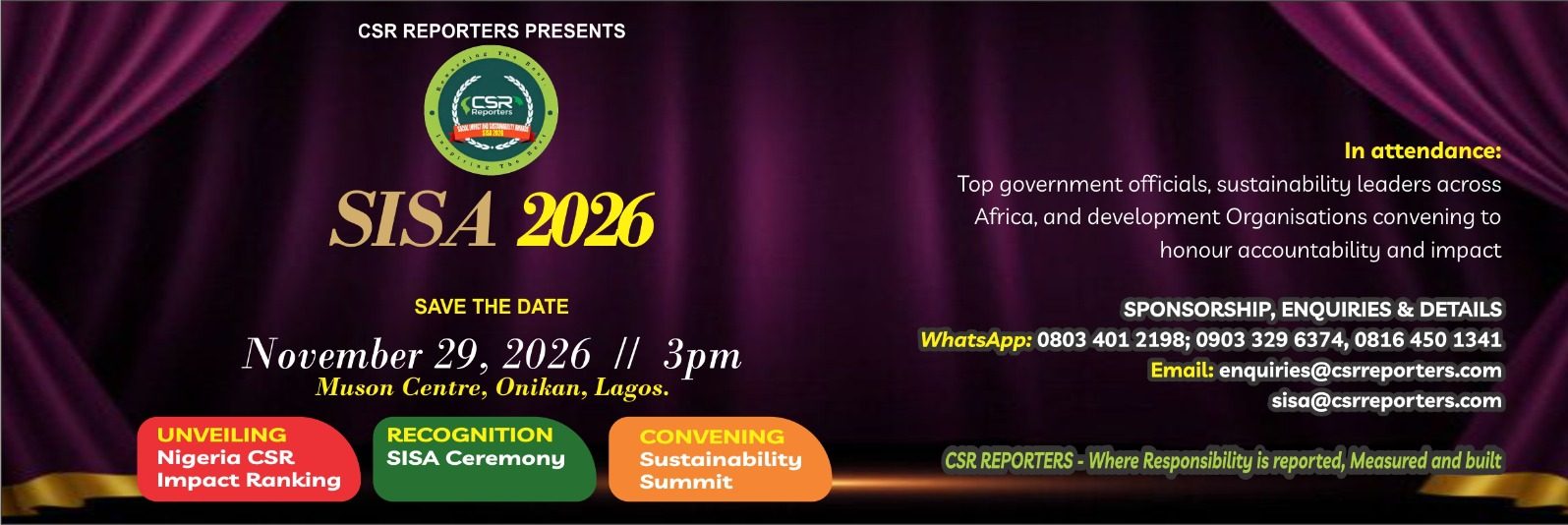
The need to strengthen how corporate impact is measured and recognized is among the conversations that the Social Impact and Sustainability Awards (SISA) 2026 seeks to advance.
A major highlight of this year’s event will be the unveiling of the Nigeria CSR Impact Ranking, an independently verified assessment examining corporate responsibility and impact across Nigerian companies.
With more than 300 companies considered, the ranking seeks to provide a structured perspective on corporate contributions, encouraging organisations to move beyond self-reported achievements towards greater transparency and accountability.
The unveiling will form part of SISA 2026, which will also feature the Social Impact and Sustainability Awards and the Africa Sustainability Summit.
The summit, themed “From Impact to Accountability: Defining Credible Sustainability in Africa,” will provide a platform for discussions on the standards, practices and expectations needed to strengthen responsible business across the continent.
Through recognition, assessment and industry conversations, SISA seeks to encourage a business environment where sustainability commitments are supported by evidence and corporate contributions can be meaningfully evaluated.
The event will hold on November 29, 2026, at the MUSON Centre, Onikan, Lagos, bringing together business leaders, sustainability professionals, CSR practitioners and other stakeholders.
The Real Measure of Responsible Business
The question of whether companies are genuinely making an impact cannot be answered by the number of sustainability reports published, awards received or community projects announced.
It requires closer attention to the outcomes of corporate interventions, the credibility of reported information and the extent to which businesses are willing to be accountable for their contributions.
For Nigerian companies, this is an opportunity to strengthen the role of CSR and sustainability in business decision-making.
The objective should not simply be to have more projects to report, but to create initiatives that respond to real needs, produce measurable results and contribute to lasting improvements.
Because responsible business is not defined by how much an organization says it has done. It is demonstrated by what its actions actually achieve.
SISA 2026: Rewarding the Best, Inspiring the Rest.
Event details:
- Date: November 29, 2026
- Time: 3:00 PM
- Venue: MUSON Centre, Onikan, Lagos
- Enquiries: sisa@csrreporters.com