Greenwashing Risks for African Exporters: Navigating Two Different Sustainability Rulebooks
 Eche Munonye, Founder and Chief Strategist, CSR Reporters
Greenwashing Risks for African Exporters: Navigating Two Different Sustainability Rulebooks
A Nigerian company writes a sustainability claim on its packaging, its website or its investor presentation. At home, few regulators will question it. Abroad, in the markets where its goods are sold and its capital is raised, the same sentence may be treated as a potential legal liability. The company has not changed. The rulebook has.
That is the heart of the greenwashing problem for African firms in 2026. Around the world, the regulation of environmental claims is diverging. In the United States, federal enforcement has eased, while private litigation and state-level action continue. In the European Union, the direction is toward stricter scrutiny. In many African jurisdictions, formal rules on green claims are thin, and enforcement is thinner still. Companies that operate in or sell to several of these worlds at once face a patchwork where the safest assumption is that the strictest standard will eventually apply to them.
This article examines that divergence, explains why it matters to African exporters and brands, and sets out what credible practice looks like when the law is uneven but the reputational stakes are not.
What greenwashing is, and why it persists
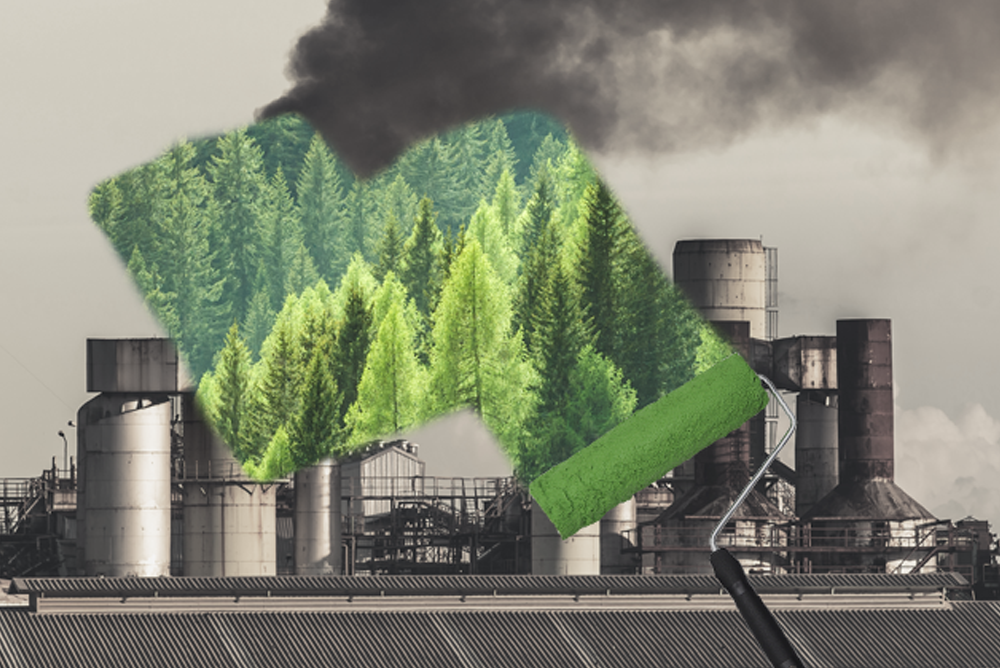
Greenwashing is the practice of exaggerating or fabricating environmental or sustainability credentials. It takes many forms: vague slogans such as “eco-friendly” or “green” with no substantiation; claims of carbon neutrality based on questionable offsets; highlighting one minor environmental improvement while ignoring a larger harm; selective use of data; or labels and certifications that the company has invented or that carry little meaning.
It persists for an uncomfortable reason: it works, at least in the short term. Consumers, investors and procurement teams increasingly want to buy from responsible companies. Verifying such claims is difficult and expensive. When the cost of making a claim is low and the cost of checking it is high, exaggeration becomes the rational choice for those who are not worried about being caught.
Regulators have been catching up. The central insight behind recent enforcement is simple: sustainability claims should be treated with the same seriousness as financial statements. If a company states a figure or a commitment publicly and people rely on it to make decisions, the claim must be accurate and capable of substantiation.
The divergence in detail
The global picture is not uniform, and it helps to understand the differences.
In the United States, the federal government has backed away from ESG policy, and federal enforcement of climate and sustainability disclosure has waned. The SEC has disbanded its dedicated ESG enforcement task force. But the retreat has not ended accountability. Private litigation over sustainability claims in marketing and labelling continues to challenge corporate statements, and state attorneys general and legislatures are filling the gap. Legal commentators describe a shift of greenwashing and carbon-claim regulation from the federal to the state level, which means that a company may face different obligations depending on where it sells.
In the European Union, the direction is firmer. Even as the bloc simplified its corporate reporting regime, it has maintained and extended rules intended to curb misleading environmental claims, including consumer-protection measures aimed at generic or unsubstantiated green marketing and rules on how carbon offsets may be used in advertising. Commentators describe enforcement as intensifying in the EU, in contrast to the American rollback. For companies with significant sales in Europe, the question is not whether claims will be examined but when.
In Canada, a different dynamic has appeared. An amendment to the Competition Act, introduced through Bill C-59, aimed to clamp down on greenwashing. Industry groups warned that uncertainty over the new rules could discourage companies from promoting genuine net-zero efforts, and some businesses scaled back reporting citing the legislation. This illustrates a point that matters for all regulators: unclear rules can chill honest communication as well as deter dishonest communication.
Across much of Africa, the picture is that of emerging regulation and limited enforcement. Securities regulators and financial reporting bodies have begun to set expectations for sustainability disclosure. Advertising and consumer-protection frameworks exist, though their application to environmental claims remains underdeveloped. In practice, many green claims in African markets are tested less by regulators than by journalists, civil society, competitors and, increasingly, international partners.
Why this is a problem for African firms specifically
Three features of the African business landscape make the divergence especially significant.
First, many African firms sell, borrow or raise equity abroad. Exporters of agricultural products, minerals, energy and manufactured goods sell into jurisdictions with stricter claim rules. Companies seeking international funding present sustainability credentials to investors who have their own legal exposure and expect substantiation. A claim that passes unnoticed at home can be damaging when it appears in a prospectus or on a European supermarket shelf.
Second, African firms are part of global supply chains. A multinational that makes a sustainability claim about its product may rely on data from its African suppliers. If that data is weak or inflated, the multinational carries the legal risk and passes the pressure down the chain. Suppliers who cannot substantiate their numbers become liabilities.
Third, trust in corporate claims is already fragile. In many African markets, communities have seen splendid corporate announcements that did not match what happened on the ground. When greenwashing is discovered, it deepens a scepticism that already exists, and it harms honest companies as well as dishonest ones.
Greenwashing’s quieter twin: greenhushing
There is a further risk that deserves attention. Where rules are uncertain, some companies react by saying nothing. This “greenhushing” can feel prudent, but it carries costs. It deprives genuinely responsible companies of credit. It leaves stakeholders unable to tell leaders from laggards. And it can turn sustainability into something done privately and defensively rather than openly and proudly.
The solution is not to say less. It is to say only what can be proven, and to prove it well. The cure for greenwashing is substantiation, not silence.
The anatomy of a defensible claim
Across jurisdictions, regulators and courts tend to ask similar questions of a green claim. African companies can use these as a practical test.
Is it specific? “Reduced Scope 1 and 2 emissions at our Ikeja plant by a stated percentage between two named years” is a claim. “Committed to a greener tomorrow” is not. Vague language is both ineffective and risky.
Is it measurable and baselined? A reduction needs a starting point, a method and a period. Claims without a baseline cannot be verified.
Is it independently verified? Third-party assurance transforms a claim from an assertion into evidence. The more consequential the claim, the more important independent checking becomes.
Is it complete? Highlighting a positive while omitting a material negative is misleading even if every individual statement is true. A company that advertises recycled packaging while ignoring a major pollution issue invites exactly the scrutiny it hopes to avoid.
Is it honest about offsets? Carbon credits are a legitimate tool, but marketing a product as “carbon neutral” because of offsets, without clear explanation of the quality and role of those credits, is among the most contested claims in the market.
Is it current? A claim based on a project completed years ago, or on a target that has since been abandoned, becomes misleading with time. Claims need maintenance.
The role of data and records
Behind every defensible claim sits a data trail. When regulators, investors or journalists challenge a statement, the company’s answer is only as good as its records. That means keeping documentation on how figures were calculated, who reviewed them, what assumptions were used and what changed over time.
For many African companies, this is the real work. The difficulty is rarely in writing the claim; it is in building the measurement and record-keeping systems that make the claim true and demonstrable. Companies that invest in this capability early gain a double benefit: protection against legal and reputational risk, and the credibility that comes with a transparent evidence base.
What African regulators can do
The divergence also poses a challenge for domestic regulators. If African markets become known as places where green claims are rarely tested, honest companies will suffer, because buyers abroad will discount all claims from the region. Credibility is collective.
Regulators can respond in several ways. They can clarify, in plain guidance, what substantiation is expected for environmental claims in advertising and investor communications. They can coordinate across agencies, so that securities, consumer-protection, advertising and environmental authorities are not working in silos. They can build capacity for assurance and verification within the country. And they can aim for proportionality, with clearer expectations for larger and listed companies and workable guidance for smaller firms.
Crucially, clarity helps both sides. The Canadian experience shows that vague rules can chill honest communication. African regulators have the opportunity to design guidance that discourages deception without discouraging transparency.
What investors, buyers and media should do
Private actors are not bystanders. Investors and lenders can build substantiation requirements into their due diligence and covenants. Corporate buyers can require suppliers to provide evidence rather than assurances. Media organisations, including independent platforms, can test corporate claims systematically, giving credit where it is deserved and publishing questions where it is not.
That last function deserves emphasis. In environments where regulatory enforcement is limited, independent scrutiny is one of the few mechanisms that raises the cost of exaggeration. A company that knows its claims will be examined by informed journalists and analysts will think harder before making them.
A practical checklist for African boards
Boards and executives who want to reduce greenwashing exposure can take several concrete steps.
Audit existing claims across packaging, websites, annual reports, social media and investor decks, and remove or correct anything that cannot be substantiated.
Create an internal sign-off process requiring evidence for any new environmental or social claim before publication, with legal, sustainability and finance functions involved.
Assign clear responsibility at senior level, so that someone is accountable for the accuracy of public sustainability statements.
Obtain external assurance for the most material claims, particularly those aimed at investors, lenders and foreign buyers.
Train marketing and communications teams in the difference between aspiration and achievement, and in the language of defensible claims.
Monitor jurisdictions of interest, since rules that apply to the company’s export markets and capital sources are changing.
The standard that will win
It is tempting to see the global patchwork as a compliance headache to be managed market by market. A wiser approach is to adopt the strictest reasonable standard everywhere. A company that substantiates its claims to European standards does not need to fear American litigation, and it certainly does not need to fear its home regulator. More importantly, it earns something that no rulebook can grant: credibility.
When rules diverge, trust becomes the common currency. A claim is only as valuable as the confidence others place in it, and confidence is built through evidence, consistency and willingness to be checked. African exporters and brands that understand this will not treat greenwashing law as a threat to be dodged. They will treat it as a specification for how to be believed.
The rulebooks may differ. The question the market asks is the same everywhere: can you prove it?
[give_form id="20698"]