csrreporters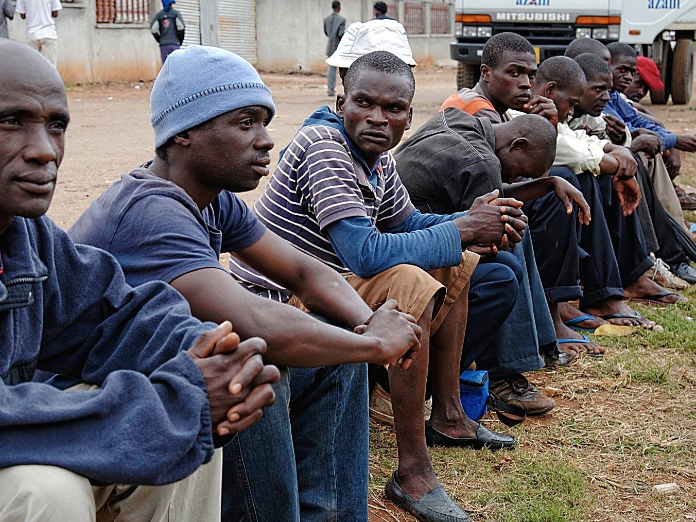
A Republic of Hunger, A People of Hope
On the 27th anniversary of Nigeria’s democracy, the gap between the ballot and the table has never felt wider — and yet, the spirit of the people has never felt sturdier.
Eche Munonye
Today, Nigeria marks twenty-seven years of unbroken civilian rule — the longest stretch of democratic government in our history. There will be parades. There will be speeches about resilience, sacrifice, and the dividends of democracy. Flags will fly in Abuja, and somewhere a band will play the anthem with full ceremonial pride.
But walk away from the podiums, and a different conversation is happening. In the markets, in the queues, in the small rented rooms where families are deciding which meal to skip today so that there is something left for tomorrow, the question is not how to celebrate democracy. The question is simpler, and far more uncomfortable: who, exactly, has this democracy been working for?
“A democracy that cannot feed its people, and cannot guarantee they will wake up safe, is a democracy that has confused the form of government with its purpose.”
The Politics of Power, and the Politics of Survival
There are, increasingly, two Nigerias running on parallel tracks. One is consumed by the politics of power — the realignments, the defections, the early jostling for 2027, the permanent campaign that never seems to pause for governance. The other is consumed by the politics of survival — the daily arithmetic of transport fares against income, of school fees against rent, of whether the road to the farm is safe to travel this week.
These two Nigerias rarely meet. And on a day set aside to honour the social contract between leaders and the led, that distance is the story that matters most.
The Hunger That Hides in Plain Sight
Hunger in Nigeria today is not always the hunger of headlines — the visible famine, the dramatic images. More often, it is the quiet hunger: the mother who has learned to stretch one pot of soup across two days, the civil servant whose salary now disappears by the third week of the month, the trader whose profit margins have been eaten alive by the cost of simply getting goods to market. It is a hunger measured not in statistics alone, but in shrinking portions, skipped breakfasts, and children sent to school on empty stomachs because there was nothing left to give them.
This is the texture of the cost-of-living crisis that economic indicators capture only in part. And it sits, uneasily, alongside official narratives of reform and recovery — narratives that may be true in the aggregate, but that have not yet reached the kitchen table.
The Insecurity That Has Become Routine
In parts of the North West and North Central, banditry and kidnapping have moved from emergency to routine — a grim normal in which farmers weigh the risk of going to their fields against the certainty of going hungry if they do not. In the South East and parts of the Middle Belt, communities continue to bury the casualties of clashes that rarely make national news for more than a day. Families have been displaced not once, but repeatedly, until displacement itself becomes a kind of permanent address.
When citizens cannot farm without fear, cannot travel without negotiation, and cannot sleep without listening for the sound of an engine on a quiet road, the promise of democracy — that the state exists to protect its people — begins to feel like a promise made to someone else.
“And yet, Nigeria is still standing — not because the centre has held, but because its people have refused to fall.”
The Hope That Refuses to Be Rational
Here is what makes this country difficult to write off, and difficult to fully explain: in the same week that hunger and insecurity dominate private conversations, Nigerians are also opening new businesses, sending children to school on borrowed fees with the faith that it will work out, and showing up — for weddings, for naming ceremonies, for church and mosque, for the small rituals that insist life continues, on its own terms, regardless of who is in power.
This is the informal economy that asks no one’s permission to function. It is the diaspora sending money home not as charity, but as an extension of family duty. It is the faith communities that have become, in many places, the only functioning safety net. It is the young people building, coding, creating, and migrating — sometimes away from the country, but just as often within it, determined to make something work here. None of this is naive optimism. It is something closer to defiance: a refusal to let the failures of leadership define the limits of what ordinary people can build for themselves and each other.
Democracy as Delivery, Not Just as Date
Democracy Day should be more than a date on the calendar. Its deeper meaning — the one June 12, 1993 was meant to represent — is that government derives its legitimacy from the consent and the welfare of the people it governs. By that measure, the truest test of democracy is not how smoothly the ballot was cast, but how honestly the basics of life — food, safety, dignity — are being delivered, twenty-seven years on.
This is precisely the gap CSR Reporters exists to examine — not only in government, but across the institutions, corporates, and leaders who shape Nigeria’s social and economic life. The gap between the promise and the plate. Between the press release and the pantry. Between the commitment made at a podium and the reality lived three streets away. Accountability, in this sense, is not an abstract governance term. It is the difference between a nation that talks about its people, and one that is actually answerable to them.
What This Day Asks of Us
To Nigeria’s leaders — in government, in business, in every institution that holds public trust — this Democracy Day is not an invitation to congratulate yourselves on survival. It is a reminder that the people you serve are still waiting, still hoping, still showing up. That hope is not unconditional, and it should not be taken for granted. It is, in fact, the most valuable thing this country has left to spend — and it deserves to be earned, not assumed.
To Nigerians carrying the weight of this moment — the traders, the farmers, the parents, the young people building anyway — your refusal to give up on this country, even when it has given you little reason to hold on, is itself a form of patriotism more durable than any parade. It is the quiet infrastructure on which everything else depends.
CSR Reporters will continue to track the distance between rhetoric and reality — not to despair of this country, but because we believe, as so many Nigerians clearly do, that it is still worth holding to account.
FROM RHETORIC TO IMPACT
CSR Reporters works with organisations ready to move beyond ad hoc CSR activity toward structured, measurable, and independently verifiable impact — through:
• Sustainability & ESG Advisory
• Impact Intelligence & Measurement
• Executive Convenings
• Independent Awards & Recognition (SISA)
• Thought Leadership & Accountability Reporting (The Verdict)
Where Responsibility Is Reported, Measured, and Built.
[give_form id="20698"]