


Abdul Samad Rabiu Nigeria Customs Hospital Commissioned in Bauchi, Expanding Access to Quality Healthcare
 csrreporters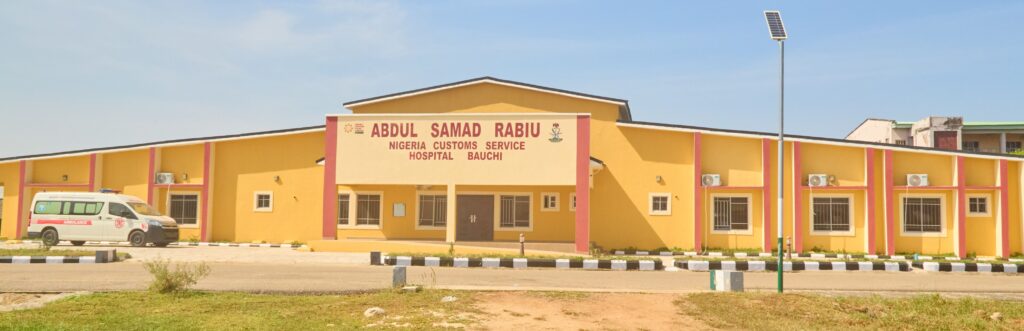
Abdul Samad Rabiu Nigeria Customs Hospital Commissioned in Bauchi, Expanding Access to Quality Healthcare
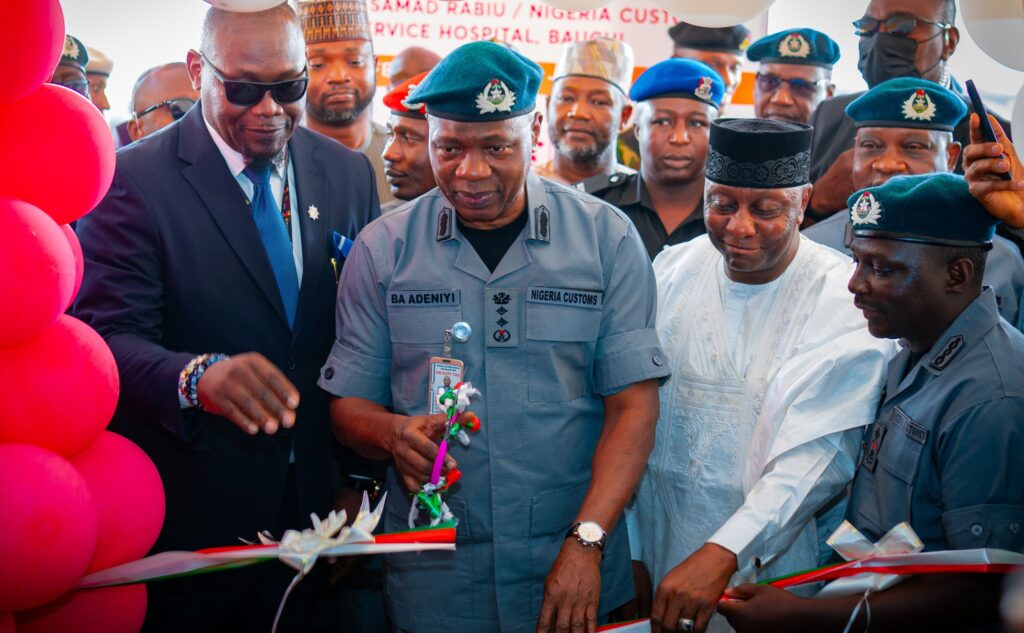
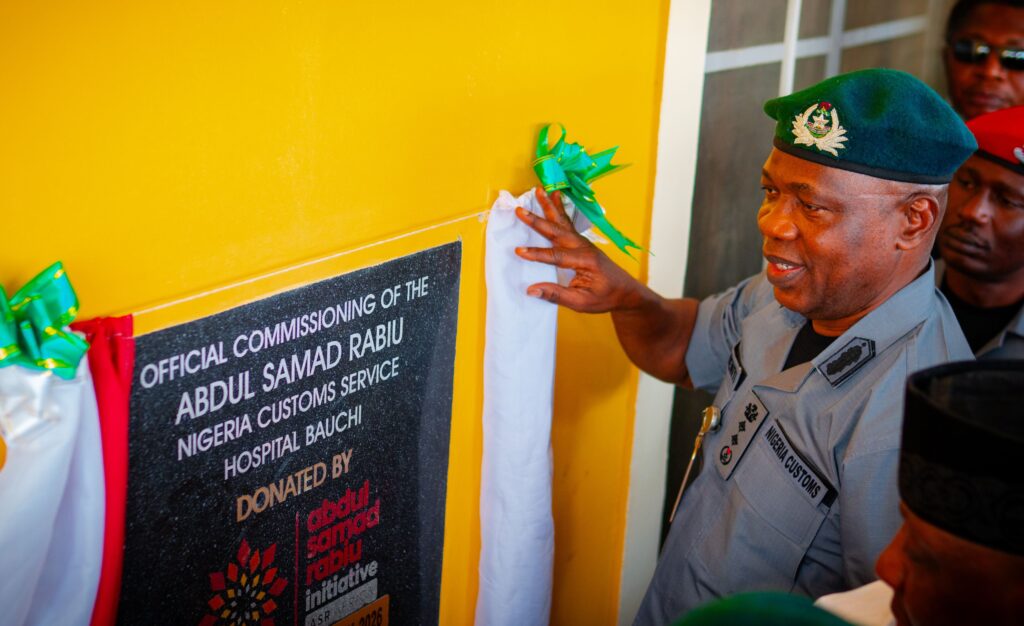
In a significant development for institutional healthcare in Nigeria, the Abdul Samad Rabiu Nigeria Customs Service Hospital has been commissioned in Bauchi State by the Abdul Samad Rabiu Africa Initiative (ASR Africa), reinforcing the growing role of structured philanthropy in strengthening public sector capacity.
The new facility, delivered in partnership with the Nigeria Customs Service, represents more than a capital project. It is a deliberate intervention aimed at improving healthcare access for Customs personnel while expanding quality medical services within the Bauchi community.
At a time when Nigeria’s public health infrastructure remains unevenly distributed and frequently overstretched, the commissioning of a purpose-built hospital in Bauchi signals a model of impact that prioritises system support over symbolic gestures.
Institutional Health as National Capacity
The Nigeria Customs Service plays a critical role in revenue generation, trade facilitation, and border security. Its officers operate across demanding terrains and high-pressure environments. Ensuring access to quality healthcare is therefore not merely a welfare consideration; it is an institutional necessity.
By funding and commissioning the hospital, ASR Africa has anchored its intervention within a strategic understanding of workforce sustainability. Healthy institutions depend on healthy personnel. Operational efficiency, morale, and service delivery are all strengthened when healthcare access is reliable and proximate.
The project reflects a recognition that national development is not abstract — it is built on functioning institutions supported by adequate infrastructure.
A Structured Philanthropic Model
ASR Africa has, in recent years, positioned itself as a catalytic philanthropic vehicle focused on healthcare and education infrastructure across the continent. Rather than dispersing fragmented donations, the initiative has concentrated on high-impact projects capable of delivering long-term value.
The Bauchi hospital fits squarely within that approach.
Healthcare delivery in Nigeria faces systemic challenges: overcrowded facilities, equipment shortages, human resource gaps, and uneven regional investment. Strategic infrastructure interventions, when integrated into existing public systems, can meaningfully ease these pressures.
The commissioning in Bauchi does not merely add another building to the landscape. It strengthens the healthcare backbone of a federal institution while creating spillover benefits for surrounding populations who may also access services.
Regional Inclusion and Access Equity
The location of the hospital carries additional significance.
Northern Nigeria continues to face infrastructure disparities relative to other regions. By situating the project in Bauchi, ASR Africa’s intervention advances regional equity in healthcare access — a critical dimension of sustainable development.
Access to quality medical services should not be geographically determined. Projects that expand service delivery outside Nigeria’s commercial hubs help rebalance national development patterns and reduce pressure on tertiary facilities in major cities.
Beyond Commissioning: The Sustainability Question
While the commissioning marks an important milestone, long-term impact will depend on operational sustainability. Infrastructure is only as effective as the systems that govern it.
Staffing capacity, equipment maintenance, referral integration, and transparent management structures will determine whether the hospital evolves into a high-functioning medical centre or struggles under the weight of systemic challenges that affect many public facilities.
Encouragingly, the partnership model between ASR Africa and the Nigeria Customs Service suggests a shared commitment to institutional longevity rather than short-term visibility.
Strengthening the Social Contract
Public-private collaboration in healthcare is increasingly becoming a cornerstone of development strategy in Nigeria. When structured responsibly, such partnerships reinforce the social contract — demonstrating that private capital can align with public priorities in ways that produce measurable benefit.
The Abdul Samad Rabiu Nigeria Customs Service Hospital stands as a case study in this alignment.
It underscores an emerging paradigm: philanthropy that supports institutional resilience, enhances workforce welfare, and contributes to community health outcomes simultaneously.
In a national context where trust in public systems must continually be rebuilt, projects of this nature offer tangible evidence that strategic investment, when anchored in accountability and long-term planning, can strengthen the foundations of public service.
The commissioning in Bauchi is therefore more than ceremonial. It reflects a deliberate commitment to healthcare access, institutional capacity, and regional inclusion — core pillars of sustainable social impact.
[give_form id="20698"]