csrreporters
Africa’s ambitious digital growth is under mounting threat as persistent energy deficits and widening talent gaps continue to challenge the continent’s fast-rising tech ecosystem.
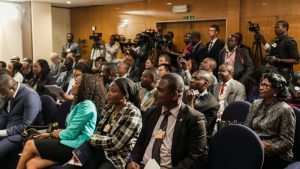
This warning came from industry leaders across the digital infrastructure, telecoms, and cloud sectors during a conference themed “The Power of Convergence,” which convened top executives to discuss Africa’s readiness to sustain its digital transformation.
Delivering the keynote address, Bill Kleyman, Chief Executive of Apolo.us and Executive Chair for Data Centre Programmes at Informa, described Africa as “one of the world’s fastest-growing digital markets,” but cautioned that unreliable power supply could significantly slow down momentum.
“Connectivity is the lifeblood of people, it’s how we live, work, and play, Kleyman said. “That’s why major organisations are moving aggressively into Africa. But without stable power, the promise of a connected future may remain unfulfilled.”
He noted that data centre power demand across Africa is expanding by 20 25% annually and could reach 8,000 gigawatt hours, stressing that “success in this space now depends on two things: power and bravery.”
Another key discussion centred on Africa’s readiness for artificial intelligence, with insights from Dr Kashifu Inuwa Abdullahi, Director General of the National Information Technology Development Agency (NITDA), alongside leaders from MTN and Business Finland, who called for responsible AI integration across industries.
Opening the event, Temitope Osunrinde, Executive Director of Africa Hyperscalers, set the stage with sobering statistics: Africa represents 18% of the world’s population, yet accounts for less than 2% of global data centre capacity and under 1% of compute power.
“Eighty percent of our data is still hosted offshore,” Osunrinde said. “The challenge before us is not just to power homes, but to power Africa’s digital economy.”
He urged African governments to fast track approvals, liberalise telecom networks, and incentivise renewable energy investments to enable a sustainable digital future.
[give_form id="20698"]