csrreporters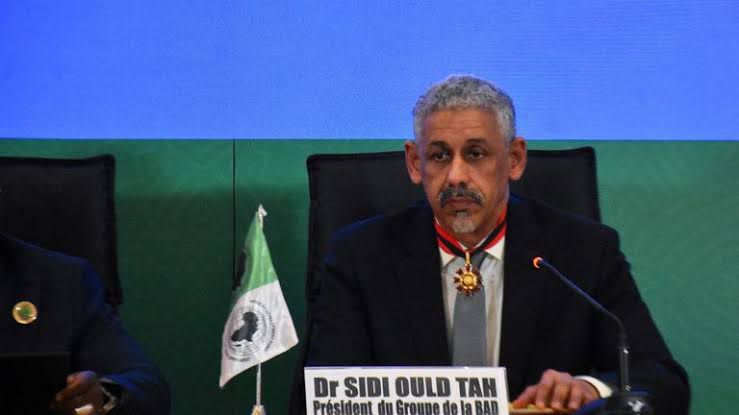
The African Development Bank (AfDB) has approved a $125 million equity investment that positions it as the largest shareholder in the African Trade and Investment Development Insurance (ATIDI), marking a significant step toward strengthening Africa’s investment protection and trade facilitation framework.
The move is aimed at reinforcing the continent’s capacity to manage investment risks, improve confidence among global investors, and unlock greater flows of private capital into strategic sectors of African economies.
As development finance institutions continue to shift toward risk-sharing and catalytic investment models, the transaction underscores the growing importance of insurance-based mechanisms in addressing Africa’s financing challenges.
Strengthening Africa’s Investment Protection Architecture
ATIDI plays a critical role in providing trade credit insurance and political risk guarantees across African markets. Its core mandate is to reduce the risks associated with investing and doing business on the continent.
These risks often include political instability, currency inconvertibility, contract enforcement challenges, and payment default risks—factors that have historically limited large-scale investment inflows into several African economies.
By increasing its shareholding in ATIDI, AfDB is effectively strengthening the institution’s financial base and expanding its ability to underwrite more complex and higher-value transactions across multiple sectors.
This development is expected to enhance investor confidence and improve the bankability of projects across infrastructure, energy, manufacturing, transport, and other productive sectors.
A Strategic Push to Mobilize Private Capital
Africa continues to face a significant infrastructure and development financing gap, despite its strong demographic and economic potential.
Public funding alone is insufficient to meet the scale of investment required to drive industrialisation, expand infrastructure networks, and support economic transformation.
In response, development finance institutions are increasingly relying on risk mitigation tools such as guarantees, blended finance structures, and insurance mechanisms to attract private capital.
The $125 million investment into ATIDI reflects this broader strategy.
By strengthening ATIDI’s capital base, AfDB aims to enhance the institution’s capacity to absorb risk and support a wider pipeline of investment projects that might otherwise struggle to attract financing from commercial markets.
This approach is widely viewed as catalytic, as risk-sharing instruments can significantly multiply the volume of private investment mobilised into emerging markets.
Supporting Trade Expansion and Regional Integration
The transaction also carries important implications for Africa’s trade and integration agenda, particularly under the African Continental Free Trade Area (AfCFTA).
AfCFTA is designed to create a unified continental market, facilitating the free movement of goods and services across African borders.
However, cross-border trade in Africa is often constrained by perceived risks, including weak enforcement mechanisms, foreign exchange challenges, and uncertainty in payment systems.
ATIDI plays a central role in addressing these barriers by providing trade credit insurance that protects exporters, importers, and investors against potential losses.
With AfDB becoming its largest shareholder, ATIDI is expected to expand its underwriting capacity, thereby enabling more trade transactions and cross-border investments to take place with reduced risk exposure.
This is expected to contribute to deeper regional integration and improved competitiveness of African economies in global trade systems.
Enhancing Investor Confidence Across African Markets
Investor confidence remains a critical determinant of capital flows into African economies.
Despite improving macroeconomic fundamentals in many countries, concerns about risk exposure continue to influence investment decisions by global financial institutions.
Risk perception often outweighs actual performance, resulting in higher financing costs or reduced investment appetite for African projects.
ATIDI was established to address this gap by providing financial guarantees that reduce uncertainty for investors and lenders.
The AfDB’s increased stake is expected to strengthen ATIDI’s credibility, improve its financial capacity, and reinforce its role as a key enabler of investment across the continent.
This may ultimately contribute to improved risk perception and increased willingness by global investors to engage with African markets.
Catalysing Infrastructure and Economic Transformation
Infrastructure remains one of Africa’s most pressing development priorities, spanning energy generation, transportation systems, digital connectivity, water supply, and industrial infrastructure.
Large-scale infrastructure projects often require long-term financing arrangements that are sensitive to political and economic risks.
ATIDI’s role in mitigating these risks is therefore essential to unlocking infrastructure development across the continent.
By strengthening ATIDI, AfDB is indirectly supporting a wider ecosystem of infrastructure financing, enabling governments and private sector actors to access capital under more favourable conditions.
This is expected to accelerate project development across critical sectors such as energy, logistics, urban development, and regional transport corridors.
In turn, improved infrastructure capacity can support industrial growth, job creation, and enhanced productivity across African economies.
Deepening Private Sector Participation
Private sector participation is increasingly recognised as essential to achieving Africa’s long-term development objectives.
However, one of the major barriers to private investment remains perceived risk, particularly in frontier and emerging markets.
ATIDI helps address this challenge by offering insurance and guarantees that reduce exposure for private investors and financial institutions.
With AfDB’s expanded involvement, ATIDI is expected to scale its operations and increase its capacity to support both large-scale infrastructure investments and cross-border commercial transactions.
This is likely to encourage greater participation from institutional investors, commercial banks, and multinational corporations seeking exposure to African markets.
Alignment with Sustainable Development Priorities
The strengthening of ATIDI aligns closely with broader sustainable development objectives, particularly in relation to economic growth, industrialisation, and partnerships.
The initiative supports:
- SDG 8: Decent Work and Economic Growth
- SDG 9: Industry, Innovation, and Infrastructure
- SDG 17: Partnerships for the Goals
By reducing investment risks and improving access to finance, the initiative contributes to job creation, industrial expansion, and improved infrastructure delivery.
It also supports long-term sustainability by enabling investment in sectors such as renewable energy, climate adaptation infrastructure, and environmentally responsible industrial projects.
The Evolving Role of Development Finance Institutions
The AfDB–ATIDI transaction reflects a broader evolution in the role of development finance institutions (DFIs).
Rather than focusing solely on direct lending, DFIs are increasingly acting as catalysts for private capital mobilisation through risk-sharing instruments and blended finance approaches.
This shift recognises that Africa’s development needs far exceed the capacity of public financing alone, requiring innovative financial structures that can attract and sustain private investment.
Insurance institutions like ATIDI are central to this strategy, serving as intermediaries that bridge the gap between public development objectives and private sector investment requirements.
Looking Ahead: Building a More Resilient Investment Climate
As Africa continues to pursue economic integration and structural transformation, the role of institutions that reduce investment risk is expected to become increasingly important.
The AfDB’s expanded stake in ATIDI signals a long-term commitment to strengthening Africa’s financial architecture and improving the predictability of its investment environment.
Over time, such interventions could contribute to a more stable, transparent, and investable African market, encouraging both domestic and international capital inflows.
If effectively implemented, this approach may help reposition Africa from a perceived high-risk investment destination to a more resilient and opportunity-driven economic region.
Conclusion
The African Development Bank’s $125 million investment in ATIDI represents a strategic effort to strengthen Africa’s trade and investment insurance ecosystem.
By enhancing risk mitigation capacity, the initiative seeks to unlock private capital, support infrastructure development, and improve investor confidence across the continent.
In a context where financing constraints remain a major barrier to growth, this development underscores the critical role of risk-sharing institutions in shaping Africa’s economic future.
As Africa deepens its integration into the global economy, such partnerships will continue to play a pivotal role in determining the scale and sustainability of its development trajectory.
Further Reading: AfDB Pushes for a New Era of Homegrown Development Finance
[give_form id="20698"]