Beyond Donations: How Dangote Cement Is Linking Business Development to Community Infrastructure
 ONYINYECHI NWAIGBA
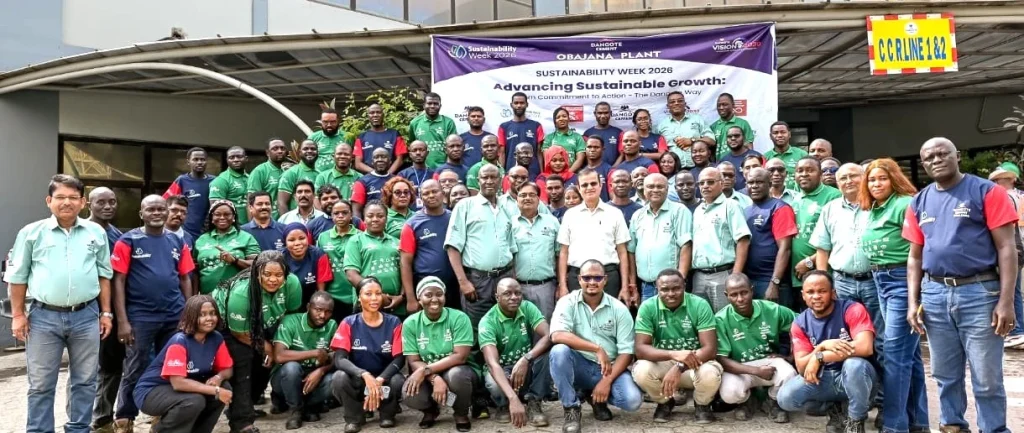
Through its 2026 Sustainability Week, Dangote Cement’s Obajana Plant supported local businesses with capacity-building initiatives and commissioned a solar-powered system for community water infrastructure in Kogi State. But the long-term value of such interventions will depend on what happens after the activities end.
For communities living around large industrial facilities, the benefits of corporate investment should extend beyond the jobs created within factory gates. They should also be visible in stronger local businesses, improved access to essential services and economic opportunities that allow residents to participate in the development taking place around them.
This is an important consideration in conversations about corporate social responsibility in Nigeria, particularly in communities hosting major manufacturing and industrial operations.
Dangote Cement Plc’s Obajana Plant has introduced two interventions that speak to these priorities during its 2026 Sustainability Week in Kogi State: a business development programme for local entrepreneurs and the commissioning of a 3.6kW solar inverter system in Oyo Community to support its water infrastructure.
The initiatives bring together two areas of community development that are often treated separately: economic empowerment and access to basic services.
However, their significance goes beyond the activities themselves. The more important question is whether they can contribute to improvements that communities will continue to experience long after Sustainability Week has ended.
Supporting Local Businesses Beyond Recognition
One of the major activities during the Sustainability Week was the Small and Medium Enterprises Empowerment and Business Development Capacity-Building programme.
The initiative provided local entrepreneurs with training in business growth strategies, financial management, customer service and sustainable business practices. These are important areas for small businesses, particularly those operating in communities where access to formal business support, professional guidance and development opportunities may be limited.
Financial management, for instance, can help business owners understand their income, expenses, cash flow and profitability. Without proper financial records, even businesses with regular customers may struggle to determine whether they are growing or simply maintaining daily operations.
Similarly, customer service and business development skills can help entrepreneurs improve customer retention, strengthen their market position and identify opportunities to expand.
As part of the programme, 15 small and medium-scale businesses received plaques in recognition of their entrepreneurial efforts and commitment to continuous improvement.
The recognition is a positive way to acknowledge local enterprise, but it is important to distinguish between recognition and direct financial empowerment. The available information confirms training and the presentation of plaques; it does not establish that the businesses received cash grants or direct funding.
That distinction matters because small businesses often require more than knowledge and encouragement to overcome the challenges affecting their growth.
Access to affordable finance, reliable electricity, suitable business premises, equipment, markets and dependable supply chains can determine whether an entrepreneur is able to translate new knowledge into improved business performance.
For this reason, the value of the programme will ultimately be measured by what participating businesses are able to do with the knowledge they have acquired.
Are they improving their financial records? Are they reaching new customers? Are they increasing their productivity or creating employment? These are the kinds of outcomes that can demonstrate whether capacity-building programmes are contributing to stronger local economies.
Solar Energy and the Importance of Community Infrastructure
The second major intervention was the commissioning of a 3.6kW solar inverter system in Oyo Community.
According to the company, the installation is intended to improve electricity supply for community water infrastructure, making the water facilities more reliable while reducing dependence on conventional energy sources.
Although the installation is relatively small in capacity, its intended purpose addresses a practical community need.
Access to water is closely connected to public health, household welfare, sanitation and economic activity. When water infrastructure cannot operate reliably because of electricity interruptions or high energy costs, residents may face additional difficulties accessing an essential service.
A solar-powered system can help reduce dependence on the conventional electricity supply and provide an alternative source of power for the facility.
It also introduces a renewable energy component into community infrastructure. However, the environmental value of the installation will depend on how effectively it operates, how well it is maintained and how much conventional energy it actually replaces.
The commissioning of the system is an important starting point, but the real test will be its performance over time.
How many households will benefit from improved water access? How frequently will the facility operate? Who will be responsible for maintenance, repairs and eventual battery replacement? Is there a local arrangement to ensure that the system remains functional?
These questions are important because community infrastructure projects can lose their value when maintenance responsibilities, operating costs and long-term management are not clearly established.
A solar installation should not simply be measured by its capacity or commissioning date. Its impact should also be assessed by the reliability of the service it provides and the number of people who continue to benefit from it.
Why Host Community Investment Matters
Large industrial operations and their host communities have an important relationship.
Companies depend on surrounding communities for land, labour, local services and the social environment in which their operations function. At the same time, industrial activities can place additional demands on local infrastructure and resources.
This makes community investment an important part of responsible business conduct.
For a manufacturing company operating at the scale of Dangote Cement, supporting local businesses and improving community infrastructure can contribute to a more inclusive relationship between industrial growth and local development.
The company’s broader sustainability priorities also recognise community development, economic empowerment and support for local businesses as areas of focus.
Dangote Cement’s published ESG information states that 82 per cent of its total procurement spending went to local businesses in 2025, amounting to approximately ₦1.72 trillion. This provides a wider picture of how local enterprise participation can extend beyond community outreach programmes into a company’s procurement and supply chain activities.
The distinction is significant.
While training and recognition can help local entrepreneurs strengthen their businesses, integrating qualified local businesses into corporate supply chains can create more direct and sustained economic opportunities.
For example, local enterprises that can meet the required standards may be positioned to provide goods, logistics, maintenance, catering, professional services and other forms of support to large industrial operations.
This creates opportunities for businesses to earn revenue, employ more people and build the capacity needed to serve larger markets.
It also raises an important consideration for corporate sustainability programmes: local businesses should not only be recipients of occasional support but should have opportunities to participate in the economic activities generated by companies operating within their communities.
Moving from Activities to Measurable Impact
Sustainability Week provides companies with an opportunity to bring employees, communities and other stakeholders together around environmental and social priorities.
However, the credibility of corporate sustainability efforts cannot be established by the number of activities organised during a particular week.
It requires evidence of what changes after the activities have taken place.
For the Obajana Plant’s business development programme, this could involve tracking the 15 recognised businesses over the next six to twelve months. Relevant indicators could include changes in revenue, business survival, employment, customer numbers, access to finance and participation in wider supply chains.
For the solar-powered water infrastructure, the company could disclose the number of households served, hours of reliable operation, maintenance arrangements, energy savings and the system’s contribution to improved water access.
Such information would help residents and other stakeholders understand whether the interventions are producing the intended benefits.
It would also provide a clearer basis for evaluating the company’s community investment beyond announcements and project commissioning.
There is also an opportunity to deepen the business development programme by connecting participating entrepreneurs to mentorship, financial institutions, relevant markets and procurement opportunities.
Training can introduce business owners to better practices, but continued support can help them apply those lessons and address the challenges that emerge as their businesses grow.
Similarly, community infrastructure projects are more likely to remain useful when residents are involved in planning, monitoring and maintenance arrangements.
This is where meaningful stakeholder engagement becomes particularly important. Communities should not only be informed when projects are completed; they should have a voice in identifying their needs and assessing whether the interventions are working.
The Bigger Picture for Corporate Sustainability in Nigeria
Dangote Cement’s 2026 Sustainability Week interventions in Kogi State reflect two important dimensions of responsible business: supporting economic participation and improving access to essential infrastructure.
The business development programme recognises the role of local entrepreneurs in creating employment and sustaining household incomes, while the solar installation addresses the energy needs of community water infrastructure.
Both are relevant to the wider conversation about how companies can contribute to development in the communities where they operate.
But the next stage is just as important as the initial intervention.
For the 15 businesses, success should mean more than receiving recognition. It should translate into stronger operations, improved income, better market access and, where possible, additional employment.
For Oyo Community, success should mean more reliable water infrastructure, supported by a system that is properly maintained and continues to serve residents.
Ultimately, responsible corporate investment should be judged not only by what a company provides but by what communities are able to sustain, improve and build upon.
The real measure of sustainability is not how much activity takes place during one week. It is whether those activities create value that remains long after the event is over.
[give_form id="20698"]