Beyond the Glamour: What the AMVCA Reveals About Nigeria’s Emerging Social Impact Economy
 csrreporters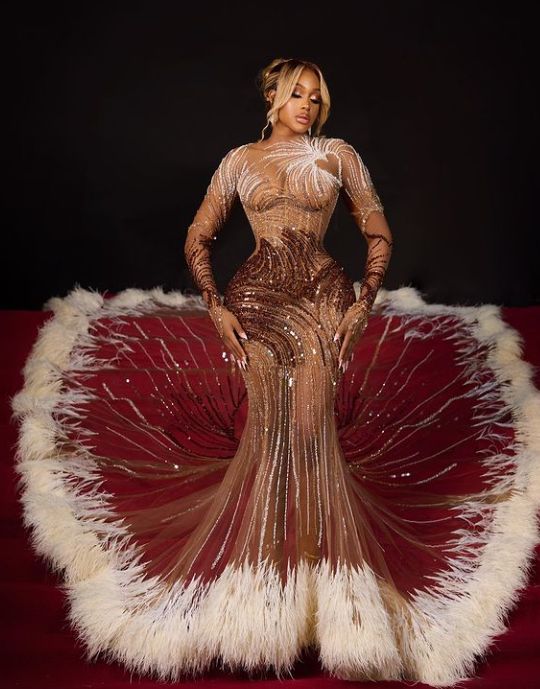
Beyond the Glamour: What the AMVCA Reveals About Nigeria’s Emerging Social Impact Economy
Every year, the spectacle arrives before the substance.
The red carpet rolls out. Cameras flash endlessly. Designer labels dominate conversations. Social media erupts with commentary over fashion statements, celebrity appearances, and viral moments. By the next morning, timelines are saturated with rankings of best dressed stars, controversial wins, and entertainment gossip.
But beneath the glamour of the Africa Magic Viewers’ Choice Awards lies a deeper story Nigeria is still failing to fully confront.
The AMVCA is no longer just an awards ceremony. It has evolved into one of the clearest reflections of Nigeria’s growing social impact economy — an ecosystem where storytelling, creativity, influence, enterprise, and cultural identity are increasingly shaping national development in ways policymakers and corporate institutions can no longer afford to ignore.
For too long, Nigeria’s creative industry was treated as decorative rather than strategic. Entertainment was seen as soft culture, useful for leisure but secondary to sectors considered more “serious” such as oil, banking, infrastructure, or telecommunications. Yet the economic and social realities unfolding around the AMVCA suggest that assumption is becoming dangerously outdated.
Behind every award night exists an expansive chain of economic activity rarely acknowledged with the seriousness it deserves. Beyond the celebrities are thousands of Nigerians whose livelihoods depend on the creative ecosystem. Cinematographers, editors, scriptwriters, makeup artists, event planners, lighting technicians, photographers, fashion designers, stylists, digital marketers, caterers, hospitality operators, publicists, production assistants, sound engineers, and technology providers all form part of a growing industry quietly creating jobs in a country battling severe unemployment and economic instability.
What the AMVCA reveals is that the creative economy is no longer peripheral. It is becoming structural.
At a time when many young Nigerians are increasingly disillusioned by shrinking opportunities in traditional sectors, entertainment and digital creativity are emerging as alternative economic pathways. Entire careers are now being built around content production, film development, social media influence, beauty entrepreneurship, costume design, animation, and digital storytelling. The implications of this shift are enormous because it signals that the future of work in Nigeria may look radically different from the industrial models political leaders still prioritize.
Yet while the industry continues to expand its economic relevance, institutional support remains painfully inconsistent. Nigeria celebrates the global success of its entertainers while often neglecting the systems that sustain them. Piracy remains widespread. Funding structures remain fragile. Infrastructure gaps continue to frustrate production quality. Policy engagement with the creative sector still lacks long-term strategic seriousness.
The contradiction is difficult to ignore. Nigeria proudly exports its culture to the world while underinvesting in the ecosystem producing that influence.
But perhaps the most powerful lesson emerging from the AMVCA lies not only in economics, but in influence itself.
Storytelling has become one of the most potent instruments of social shaping in modern society. Films, television, and digital content increasingly shape public understanding of gender, corruption, mental health, governance, migration, inequality, identity, and social aspiration. Long before policy reports reach ordinary citizens, stories reach them emotionally. Culture now travels faster than legislation.
This is where the AMVCA becomes more than entertainment recognition. It becomes a reflection of which narratives society chooses to amplify, reward, and normalize.
The industry’s growing power also carries enormous responsibility. In a media environment heavily driven by visibility and virality, entertainment can either deepen harmful stereotypes or challenge them. It can reinforce toxic social expectations or provoke difficult conversations. It can commercialize superficiality or elevate substance. That tension sits at the heart of Nigeria’s evolving cultural landscape.
Another important shift visible through the AMVCA is the increasing influence of women across the creative economy. Not only as actors, but as producers, directors, executives, entrepreneurs, writers, and cultural strategists shaping the direction of the industry itself. Their presence signals a broader redistribution of influence within spaces historically dominated by entrenched gatekeeping structures.
Yet the applause and celebration often conceal persistent inequalities behind the scenes. Unequal access to financing, online harassment, underrepresentation in executive decision-making, and gender-based barriers still shape the experiences of many women navigating the industry. The glamour frequently masks the labor required to survive within systems that remain uneven.
Corporate Nigeria, meanwhile, may still be underestimating the broader significance of what is unfolding.
Many brands continue to approach entertainment partnerships primarily through visibility metrics — logo placements, celebrity associations, impressions, and social media engagement. But the AMVCA points toward something far more consequential. Entertainment is increasingly functioning as a social influence ecosystem where conversations around inclusion, identity, mental health, youth aspiration, governance, and even sustainability can be shaped at scale.
The smartest institutions are beginning to recognize that social impact is no longer communicated only through sustainability reports, conferences, or corporate campaigns. Increasingly, it is communicated through culture. Younger audiences now absorb values through stories, music, digital media, and entertainment experiences far more than through formal institutional messaging.
Brands that fail to understand this cultural transition risk becoming disconnected from the audiences they seek to influence.
Beyond corporate relevance, the AMVCA also reveals something larger about Nigeria’s global positioning. Nations today compete not only through military strength or natural resources, but through cultural influence. Hollywood became American soft power. K-pop transformed South Korea’s global image and economic reach. Bollywood helped project Indian cultural identity internationally.
Nigeria already possesses one of Africa’s most influential cultural exports through Nollywood and its rapidly expanding entertainment ecosystem. The AMVCA demonstrates how Nigerian storytelling now commands continental visibility and international attention. That influence creates opportunities far beyond entertainment itself, extending into tourism, fashion, technology, investment, digital commerce, and international partnerships.
Yet despite its growing influence, the sector still operates without the level of strategic policy coordination its impact warrants. The danger is that Nigeria may continue benefiting from cultural visibility while failing to build the institutional frameworks capable of sustaining it long term.
Public discourse around the AMVCA often remains trapped at the surface. Conversations revolve around fashion controversies, celebrity drama, and viral moments while the deeper structural transformation unfolding underneath receives far less scrutiny.
But beneath the red carpets and flashing cameras lies a significant economic and social reality. Nigeria is gradually evolving toward a culture-driven economy where creativity, storytelling, and influence are becoming serious instruments of national relevance.
That transformation remains imperfect. It remains commercially volatile and structurally unequal. But it is undeniably real.
The bigger question now is whether Nigeria’s institutions are prepared to take it seriously enough.
Because beyond the glamour of the AMVCA lies a truth the country can no longer afford to ignore:
Culture is no longer merely entertainment.
It is infrastructure.
[give_form id="20698"]