


 csrreporters
Nigeria's Health System Needs Private Sector Support
A Familiar Crisis on the Wrong Anniversary
Today is World Health Day. Ironically, it is also the day Nigeria’s resident doctors chose to begin a strike. The Nigerian Association of Resident Doctors, known as NARD, declared an indefinite nationwide work stoppage over unpaid allowances and policy reversals. Within hours, however, reports emerged that the strike would be suspended following assurances from the federal government. By Tuesday, NARD officially confirmed the suspension, giving the government an ultimatum until April 21 to meet its demands.
So, for now, the crisis is paused. Yet, paused is not resolved. Furthermore, the suspension does not erase the larger, more troubling story. Nigeria’s healthcare system is in a prolonged state of decline, and no single negotiation will fix that.
A Pattern Nigeria Cannot Keep Repeating
The numbers alone tell a damning story. Since President Bola Tinubu assumed office, resident doctors have spent a cumulative 51 days on strike. This includes a 17-day strike in August 2023, a five-day warning strike in September 2025, and a 29-day strike in November 2025. Now, barely five months later, they were ready to down tools again.
At the centre of the latest dispute is the Professional Allowance Table, which standardises payments for call duty, shifts, and rural postings. The government had agreed to implement this revised table after the 2025 strike. Implementation was initially scheduled for January 2026, then shifted to February. Consequently, when the government appeared to discontinue the process entirely, doctors responded with fury.
The immediate trigger is, therefore, not surprising. What is surprising, however, is that we are still surprised. This pattern has repeated itself so many times that it has become a feature, not a bug, of how Nigeria manages its healthcare workforce.
Moreover, Nigeria is not alone. In England, resident doctors began their 15th strike in a long-running pay dispute on the same day. The British Medical Association argues that doctor pay has fallen significantly in real terms since 2008, despite recent increases. The UK government, meanwhile, called its latest offer generous. Ultimately, the deadlock sounds familiar. Wherever healthcare workers feel undervalued, industrial action follows.
The Deeper Wounds: Brain Drain, Bad Conditions, Broken Policy
Beyond the strikes, Nigeria’s healthcare sector is bleeding from several open wounds simultaneously. Therefore, to understand the full scale of the crisis, one must look beyond the headlines.
First, there is brain drain. Nigerian doctors are leaving in alarming numbers, seeking better pay, safer environments, and more opportunities abroad. Those who remain carry heavier workloads as a result. Burnout, stress, and declining morale follow naturally. Additionally, the cycle feeds itself: poor conditions push more doctors to leave, which worsens conditions further.
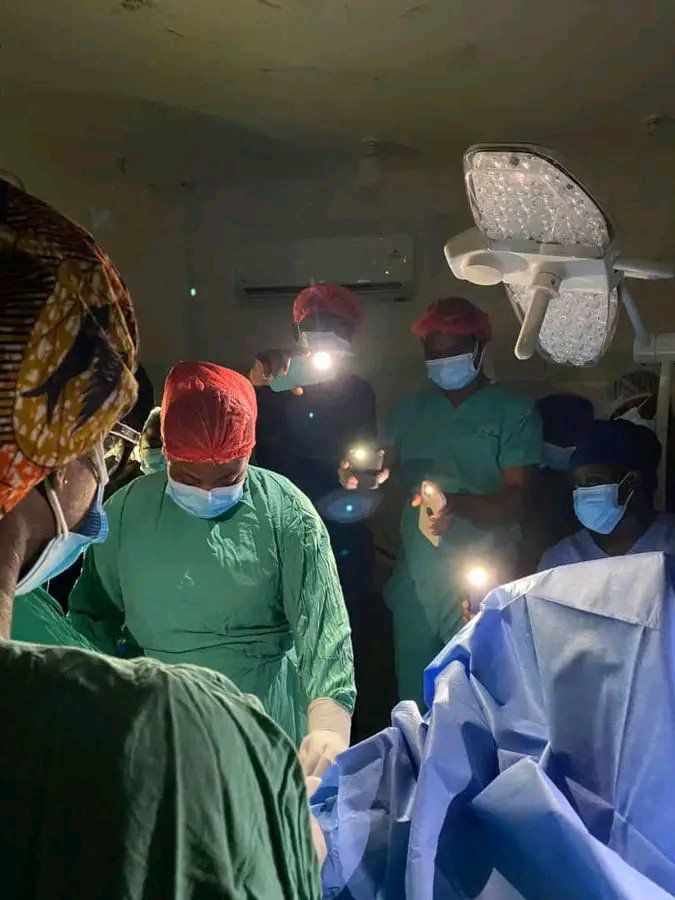
Second, hospital infrastructure across the country remains inadequate. Many public health facilities lack basic equipment, reliable electricity, and essential medicines. Consequently, both patients and healthcare workers suffer. A doctor cannot deliver quality care in a facility that loses power during surgery. A nurse cannot maintain medication cold chains without stable electricity.
Third, policy inconsistency continues to erode trust. Agreements reached between the government and health worker unions have repeatedly been reversed, delayed, or ignored. As a result, every new negotiation begins with a deficit of goodwill. Doctors arrive at the table expecting to be disappointed, because history has trained them to expect exactly that.
Fourth, funding remains chronically insufficient. Nigeria’s health budget has consistently fallen below the Abuja Declaration target of 15% of national budget. Without adequate funding, salaries stagnate, infrastructure crumbles, and training suffers. Therefore, everything else follows.
Together, these factors create a system that is struggling not because of any single failure, but because of accumulated, overlapping neglect.
Why the Private Sector Can No Longer Stand Aside
Governments alone will not fix this. That reality is uncomfortable, but it is increasingly undeniable. Therefore, the question becomes: who else can step in, and how?
This is where the corporate sector enters. Corporate Social Responsibility and Environmental, Social, and Governance frameworks are no longer optional additions to business strategy. Instead, they represent a company’s social contract with the communities where it operates. In Nigeria, where public services consistently fall short, that contract carries enormous weight.
Specifically, companies operating in Nigeria have both the resources and the reach to address healthcare gaps in meaningful ways. Moreover, doing so aligns with global ESG priorities around health equity, community development, and sustainable infrastructure. Investors, partners, and regulators increasingly reward companies that take these obligations seriously.
The opportunity is therefore clear. However, for healthcare CSR to create lasting impact, it must move beyond one-off donations and photo opportunities. Instead, it must target systemic gaps with sustainable solutions.
From Charity to Strategy: What Effective Healthcare CSR Looks Like
Effective healthcare CSR in Nigeria requires companies to think like systems designers, not philanthropists. Consequently, the most impactful initiatives tend to address root causes rather than symptoms.
Energy access is one such root cause. Reliable electricity is not a luxury in healthcare; it is a clinical necessity. Without it, surgeries cannot proceed, vaccines cannot be stored, and diagnostic equipment cannot function. Yet, power supply remains one of the most persistent failures in Nigeria’s public health infrastructure.
Additionally, workforce support matters deeply. Companies can fund scholarships, residency training, and specialist programmes that keep skilled doctors in the country. They can also partner with government to provide non-salary welfare support, such as housing, transport allowances, and childcare facilities, that make staying in Nigeria more viable for medical professionals.
Furthermore, supply chain partnerships can ensure that essential medicines and consumables reach facilities consistently. Many public health centres run out of basic supplies not because they lack funding on paper, but because procurement and logistics systems are broken. Private sector expertise in supply chain management can bridge that gap directly.
Finally, data and technology investments can improve health outcomes at scale. Telemedicine infrastructure, electronic health records, and diagnostic tools funded through CSR programmes can extend the reach of Nigeria’s overstretched medical workforce significantly.
JMG Limited: Energy as a Health Intervention
One company has already demonstrated what thoughtful, strategic healthcare CSR looks like in practice. JMG Limited, a leading power solutions company in Nigeria, made healthcare a central pillar of its CSR efforts in 2025. Crucially, this decision was driven by a specific insight: that energy access is a clinical issue, not merely an infrastructure one.
JMG’s leadership recognised that uninterrupted power directly influences health outcomes, patient dignity, and operational efficiency in medical facilities. Consequently, the company installed a solar hybrid system at the Agboyi-Ketu Primary Health Care Centre, providing stable electricity for essential services. The result was immediate and practical. Maternity services, in particular, benefited from lighting and equipment that could now function reliably around the clock.


Read More Here: Beyond Power Solutions: JMG’s Commitment to Uplifting Lives
What makes this initiative notable is not simply its generosity. Rather, it is the alignment between the company’s core technical expertise and a specific, documented gap in public health delivery. JMG did not step outside its lane. Instead, it used what it does best to solve a problem that the government had left unaddressed.
This, therefore, is the model other companies should study. CSR works best when it connects a company’s genuine capabilities to a community’s genuine needs.
World Health Day Should Mean More Than a Hashtag
Today, organisations around the world will post about World Health Day. They will share statistics, celebrate frontline workers, and call for change. Some will mean it. Others will move on by tomorrow.
Meanwhile, in Nigeria, patients who were preparing to find empty beds this morning may find staffed wards by Wednesday. The strike suspension is welcome. Nevertheless, the applause should be brief. Because the conditions that caused this strike remain entirely intact.
Therefore, the real question for Nigeria’s corporate sector is not whether to engage with healthcare. That question is already answered. Rather, the question is how fast and how seriously companies are willing to act.
CSR and ESG frameworks exist precisely for moments like this. They exist to ensure that business does not simply extract value from communities, but returns it. In Nigeria’s healthcare crisis, the opportunity to return value is urgent, visible, and waiting.
Companies that move beyond hashtags and into action will not only strengthen communities. They will also strengthen their own social licence to operate, their reputations, and ultimately their long-term business resilience.
Strike or no strike, the system still needs fixing. And fixing it will take more than government promises. It will take corporate commitment, strategic investment, and the kind of sustained engagement that transforms a CSR line item into a genuine lifeline.
Nigeria’s doctors deserve better. So do Nigeria’s patients. The private sector, therefore, has both the means and the mandate to help deliver exactly that.
[give_form id="20698"]