csrreporters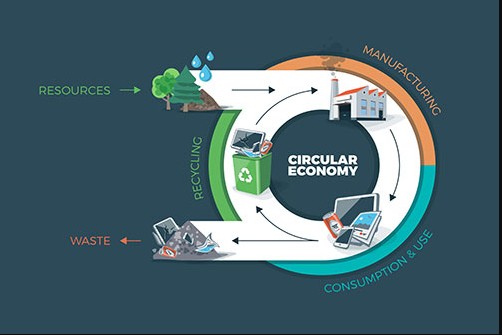
Ever heard of the term, “circular economy?”
Does it sound like jargon imported from abroad? Just pause a little, CSR REPORTERS will make you see that Nigerians have been living parts of it all along, sometimes without even naming it.
At its heart, a circular economy means designing our systems so that nothing goes to waste and everything keeps moving in a loop. Instead of the old way of living: “take, use, throw away,” it pushes us towards “take, use, reuse, repair, recycle.” In other words, waste is no longer the end of the road but the beginning of another journey.
Does this make sense?
Take a simple example: Bottled water and soft drinks. In a linear economy, when you finish drinking, you toss the bottle into the gutter. It clogs the drainage, floods the street, and ends up polluting the ocean. But in a circular economy, the bottle is collected, recycled, and reborn as polyester fiber for clothes, new bottles, or even school bags. Suddenly, what was waste becomes the raw material for another industry. You see?
Nigerians may not know it, but the football jersey their children wear could be partly made from recycled plastic.
In truth, informal recycling has always been part of our DNA. The aboki who collects scrap iron in wheelbarrows and sells them to foundries is a circular economy player. The massive Ladipo Market in Lagos, where car parts are stripped and resold, is another clear model. Even in our kitchens, we live this principle: Warming leftover jollof rice the next day or turning it into fried rice is circular thinking. Tailors in Aba who convert fabric scraps into caps and purses are practicing the same philosophy. The akara seller who resells vegetable oil jerrycans to mechanics is showing us that value never really dies.
We can go on and on….
At business scale, circular economy thinking has already saved industries billions. Breweries that reuse bottles instead of producing new ones have drastically cut glass waste and production costs. Cement manufacturers are now using waste as alternative fuel, cutting down on coal imports. Cassava peel, which once rotted in heaps in Oyo, is being turned into animal feed. Cattle dung in Kaduna is now powering biogas stoves. These are not Western case studies, they are Nigerian solutions.
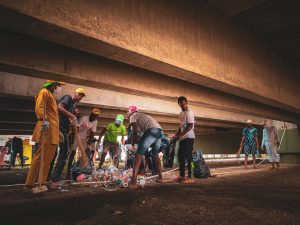
But the truth is that we still waste too much. Lagos alone generates 14,000 tonnes of waste daily, most of it dumped in landfills or gutters. Plastics choke our drains and waterways, while electronic waste piles up in Alaba. Yet, buried in all that waste is wealth waiting to be unlocked if only we adopt a circular mindset. Come to think of it: If sachet water nylon was systematically collected and turned into paving stones, how many jobs would that create for idle youth? If food waste from our markets was converted into compost, how many farms would thrive without expensive fertilizers? If discarded clothes were reprocessed into fibers, how many mattress companies would cut their raw material bills? The answers lie in structured circular economy practices.
For Nigerian brands, this is not just about doing good for the environment. It is about competitiveness and survival. Consumers are becoming more discerning, and investors are watching. A company that can show it reuses, recycles, and reduces waste is not only saving costs but also building consumer loyalty and winning global funding. Circularity, in today’s world, is strategy. Actually.
This is where CSR REPORTERS becomes an ally. As Nigeria’s leading CSR and sustainability platform, CSR REPORTERS does more than tell stories, it translates global concepts like circular economy into Nigerian reality just as this piece has done.
It benchmarks local brands against international best practices so that what we call CSR here is not just handouts or token gestures but genuine alignment with circular and sustainable models. It curates stories of waste-to-wealth innovations and amplifies them so others can replicate. And most importantly, it holds brands accountable, reminding them that circular economy is not a buzzword but a pathway to resilience, reputation, and revenue.
CSR REPORTERS is, in many ways, Nigeria’s mirror and megaphone for circular economy. It documents the quiet heroes already practicing it, from SMEs in Aba to multinationals in Lagos. It educates consumers on why supporting brands that recycle matters. It nudges policymakers to design regulations that reward circularity. And it provides corporates with advisory pathways to embed these practices into their DNA. Without such a platform, the risk is that circular economy will remain a conference slogan rather than a lived reality in factories, farms, and communities.
For brands, the opportunity is clear: Work with CSR REPORTERS to showcase your circular economy efforts, have your initiatives benchmarked against global standards, and let your impact stories be told in ways that inspire loyalty, investment, and scale. Paid stories, adverts, and partnership features are not just publicity, they are part of building Nigeria’s collective memory of how businesses shifted from wastefulness to resourcefulness. They are how we ensure that future generations can trace how brands took responsibility for their footprints and turned them into impact.
Hope this makes sense? The term, “circular economy,” is not some European model far removed from Nigerian reality. Not at all. Think of your grandmother reusing tins to store spices. Think of the vulcanizer making sandals out of old tires. Think of entire communities in Nigeria where waste is already being reborn into wealth. The real question is whether Nigerian brands will rise to the challenge of mainstreaming it and whether they will engage partners like CSR REPORTERS to amplify, benchmark, and document their progress. Because in a world choking on waste, the brands that embrace circularity will be the ones that last.