Farming Justice Project Trains Inmates in Agriculture, Tackles Food Shortages and Creates Livelihood Opportunities
 csrreporters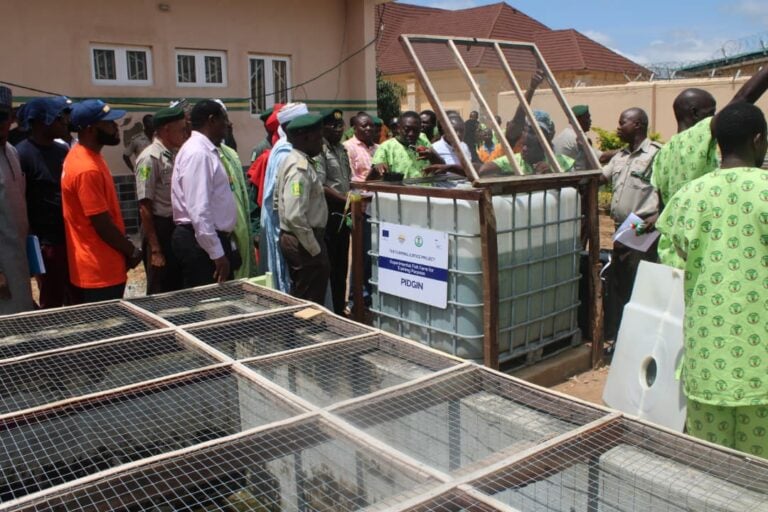
Hope Behind Bars Africa (HBBA), in partnership with the Nigerian Correctional Service (NCoS), has launched the Farming Justice Project at the Kuje Custodial Centre, Abuja, a pioneering initiative aimed at providing inmates with agricultural skills while addressing food insecurity within correctional facilities.
Funded by the European Union through International IDEA under the Rule of Law and Anti Corruption Programme, the project integrates modern farming techniques with restorative justice principles, equipping inmates with skills they can use during incarceration and after release.
At the official launch, HBBA’s Executive Director, Funke Adeoye, described the initiative as a practical response to Nigeria’s evolving correctional mandate. With the transition from prison to correctional service, it is essential that our custodial centres reflect genuine rehabilitation and empowerment. The Farming Justice Project currently trains over 80 inmates in modern cultivation techniques for crops such as okra, watermelon, and tomato. Adeoye noted that some harvested produce has already been used to supplement meals in the custodial centre, demonstrating the project’s immediate impact on food security.
Our aim is to equip inmates with practical skills that can translate into viable livelihoods after their sentences. The initiative currently operates at both the Kuje Custodial Centre and the Dukpa Farm Centre in Abuja, with plans to expand to other facilities nationwide, including Lagos, where HBBA has previously implemented similar agricultural training programs for female inmates. Christopher Jen, Controller of Corrections for the FCT Command, praised the project as a meaningful step toward building a productive, peaceful, and secure society.
The willingness of inmates to learn today gives me confidence that a better Nigeria is possible,” Jen said, noting that Kuje is already a hub for vocational training, including barbing, carpentry, shoemaking, electrical work, and fishery.
The initiative was also endorsed by International IDEA, with representative Joseph Odeh emphasizing that justice reform requires collective participation from all sectors of society. Let this project mark a new chapter in our justice system one that prioritizes human development, community reintegration, and sustainable transformation
The launch featured a guided tour of the Kuje facility, unveiling of the Farming Justice Project, and visits to various skills acquisition centres, highlighting the breadth of vocational and agricultural training available to inmates. By combining food production with vocational training, the Farming Justice Project not only addresses immediate food needs but also creates long-term employment opportunities, helping inmates reintegrate successfully into society and contribute meaningfully to the economy.
[give_form id="20698"]