


 csrreporters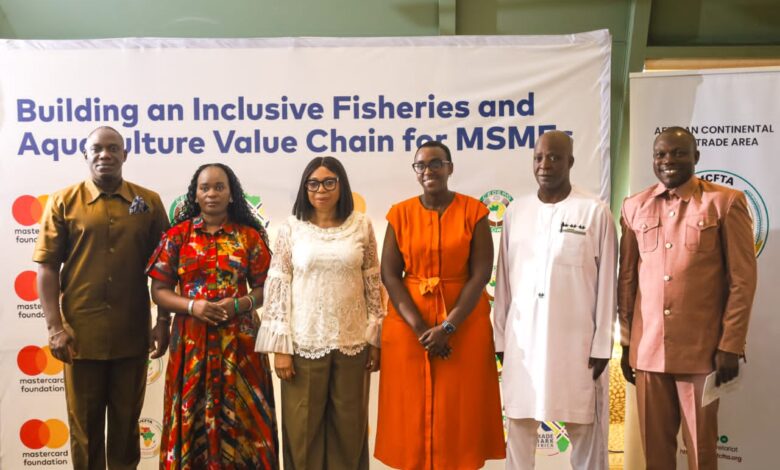
The Federal Government is intensifying efforts to expand the participation of women and young people in Nigeria’s fisheries sector, as part of broader strategies to harness opportunities under the African Continental Free Trade Area (AfCFTA).
The move reflects a growing policy focus on inclusive economic growth, particularly in sectors with strong potential to drive employment, food security, and regional trade competitiveness across Africa.
Fisheries remain a critical component of Nigeria’s agricultural and blue economy landscape, supporting millions of livelihoods, especially in coastal and riverine communities. However, participation across the value chain has historically been uneven, with women and youth often concentrated in informal segments with limited access to capital, technology, and formal market structures.
The new inclusion drive is therefore aimed at repositioning the sector as a more structured, equitable, and competitive contributor to national and continental economic development.
A Sector with Untapped Potential for Inclusive Development
Across Nigeria, the fisheries value chain extends beyond fishing activities to include processing, preservation, distribution, and retail. Women and young people already play significant roles in these downstream activities, often forming the backbone of local supply chains.
Despite this, their contributions have frequently remained under‑recognised in formal policy frameworks and economic planning systems.
Stakeholders argue that unlocking the full potential of the sector requires addressing long‑standing structural barriers that limit participation and scalability. These include limited access to financing, inadequate training opportunities, weak infrastructure, and fragmented market systems that make it difficult for small operators to grow beyond subsistence levels.
By focusing on inclusion, policymakers are aiming to ensure that more participants are integrated into formal systems where productivity can be improved and economic value better captured.
AfCFTA as a Catalyst for Economic Transformation
The African Continental Free Trade Area presents a significant opportunity for African economies to expand intra‑continental trade, strengthen regional value chains, and improve competitiveness in global markets.
For Nigeria, sectors such as fisheries represent an important pathway to achieving these objectives, particularly if supported by inclusive participation models that reflect the country’s demographic realities.
With a large population of women and young people actively engaged in informal economic activities, the fisheries sector holds substantial untapped potential for job creation and enterprise development.
However, experts note that without deliberate policy intervention, many of these actors risk being excluded from the formal benefits of AfCFTA integration, including access to larger markets, improved pricing structures, and export opportunities.
The current inclusion push is therefore positioned as a strategic step toward ensuring that economic integration does not deepen inequality, but instead broadens participation across all demographic groups.
Women and Youth at the Centre of Economic Participation
Women and youth represent a significant proportion of Africa’s working‑age population, yet they remain disproportionately affected by unemployment, underemployment, and limited access to formal economic systems.
In the fisheries sector, their participation is often concentrated in informal roles such as fish processing, smoking, packaging, transportation, and local trade. While these roles are essential to the functioning of the value chain, they often lack the structural support needed for growth and sustainability.
The Federal Government’s inclusion agenda seeks to address these gaps by promoting targeted interventions that can enhance productivity and expand access to economic opportunities.
These efforts include strengthening access to financing mechanisms, improving technical capacity through training programmes, and supporting cooperative structures that can help small operators achieve scale and market visibility.
By embedding inclusion into sectoral development strategies, policymakers aim to ensure that women and youth are not only participants in the economy, but active beneficiaries of growth.
Structural Challenges Limiting Sectoral Transformation
Despite its potential, Nigeria’s fisheries sector continues to face a range of structural constraints that limit efficiency and competitiveness.
Key challenges include:
- Limited access to affordable credit and financing tools
- Insufficient cold storage and processing infrastructure
- Weak integration between informal and formal value chains
- Low adoption of modern fishing and processing technologies
- Inconsistent policy enforcement across local markets
These challenges have contributed to low productivity levels and reduced competitiveness in both domestic and regional markets.
Addressing them is critical to ensuring that inclusion efforts are not only symbolic, but translate into measurable improvements in output, income levels, and market participation.
Building a Stronger Blue Economy Under AfCFTA
Nigeria’s fisheries sector forms a key part of the broader blue economy, which includes the sustainable use of aquatic resources for economic growth, improved livelihoods, and ecosystem health.
As AfCFTA continues to reshape trade relationships across Africa, there is increasing emphasis on strengthening sectors that can support regional value chains and reduce dependency on external imports.
A more inclusive fisheries sector is expected to contribute to:
- Increased domestic fish production and food security
- Expansion of intra‑African trade in agricultural commodities
- Job creation across coastal and inland communities
- Improved export competitiveness within Africa
- Greater efficiency across the fisheries value chain
By integrating women and youth more effectively into this ecosystem, Nigeria aims to build a more resilient and inclusive economic structure capable of responding to both domestic and regional demand.
Policy Direction and Long‑Term Development Goals
The push for inclusion reflects a broader shift in development thinking, where economic growth is increasingly measured not only by output, but by how widely its benefits are distributed.
In this context, the fisheries sector serves as both an economic and social development platform, offering opportunities to address unemployment, reduce inequality, and strengthen rural livelihoods.
However, experts emphasise that sustainable impact will depend on the consistency of implementation, the availability of supporting infrastructure, and the ability of institutions to coordinate across multiple levels of government and industry stakeholders.
Without these enabling conditions, inclusion risks remaining policy‑driven rather than impact‑driven.
Inclusion as a Pathway to Sustainable Economic Growth
Nigeria’s renewed focus on women and youth inclusion in the fisheries sector signals an important step toward building a more equitable and competitive economy under the AfCFTA framework.
While the sector already plays a vital role in supporting livelihoods and food systems, its full potential remains largely untapped due to structural and systemic challenges.
By prioritising inclusion, capacity building, and improved access to economic opportunities, the initiative seeks to ensure that more Nigerians are positioned to benefit from the expanding African trade landscape.
Ultimately, the success of this agenda will depend on sustained policy commitment, effective implementation, and the ability to translate inclusion into tangible economic outcomes that strengthen both national development and regional competitiveness.
Read more on Africa Ocean economy and its potential for sustainable growth
[give_form id="20698"]

1 thought on “FG Advances Women and Youth Empowerment in Fisheries for AfCFTA Growth”