


FG Unveils National Standards for CNG and Electric Vehicles to Drive Clean Energy and Job Creation
 csrreporters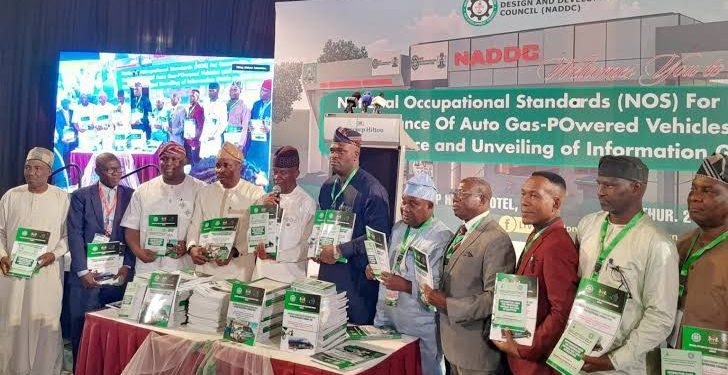
The Federal Government has launched new National Occupational Standards (NOS) for Compressed Natural Gas (CNG) and Electric Vehicles (EVs), marking a bold move to reshape Nigeria’s auto industry and accelerate its transition to cleaner energy.
Unveiled in Abuja by the Minister of State for Industry, Trade and Investment, the initiative is designed to promote industrial growth, job creation, and greener transport solutions.
“This is leadership in action. Under President Bola Tinubu, we’re not just making policy—we’re delivering reforms,” the minister said, noting the automotive sector’s huge potential for economic growth and job creation.
The National Automotive Design and Development Council (NADDC) also introduced safety and technical guidelines for converting, calibrating, and maintaining autogas vehicles—including hybrid and electric models.
These new standards, developed in collaboration with the National Board for Technical Education (NBTE) under the National Skills Qualification Framework (NSQF), will ensure Nigerian technicians receive certified, standardized training.
“The NOS will harmonize training across universities, polytechnics, and technical colleges, and allow technicians to gain certifications up to Level Five,” said NADDC DG, Joseph Osanipin.
He stressed that safety and consistency in CNG vehicle retrofitting are essential, and that embracing cleaner fuels like natural gas could help Nigeria avoid the same pitfalls experienced in the crude oil era.
Also speaking at the event, CEO of the Presidential CNG Initiative (Pi-CNG), Michael Oluwagbemi, called for more investment in infrastructure and skilled labor to support nationwide adoption of CNG. He pointed to private sector interest—such as Dangote’s plan to build 200 CNG stations—as a promising sign, while urging others like BUA, NNPC, and A.Y. Shafa to contribute.
“Standards unlock skills, and skills build infrastructure,” he said. “We need certified manpower to power Nigeria’s clean energy transition.”
The launch event brought together stakeholders from the automotive, oil & gas, technical education, and environmental sectors, all aligned in building a cleaner, more job-rich, and energy-resilient Nigeria.
[give_form id="20698"]