csrreporters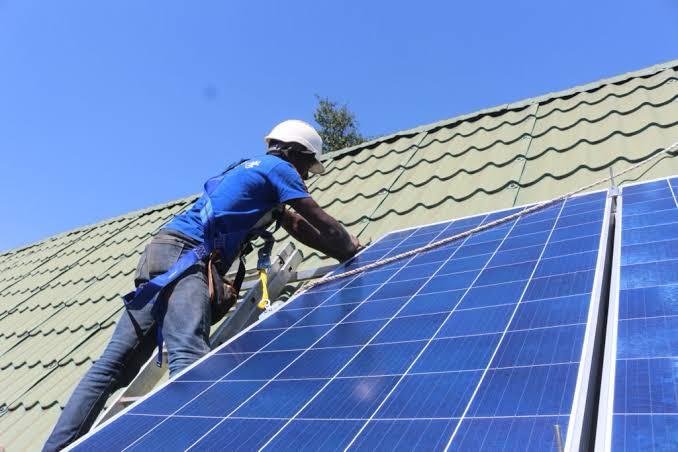
Across Lagos, the steady hum of generators has become part of everyday life. From small roadside shops to growing businesses, millions rely on petrol and diesel to power basic operations. Electricity from the national grid is often inconsistent, and for many, simply keeping the lights on comes at a high financial and environmental cost.
This is not just a Nigerian problem, it is a continental one.
Across Africa, over 600 million people still lack access to reliable electricity. For decades, this gap has limited economic growth, constrained education, and reduced quality of life for millions. In Nigeria, this challenge is even more pronounced in rural areas, where infrastructure gaps persist and communities remain underserved. Yet in 2026, a quiet but powerful shift is underway one that is redefining both energy access and the meaning of corporate social responsibility (CSR). Effort to improve energy access in rural Nigeria are beginning to gain momentum.
At the center of this shift is off grid solar.
From Energy Crisis to Innovation Opportunity
Africa’s energy challenge has long been framed as a development issue requiring government intervention and international aid. While these remain important, they have not been sufficient to close the access gap.
Now, private sector innovation is stepping in to accelerate progress.
Companies like M-KOPA and d.light are leading a new wave of decentralized energy solutions. Their approach is simple but transformative: provide affordable solar home systems through flexible, pay-as-you-go financing.
Instead of paying large upfront costs, customers make small daily or weekly payments using mobile money. Over time, they own the system outright. This model has unlocked access for millions of low income households who were previously excluded from traditional energy infrastructure.
The impact is immediate and tangible. Homes gain lighting. Students can study at night. Small businesses extend operating hours. Phone charging a critical service in today’s digital economy becomes reliable and accessible.
This is not theoretical impact. It is lived experience across communities.
A New Definition of CSR
Traditionally, CSR in many African markets has been associated with philanthropy donations to schools, hospital projects, or periodic community outreach programs. While these efforts have value, they are often short term and disconnected from core business operations.
The rise of off grid solar signals a fundamental shift.
Here, companies are not just giving back; they are solving systemic problems through scalable business models. Energy access becomes both a commercial opportunity and a social mission.
This represents a new kind of CSR, one that is:
• Integrated into business strategy
• Sustainable over the long term
• Measurable in real world impact
Rather than writing cheques, companies are building infrastructure. Rather than temporary relief, they are enabling lasting change.
In this sense, solar energy is not just powering homes, it is powering a new philosophy of corporate responsibility.
Why Solar Aligns Perfectly with CSR Goals
Off-grid solar sits at the intersection of several urgent global and regional priorities.
First, it addresses energy access, one of Africa’s most pressing development challenges. Without electricity, economic participation is limited and inequality deepens.
Second, it contributes to climate action. By reducing reliance on diesel generators and kerosene lamps, solar solutions significantly cut greenhouse gas emissions and local air pollution.
Third, it drives economic empowerment. Reliable energy enables micro enterprises to grow, supports digital inclusion, and creates new jobs across the solar value chain from sales agents to technicians.
For companies, this alignment is powerful. A single investment in solar infrastructure can deliver impact across multiple Sustainable Development Goals, making it one of the most efficient CSR strategies available today.
The Nigerian Context: Urgency Meets Opportunity
In Nigeria, the case for off grid solar is particularly strong.
Despite being Africa’s largest economy, Nigeria continues to face persistent electricity challenges. Grid supply falls short of demand, and outages are frequent. As a result, businesses and households spend billions annually on generators and fuel.
This dependence has both economic and environmental consequences. Fuel costs eat into profits, while emissions contribute to air pollution and climate change.
Solar offers a viable alternative.
With abundant sunlight throughout the year, Nigeria has significant untapped potential for solar energy adoption. Off grid solutions, in particular, can bypass the limitations of centralized infrastructure and deliver power directly to underserved communities.
For corporations operating in Nigeria, investing in solar whether through partnerships, financing, or direct deployment represents a clear and impactful CSR pathway.
Moving Beyond “Feel-Good” CSR
One of the most important shifts happening in 2026 is the move away from symbolic CSR toward impact driven strategies.
Stakeholders including investors, regulators, and consumers are increasingly demanding transparency and measurable outcomes. It is no longer enough for companies to claim they are making a difference; they must demonstrate it with data.
Off grid solar naturally supports this shift.
Impact can be tracked in concrete terms:
• Number of households electrified
• Reduction in diesel usage
• Increase in income for small businesses
• Improvements in education and health outcomes
This level of measurability strengthens accountability and enhances credibility.
It also challenges companies to think bigger. Instead of isolated initiatives, CSR becomes about building systems that deliver continuous value.
Barriers That Still Need to Be Addressed
Despite its rapid growth, the off grid solar sector is not without challenges.
Affordability remains a concern for the lowest income households, even with flexible payment models. Reaching remote and rural communities requires significant logistical coordination and investment.
There are also regulatory hurdles. Policy frameworks for renewable energy are still evolving in many African countries, and inconsistent regulations can slow down expansion.
Financing is another critical issue. While investor interest in African solar is growing, access to large scale, patient capital remains limited.
Addressing these barriers will require collaboration across sectors. Governments must create enabling policies. Financial institutions need to support innovative funding models. Corporations can play a key role by integrating solar into their CSR and ESG strategies.
The Bigger Picture: A Blueprint for the Future
What is happening in Africa’s solar sector reflects a broader global trend.
CSR is no longer a side function, it is becoming central to how companies operate and create value. The most forward thinking organizations are those that align profitability with purpose, embedding impact into their core business models.
Off grid solar offers a clear example of how this can be done.
It demonstrates that addressing major societal challenges does not have to come at the expense of financial performance. In fact, when executed effectively, it can drive growth, innovation, and long-term resilience.
Conclusion: Powered by Purpose
As Africa continues to navigate its energy future, the role of the private sector will be critical. Governments alone cannot close the electricity gap. Partnerships, innovation, and investment will all be required.
In this landscape, off-grid solar stands out as one of the most promising solutions not just for energy access, but for redefining corporate responsibility itself.
The generator economy that defines cities like Lagos may not disappear overnight. But change is already happening, quietly and steadily, in homes and communities across the continent.
And as more companies recognize the potential of solar as a CSR strategy, one thing is becoming clear:
The future of impact in Africa will not be powered by diesel.
It will be powered by the sun.
[give_form id="20698"]