Lagos Has an Agbero Problem: The Hidden Cost of Making a Living in Nigeria’s Commercial Capital
 ONYINYECHI NWAIGBA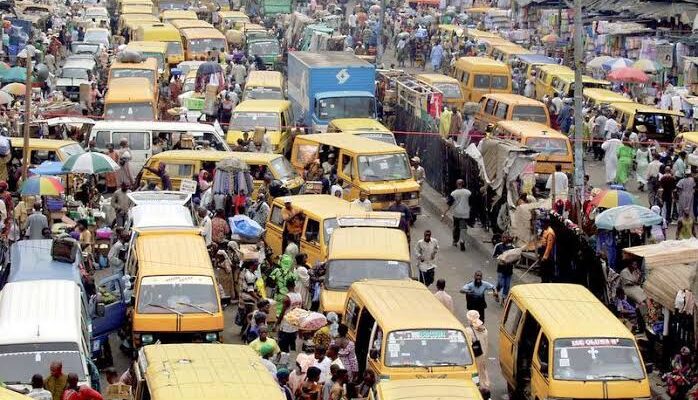
Lagos is a city built on hustle.
Every morning, thousands of people leave their homes to sell vegetables, transport passengers, move goods, run roadside businesses and find ways to earn enough to survive another day. From the busy markets of Mile 12 and Oyingbo to the crowded streets of Oshodi, economic activity begins long before many offices open for business.
But for some of these workers, making money is only half the struggle. The other half is keeping enough of what they earn.
Recently, I discovered something that made me look at the agbero problem in Lagos from a different perspective. It was not just about commercial buses, conductors and the money collected at motor parks. Pepper sellers, onion sellers and other small traders who push their goods around in wheelbarrows were also reportedly being made to pay.
Think about that for a moment.
Someone buys pepper or onions, loads the goods into a wheelbarrow and pushes them around, hoping to sell enough to cover the cost of the goods and make a small profit. Yet, before that person can enjoy the proceeds of the day’s work, there may be demands for money from people claiming to be entitled to collect it.
Where is the fairness in that?
This observation reflects a much bigger question about the informal economy in Lagos: how can people at the bottom of the economic ladder build sustainable livelihoods when they must contend with repeated, poorly explained or potentially unauthorized payments?
Reports published in 2026 have documented complaints from traders in Lagos markets about multiple levies, including payments demanded without receipts or clear legal backing. The problem is therefore not limited to the experience of one person or one category of trader. It raises wider questions about how revenue collection is organized and enforced across parts of the city’s informal economy.
The Agbero Problem Is Bigger Than Public Transportation
In everyday conversations, the word “agbero” is commonly associated with men who collect money from commercial drivers, conductors and transport operators at motor parks and along busy routes.
The consequences can extend beyond the driver who hands over the money.
When transport operators face multiple daily charges, the cost of running their businesses rises. Drivers must still pay for fuel, vehicle maintenance and other operating expenses. Where informal collections become an additional burden, some operators may attempt to recover those costs through higher fares.
Commuters ultimately risk paying more for the same journey.
A December 2025 investigation by PUNCH examined the financial burden of informal transport collections in Lagos and described how the payments affect drivers, commuters and small businesses. It also documented drivers’ accounts of repeated collections at different points along their routes.
However, the issue does not stop at the bus park.
Market traders, hawkers and other informal workers also operate within an environment where access to trading spaces, movement of goods and the ability to earn an income can be affected by competing demands for payment.
A June 2026 investigation by NewsClick Nigeria described how petty traders, including wheelbarrow pushers, faced multiple demands for money under different labels. A separate report published by PUNCH in March 2026 documented the experiences of women traders in markets including Oyingbo, Mile 12 and Oshodi.
Together, these accounts point to a problem that deserves attention beyond the usual complaints about traffic and motor parks.
The question is not simply whether people are collecting money. It is who has the authority to collect it, what the payment is for, whether the amount is lawful and where the money goes.
When Every Small Payment Eats Into a Trader’s Profit
To understand the consequences, consider the economics of a small trader.
A pepper seller purchases produce, transports it to a market or selling point and hopes to sell it at a margin that covers expenses and provides an income. An onion seller faces similar pressures, including changes in purchase prices, spoilage, transportation costs and unpredictable customer demand.
These are businesses that often operate with limited capital.
Unlike a large company, a small trader may have little financial cushion to absorb unexpected expenses. A payment that appears insignificant to someone else can represent a meaningful portion of the trader’s daily earnings.
Now imagine facing several such demands in one day.
The trader may have to pay for transportation, market access or other legitimate charges, alongside additional payments whose purpose or authorization is unclear. If refusing to pay risks harassment, disruption or the loss of goods, the trader’s ability to choose becomes even more limited.
The result is a business environment in which the cost of working keeps increasing, while the person doing the work has little control over those costs.
For wheelbarrow pushers and mobile sellers, the burden can be especially troubling because their livelihoods depend on movement. They need to transport goods, reach customers and complete transactions. If moving through public spaces becomes an opportunity for repeated collections, the ability to earn a living is placed under additional pressure.
This is also a development issue.
Small traders contribute to food distribution, local employment and the everyday functioning of urban communities. They help move agricultural produce from supply points to consumers and make goods accessible to people who cannot always afford to shop in large supermarkets.
Making their work more expensive without a clear and accountable system of charges does not help build a healthier local economy.
Not Every Levy Is Illegal, but Every Levy Must Be Accountable
There is an important distinction to make here.
Local governments have legitimate responsibilities concerning markets, trading permits and other approved charges. Traders may be required to pay lawful fees for specific services or permissions. Lagos Island Local Government, for example, publishes information about approved categories of local levies and advises residents to request official receipts and verify charges through its revenue office.
The existence of a payment demand, therefore, does not automatically establish that the demand is unlawful.
The concern arises when individuals collect money without clear authorization, demand amounts that cannot be verified, issue no receipts or use intimidation to compel payment.
In those circumstances, traders have a legitimate reason to ask questions.
Who authorized the collection? Is the amount listed in an approved schedule? What service does it cover? Which public authority receives the revenue? What complaint mechanism exists when a collector exceeds their authority?
These questions should have clear answers.
Transparency protects both traders and legitimate revenue authorities. It helps distinguish official payments from unauthorized collections, reduces opportunities for abuse and makes it easier to hold the appropriate people accountable.
A functional revenue system should not depend on a trader’s fear of what might happen if they refuse to hand over cash.
The Governance Question Lagos Cannot Ignore
The persistence of complaints about informal collections raises questions about enforcement and institutional responsibility.
Lagos has previously introduced measures intended to address multiple transport levies. In January 2022, the state announced a consolidated daily levy for commercial transport operators, with the stated aim of reducing repeated payments at different parks and stops. Yet subsequent reporting has continued to document complaints about multiple collections.
This raises an important implementation question: what happens after a policy is announced?
A policy may establish an approved payment structure, but its effectiveness depends on whether the rules are communicated, monitored and enforced in practice. Where unauthorized collections continue, the public needs to know which agencies are responsible for investigating complaints and what corrective action is being taken.
The same principle applies to market trading.
Authorities should be able to identify the charges traders are expected to pay, the people authorized to collect them and the channels through which payments should be made. Traders should be able to verify a demand without exposing themselves to unnecessary confrontation.
There must also be a practical way to report suspected extortion and receive a response.
This is not an argument against legitimate revenue collection. It is an argument for making revenue collection lawful, transparent and proportionate.
If government requires residents and businesses to comply with its rules, the institutions responsible for enforcing those rules must also be accountable for how they operate.
What Should Change?
Addressing the problem requires more than occasional enforcement exercises or public statements.
First, approved market and transport levies should be clearly published and displayed at relevant locations. Traders and drivers should be able to see the amount payable, the purpose of the charge and the authority responsible for collecting it.
Second, payments should be traceable. Official receipts and verifiable electronic payment options can help reduce disputes about whether money has been collected on behalf of a recognized authority.
Third, authorities should investigate credible complaints about unauthorized collections, intimidation and threats against traders or transport operators. Where wrongdoing is established, consequences should follow regardless of the collector’s position or affiliation.
Fourth, small traders need accessible complaint channels. A system that requires a struggling pepper seller to lose a day’s income traveling between government offices is unlikely to provide meaningful protection.
Finally, authorities should assess how existing collection practices affect informal workers. Enforcement should not focus only on keeping roads clear or maintaining order in markets. It should also consider whether people can conduct lawful economic activity without being subjected to arbitrary demands.
These measures would not eliminate every challenge facing Lagos’s informal economy. However, they would create a clearer framework for distinguishing legitimate public revenue from practices that undermine livelihoods and public trust.
A City Cannot Thrive by Making Survival More Expensive
There is something particularly troubling about the idea of collecting repeated payments from people who are already struggling to earn a living.
The woman selling pepper is trying to feed her family. The man pushing a wheelbarrow is providing a service. The onion seller is participating in the food supply chain. The commercial driver is trying to keep a vehicle running and take passengers to their destinations.
They are not outside the economy. They are part of what keeps it moving.
Their businesses may be small, but their collective contribution to Lagos is significant. They connect producers to consumers, create livelihoods and make everyday commerce possible.
That is why complaints about informal levies should not be dismissed as a minor inconvenience or an unavoidable part of doing business in a busy city.
They are questions of economic fairness, public accountability and the conditions under which ordinary people are allowed to work.
The solution is not to assume that every collector is acting illegally or that every payment is illegitimate. It is to establish a system in which every demand for money can be explained, every authorized collection can be verified and every allegation of abuse can be investigated.
Lagos is known for its resilience and entrepreneurial spirit. But resilience should not become an excuse for leaving people to endure preventable hardship.
A city that wants its small businesses to survive must do more than celebrate their hustle. It must create an environment in which their efforts have a fair chance of paying off.
Because if a person must keep paying simply to move their goods, reach a customer or sell what they have worked hard to buy, then the question is no longer just about agberos.
It is about who protects the people who keep the city running, and who holds those collecting the money accountable.
And perhaps that is the question Lagos needs to answer most urgently: who is making a living easier for the people who make a living possible?
[give_form id="20698"]