NG-CARES Gets $500m Boost: What the $490m Allocation Means for Nigerian Households and Small Businesses
 ONYINYECHI NWAIGBA
The Federal Government and the World Bank are expanding a programme expected to reach millions of vulnerable Nigerians. But with state governments responsible for implementation, the real test will be whether the funding translates into accessible support, stronger livelihoods and measurable improvements in local economies.
For millions of Nigerian households, small businesses and farmers, economic hardship is not an abstract policy discussion. It is reflected in the cost of food, the difficulty of maintaining a business, the rising cost of agricultural inputs and the struggle to keep household income ahead of daily expenses.
Government interventions designed to cushion these pressures can make a difference, but their effectiveness depends on more than the amount of money announced. The support must reach the right people, address real economic challenges and produce results that can be measured.
This is the challenge facing the next phase of Nigeria’s Community Action for Resilience and Economic Stimulus programme, widely known as NG-CARES.
The Federal Government has announced that $490 million from an additional $500 million World Bank financing package has been allocated to participating state governments to strengthen poverty reduction, improve food security and support vulnerable households and businesses.
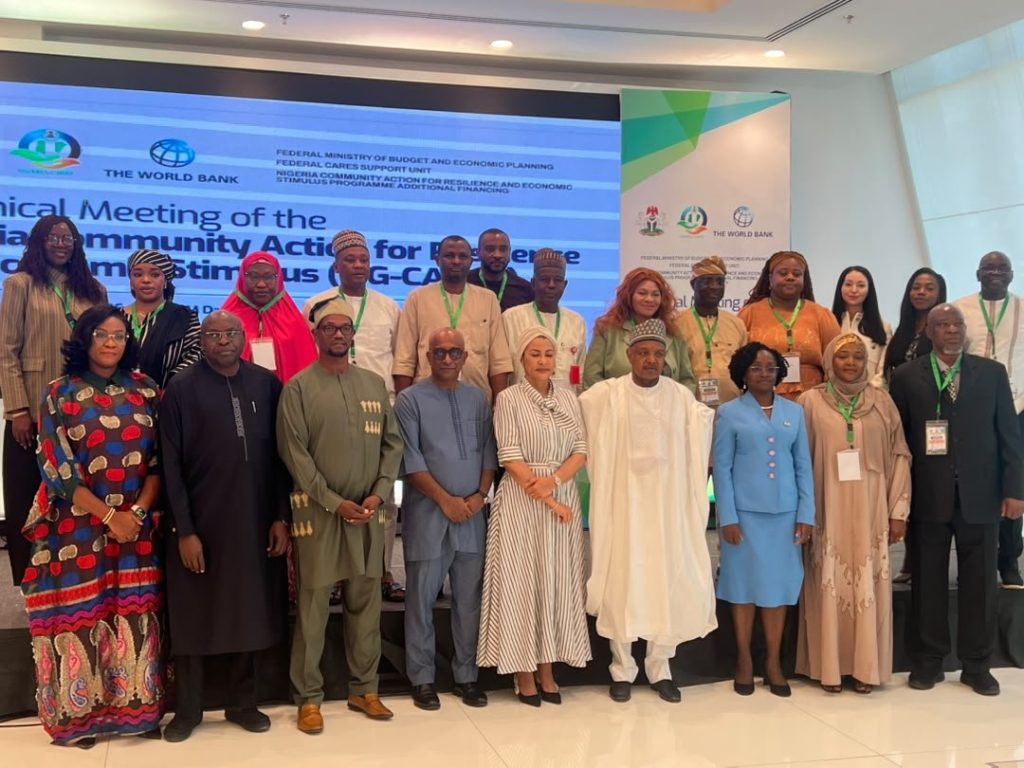
The National Coordinator of the NG-CARES Support Unit, Dr Abdulkarim Obaje, disclosed the allocation during a technical meeting in Abuja on November 16, 2026.
The announcement places state governments at the centre of the programme’s next phase, with governors and relevant ministries expected to coordinate budgeting, implementation, monitoring and delivery.
The funding is significant, but it is important to understand what it represents. The $490 million is an allocation to participating states, not a direct payment to individual Nigerians. It also does not mean that the entire amount has already been disbursed or that a new nationwide application portal has opened.
For households, farmers and business owners, the more important question is how quickly and effectively this financing will translate into practical assistance.
What is NG-CARES and why is it receiving additional funding?
NG-CARES was introduced to help poor and vulnerable Nigerians recover from the economic disruption caused by the COVID-19 pandemic.
Over time, the programme evolved beyond its original emergency-response purpose. It became a broader platform for supporting livelihoods, agricultural production, food security, small businesses and access to basic community services.
Its interventions are implemented through state-level structures, allowing governments to respond to the specific economic and social needs of their populations.
The World Bank approved an additional $500 million for the programme in March 2025. This followed the original $750 million financing arrangement, bringing the World Bank’s total financing for NG-CARES to $1.25 billion.
The additional financing is intended to strengthen the programme’s existing interventions and extend its reach as Nigerian households and businesses continue to face economic pressures.
According to the World Bank, NG-CARES has evolved into a shock-responsive platform that supports vulnerable communities through social transfers, livelihood grants, agricultural assistance, labour-intensive public works, basic community services and support for micro and small enterprises.
This broader approach is important because economic hardship rarely affects people in only one way.
A household may struggle with food affordability while also losing income because a family business has reduced operations. A farmer may need agricultural inputs but lack the money to purchase them. A small enterprise may have customers but lack the capital to maintain production.
Addressing these interconnected challenges requires interventions that go beyond a single form of financial assistance.
What does the $490 million allocation mean for Nigerians?
The additional financing is expected to support several categories of beneficiaries, particularly poor and vulnerable households, farmers and small businesses.
The World Bank has projected that the expanded programme will reach approximately 8.9 million beneficiaries through safety nets and basic services, including about 4.1 million women. It also expects approximately 4.5 million farmers to receive support.
These are programme targets, not confirmation that all the projected beneficiaries have already received assistance.
The different intervention areas are expected to address some of the economic challenges affecting households and local businesses.
1. Small businesses could receive support to sustain their operations
For many micro and small businesses, the ability to remain operational depends on access to working capital, productive assets and a stable source of income.
A small food-processing business, for instance, may struggle to purchase raw materials in sufficient quantities. A local trader may lack the resources to restock goods, while a small service provider may need equipment to maintain operations.
NG-CARES includes interventions designed to support micro and small enterprises, restore livelihoods and improve business resilience.
Depending on the programmes implemented by individual states, eligible businesses may benefit from livelihood grants, productive assets or other forms of business-related assistance.
This could help businesses maintain operations, recover from economic shocks and protect existing employment.
However, the latest funding announcement does not specify a uniform grant amount for business owners or establish a single nationwide application process.
The real value of this component will depend on whether support reaches viable but vulnerable businesses, particularly enterprises that have limited access to conventional financing.
It will also be important to establish whether beneficiaries receive support that helps them sustain their businesses beyond the initial intervention.
2. Farmers could receive support to improve food production
Agriculture is another major component of NG-CARES.
The World Bank expects approximately 4.5 million farmers to receive support under the expanded programme.
This is particularly relevant as agricultural producers continue to face challenges involving the cost of inputs, access to productive resources, infrastructure and disruptions to farming activities.
For smallholder farmers, access to improved inputs and appropriate agricultural assistance can influence how much they produce and how effectively they respond to changing conditions.
When farmers are better supported, the benefits can extend beyond individual farming households.
Improved agricultural production can strengthen local food supply chains, support food processors and traders, create demand for transportation services and contribute to the availability of food in local markets.
But agricultural assistance must be appropriate to the needs of different farming communities.
Access to inputs alone may not be enough where farmers also face poor storage facilities, limited market access, inadequate irrigation, insecurity or high transportation costs.
The programme’s impact will therefore depend on whether state governments design interventions that address the practical conditions affecting agricultural productivity.
3. Vulnerable households could receive stronger social protection
NG-CARES also seeks to improve the ability of vulnerable households to withstand economic shocks.
For families with limited and unstable incomes, a sudden increase in food prices, loss of employment, illness or disruption to their livelihoods can have serious consequences.
Social protection interventions can help prevent temporary economic difficulties from becoming long-term deprivation.
The programme is expected to strengthen safety nets and improve access to basic services, with particular attention to people who are most vulnerable.
The World Bank has also emphasised the importance of improving social registers and beneficiary identification systems.
This matters because the effectiveness of social assistance depends partly on whether governments can identify the people who genuinely need support.
Accurate records can help reduce duplication, improve targeting and make it easier to monitor whether assistance reaches its intended recipients.
Why state governments hold the key to the programme’s success
One of the most important features of the additional financing is the central role assigned to state governments.
Although the programme is supported by the Federal Government and the World Bank, much of the implementation responsibility rests with participating states.
This means the success of NG-CARES will vary significantly according to how effectively individual state governments organise their interventions.
At the November 16 technical meeting, the Federal Government provided an update on state participation and eligibility documentation.
The Permanent Secretary of the Federal Ministry of Budget and Economic Planning, Dr Deborah Odoh, disclosed that 35 states and the Federal Capital Territory had joined the additional financing programme, while 33 states had submitted eligibility documents for review.
The National Coordinator of the NG-CARES Support Unit also explained that 17 states had submitted eligibility documents to the World Bank for clearance, while another six had satisfied federal requirements and were preparing to forward their documentation.
These figures reflect different stages of the eligibility and documentation process. They should not be interpreted as confirmation that every participating state has completed clearance or begun distributing assistance.
For states, the next challenge is to complete the outstanding requirements, establish implementation arrangements and ensure that approved interventions respond to actual community needs.
This is particularly important because a state may have access to programme financing but still struggle to deliver meaningful results if its implementation systems are weak.
The accountability question: How will Nigerians know the money is working?
The announcement of $490 million creates an important accountability responsibility.
Public financing and development assistance should be judged not only by the amount committed but also by what the money achieves.
For NG-CARES, this means Nigerians should be able to understand how participating states are using the resources, who is benefiting and what measurable improvements are being recorded.
The World Bank has emphasised the importance of independent verification, stronger social registers and transparent delivery of assistance.
These safeguards are important because social intervention programmes can face challenges involving inaccurate beneficiary records, duplication, poor monitoring and the diversion or inefficient use of resources.
Independent verification can help establish whether reported results are supported by evidence.
For small businesses, monitoring should go beyond the number of grants or assets distributed. It should examine whether businesses remain operational, improve productivity or retain workers after receiving assistance.
For farmers, the assessment should consider whether support improves production, strengthens access to markets and contributes to more reliable agricultural livelihoods.
For vulnerable households, the programme should demonstrate whether assistance improves access to basic services and strengthens their ability to withstand economic shocks.
Publishing clear results would also help build public confidence in government-backed social protection programmes.
What previous NG-CARES results tell us
The additional financing builds on an intervention that has already reached millions of Nigerians.
During the November 2026 technical meeting, the World Bank’s NG-CARES Task Team Leader, Dr Lire Ersado, disclosed that the programme had reached approximately 17.6 million direct beneficiaries through its various interventions.
The World Bank had earlier reported that the programme reached more than 15 million direct beneficiaries, highlighting its scale and the role of state-level interventions in supporting vulnerable populations.
These figures demonstrate the programme’s reach, although beneficiary numbers alone do not establish the depth or long-term sustainability of the impact.
A person receiving agricultural inputs, a household accessing a social protection service and a business receiving a livelihood grant may all count as beneficiaries, but the nature and duration of the benefits differ.
The next phase should therefore place greater emphasis on the quality of outcomes.
How many supported businesses are still operating? How many farmers have improved their production? How many households have become more economically secure? What proportion of beneficiaries are women and other groups facing additional barriers?
These are the questions that can help distinguish between programme activity and lasting development impact.
What should Nigerians do if they want to benefit?
The latest announcement does not establish a new nationwide application portal for individual Nigerians to register for automatic cash payments.
NG-CARES is implemented through state-level programmes, and the form of support, eligibility requirements and registration procedures depend on the intervention being offered.
Nigerians interested in possible assistance should monitor announcements from their respective state governments and authorised NG-CARES implementation agencies.
The official programme website, ngcares.gov.ng, provides background information and programme updates.
Business owners and farmers should also be cautious of unofficial websites, agents or individuals demanding payment in exchange for guaranteed access to NG-CARES funding.
The announcement of additional financing should not be mistaken for an invitation to pay registration fees to secure a grant.
Beyond the funding announcement
The additional $500 million financing represents an important opportunity to strengthen social protection, support agricultural livelihoods and improve the resilience of small businesses across Nigeria.
But the funding alone cannot guarantee these outcomes.
Its impact will depend on the ability of state governments to complete eligibility requirements, identify the right beneficiaries, deliver appropriate assistance and demonstrate how the resources are being used.
For small businesses, the priority should be support that helps them remain productive and protect livelihoods. For farmers, it should be assistance that improves production and strengthens food systems. For vulnerable households, it should be reliable support that improves their ability to withstand economic shocks.
Ultimately, the success of NG-CARES will not be determined by the size of the financing package or the number of states participating.
It will be determined by whether the money reaches the people it was intended to support, whether their economic circumstances improve and whether those improvements can be sustained.
For millions of Nigerians who need more than another policy announcement, that is the result that matters.
[give_form id="20698"]