


 ROSEMARY IMOBHIO
Nigeria has dropped 19 places on the World Economic Forum’s Energy Transition Index. It slipped from 61st position globally in 2025 to 80th in the 2026 edition. The country’s score fell from 54.8 to 52.7 points. It now ranks eighth in Africa, down from first a year earlier.
The reversal is striking mainly because of what preceded it. In 2025, Nigeria was Africa’s highest-ranked country on the index. It had climbed 48 places in a single year on the back of regulatory reforms and rising clean-energy investment. A year later, Namibia, Tunisia, Gabon, South Africa, Morocco, Mauritius and Cameroon all rank above it.
Yet Nigeria has not stood still. Over the same period, distributed solar rollouts, gas-flare reduction, climate-finance plans, electric-mobility incentives and state-level power reforms all continued. That combination raises a genuine question rather than a simple verdict. How does a country keep building transition programmes while its position on a global readiness index moves backward?
What The WEF Index Actually Measures
The Energy Transition Index is produced by the World Economic Forum in collaboration with Accenture. It is now in its sixteenth year of tracking. The 2026 edition, released on 18 June 2026, covers 120 countries and uses 44 indicators.
It combines two distinct assessments. The first is current energy-system performance, covering security, sustainability and equity, essentially how well a country’s energy system works today. The second is transition readiness, which looks at the policy, financial, infrastructural, innovation and human-capital conditions needed to sustain progress over time.
A country can perform reasonably on today’s energy system while showing weaker readiness for tomorrow’s, or vice versa. The WEF treats readiness as the more forward-looking signal.
Notably, the 2026 report recorded the first decline in global transition readiness in more than a decade. Overall ETI progress worldwide nearly flatlined, with system performance improving modestly. Readiness weakened due to softer regulation, reduced investment flows and slowing innovation.
Nigeria’s fall, therefore, did not occur against a backdrop of universal global improvement. It occurred at a moment when the enabling conditions for transitions were eroding almost everywhere.
Africa’s Uneven Progress
Even so, Africa as a region moved in a different direction. Sub-Saharan Africa recorded the strongest regional improvement anywhere in the 2026 index. One of only two regions globally to improve on transition readiness even as the world average declined.
Namibia emerged as the continent’s new leader, ranking 61st globally with a score of 56.2, three places better than in 2025. Its electricity mix leans heavily on hydropower, and the WEF credited its progress to regulatory reform and rising investment in clean energy, alongside ambitions in green hydrogen. Tunisia followed in 62nd place, with Gabon, South Africa, Morocco, Mauritius and Cameroon rounding out the top seven.
Kenya’s story adds further texture. Although it ranked 87th overall, well behind Nigeria, Kenya was singled out as one of the region’s strongest improvers, partly on the back of research and development spending that reportedly doubled as a share of GDP between 2022 and 2023.
In other words, Africa’s transition story in 2026 is not simply about who sits highest on the table. It is about which countries are strengthening the underlying conditions that determine future progress. Nigeria’s relative position weakened even as several peers gained ground.
None of this means every other African country now has a stronger or more reliable energy system than Nigeria’s in every respect. Nigeria remains the continent’s largest oil producer and West Africa’s leading gas producer. This is a position the WEF explicitly notes when describing its continued relevance to the region’s energy future. The ranking reflects a composite readiness picture, not a verdict on scale or importance.
What Nigeria Has Actually Been Doing
The past year has not been one of inactivity. Several strands of Nigeria’s energy-transition programme continued to advance. Understanding them is essential to interpreting the ranking fairly.
Energy Transition Plan
Nigeria’s Energy Transition Plan, first unveiled in 2021 with a 2060 net-zero target, remains the umbrella framework guiding activity across power, cooking, transport, industry, and oil and gas. The plan has been periodically updated to reflect new data and policy developments. It continues to frame gas as a transition fuel rather than a permanent solution.
DARES
On energy access, the World Bank-financed Distributed Access through Renewable Energy Scale-up programme (DARES), remains one of the most consequential initiatives under way. Backed by a $750 million International Development Association credit designed to leverage more than $1 billion in private capital, DARES aims to provide over 17.5 million Nigerians with new or improved electricity access through standalone solar systems and mini-grids.
Given that tens of millions still lack reliable grid access, this is not a peripheral add-on. It addresses one of the most fundamental constraints on the country’s energy system.
Climate Change Fund
Climate finance has also seen renewed attention, with continued efforts around a proposed National Climate Change Fund and a Climate Investment Platform. These are intended to draw larger pools of private and institutional capital toward transition projects. However, they remain, for the most part, announced mechanisms and targets rather than fully deployed capital. This is a distinction worth preserving rather than blurring.
Electric Vehicles
Electric mobility offers a particularly useful illustration of the wider challenge. Nigeria has pursued incentives for EV imports and local assembly, and pilot projects have expanded in various states.
However, electric vehicles depend on dependable electricity and charging infrastructure to function at scale. Both of these remain constrained by the same grid weaknesses that affect the rest of the economy. A policy incentive, in other words, is not the same as a functioning system.
Gas-flare Commercialisation
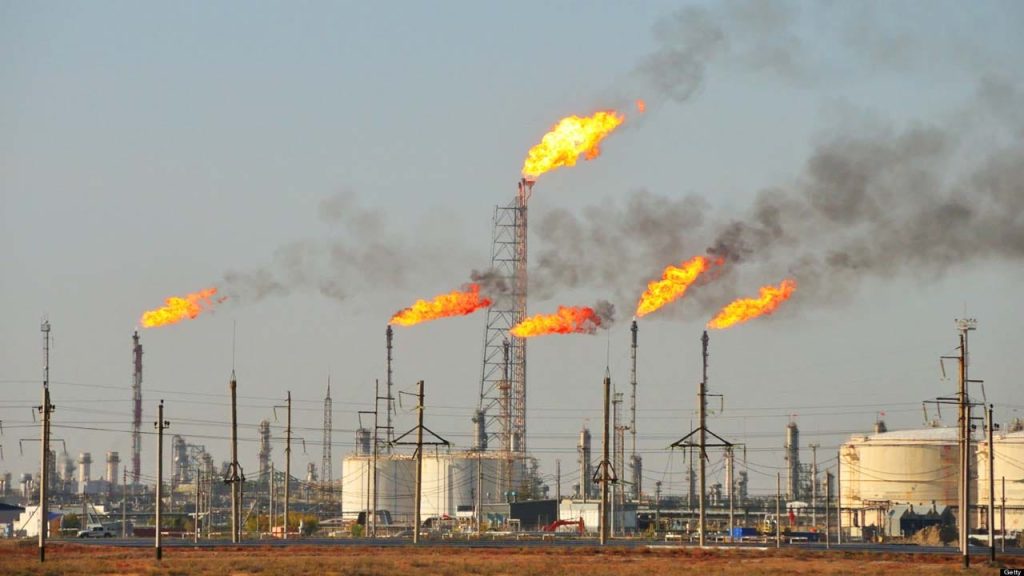
Gas-flare commercialisation has continued as well, through programmes intended to capture and monetise gas that would otherwise be flared, reducing emissions while creating new revenue streams. This sits within the broader tension embedded in Nigeria’s approach. Attempting to expand energy access and cut flaring-related emissions. These while remaining heavily dependent on hydrocarbons for revenue and industrial activity.
Power Sector Reform
Finally, power-sector reform has extended beyond renewables. Nigeria’s electricity market reforms have opened space for states to regulate and develop their own intrastate markets. Lagos is among the states building out independent electricity regulatory frameworks. This points to structural change in how Nigeria’s power sector is governed, separate from any single renewable-energy project.
The Gap Between Ambition And Readiness
Taken together, these efforts describe a country that is far from passive. Nigeria has an energy-transition plan, a large distributed-energy programme, emerging climate-finance mechanisms, electric-mobility incentives, gas-flare reduction efforts, power-sector reforms and continued private investment interest.
Yet the WEF’s readiness framework does not simply reward the existence of programmes. It measures whether underlying conditions, financing depth, regulatory consistency, infrastructure resilience, innovation capacity and human capital, are strengthening in ways that let individual initiatives scale and endure.
On several of those fronts, Nigeria continues to face familiar constraints. Unreliable electricity supply, transmission and distribution bottlenecks, limited access to affordable capital, regulatory uncertainty and persistent affordability pressures for ordinary households.
The electric-vehicle example illustrates this gap concretely. Incentivising EV adoption is a policy choice. Building the grid and charging network to support it is a systems challenge. The two do not move at the same pace.
Distributed solar tells a related story from the opposite direction. DARES is designed precisely because the national grid cannot yet reach or reliably serve tens of millions of Nigerians. This is itself evidence of how far the underlying system still has to travel.
The evidence suggests a gap, then, between accumulating transition initiatives and building the deeper, integrated conditions the WEF’s readiness sub-index is designed to capture. This is not necessarily an indictment of individual programmes, many of which are genuinely well-conceived. The ranking raises questions about whether the pace of institutional, financial and infrastructural change is keeping up with the pace of policy announcements.
Read Also: Nigeria’s GDP Is Growing. Where Is the Dividend?
It would be a mistake to read this as proof that Nigeria’s transition has failed. A one-year change in a composite global ranking, however striking, cannot settle whether a decade-long national strategy is working. The World Economic Forum itself notes that Nigeria’s ETI score has risen by more than 19 percent over the past ten years. It describes this as reflecting genuine policy transformation over the longer arc, even as the 2026 snapshot shows a decline.
Both facts can be true simultaneously: real progress over a decade, and a weaker single-year position relative to accelerating peers.
Equally, it would be inaccurate to claim the WEF identified specific causes for Nigeria’s fall. The index does not attribute country-level movements to individual policy failures, and this analysis does not either. What the data supports is a pattern, not a diagnosis. Ambition that continues to expand, alongside readiness conditions that, on the evidence available, may not be strengthening at the same rate.
A Bigger Question For Africa
Returning to the continental picture sharpens this point. Namibia now leads Africa on the index. Kenya stands out among the notable improvers. South Africa and Morocco remain significant transition stories in their own right, each with distinct strengths in readiness or investment. Sub-Saharan Africa as a whole recorded the strongest regional gain worldwide.
Nigeria, meanwhile, moved in the opposite direction. The country’s challenge may be less about the absence of initiatives and more about whether those initiatives are converting into the integrated, financeable, reliable energy system that transition readiness ultimately measures. Africa’s largest economy and most populous nation continues to carry outsized weight in any regional transition story. This makes its trajectory worth watching closely rather than dismissing.
Whether Nigeria can translate its growing collection of energy-transition programmes into a coherent system capable of delivering secure, affordable and increasingly low-carbon energy at scale remains an open question. The coming editions of the index, more than this single year’s movement, will offer the clearer answer.
Stay with CSR Reporters for continuing coverage of Africa’s energy transition, sustainability and business landscape.
[give_form id="20698"]



1 thought on “Nigeria Falls 19 Places on WEF Energy Index”