Nigeria’s $337 Billion Climate Finance Challenge: Why Food Security Must Be Part of the Conversation
 ONYINYECHI NWAIGBA
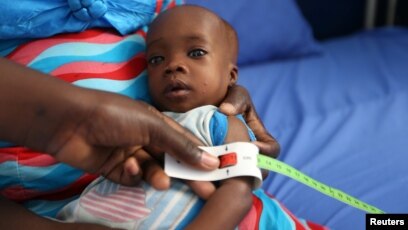
Nigeria needs an estimated $337 billion to implement its climate commitments between 2026 and 2035, while millions of children face acute malnutrition. As the government seeks domestic and international investment for climate action and explores new support for nutrition programmes, the challenge is ensuring that funding strengthens food systems, protects vulnerable communities and delivers measurable improvements in people’s lives.
Nigeria’s climate commitments are entering a critical implementation phase, with the government facing the enormous task of financing emissions reduction, climate adaptation and a more resilient economy over the next decade.
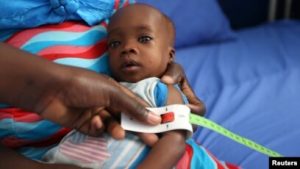
The country’s updated climate action plan estimates that approximately $337 billion will be required between 2026 and 2035. At the same time, the government continues to confront a serious nutrition challenge, with an estimated 6.4 million children under five affected by acute malnutrition across parts of northern Nigeria.
These figures describe different but related development priorities. Climate finance is needed to reduce emissions and help communities adapt to environmental pressures, while the malnutrition crisis requires direct nutrition support, healthcare, improved food access and stronger livelihoods.
The connection between them lies partly in the food system. Flooding, extreme heat and changing rainfall patterns can disrupt agricultural production, damage infrastructure and undermine household incomes. When families already struggle to afford nutritious food, such disruptions can deepen existing vulnerabilities.
However, climate change is not the sole cause of child malnutrition in Nigeria. Insecurity, disease, inadequate diets, weak healthcare coverage and poor sanitation are also major drivers. Addressing the crisis therefore requires coordinated investment across climate resilience, agriculture, public health and social protection.
What Nigeria’s $337 Billion Climate Finance Requirement Covers
Nigeria’s climate financing estimate forms part of its Third Nationally Determined Contribution, commonly referred to as NDC 3.0. The framework outlines the country’s climate commitments and the actions needed to pursue lower emissions while strengthening resilience to climate-related risks.
The estimated $337 billion requirement is divided into three broad components.
Approximately $195 billion is allocated to mitigation measures intended to reduce greenhouse gas emissions. These efforts cover areas such as energy, transport, industry, agriculture, forestry and waste management.
Another $141.5 billion is required for adaptation, which focuses on helping people, infrastructure, businesses and ecosystems withstand the effects of climate change.
The remaining $500 million is designated for Action for Climate Empowerment, which includes efforts to strengthen public awareness, education, training and participation in climate action.
These figures make clear that Nigeria’s climate agenda extends beyond renewable energy and emissions reduction. It also involves protecting communities against environmental risks and building the capacity to respond to their consequences.
Under the financing framework, Nigeria expects to mobilize approximately $67 billion through domestic resources, while the remaining requirement is largely conditional on international financial support, technology transfer and capacity building.
That dependence presents a substantial challenge. International funding must be mobilized, suitable projects must be developed, and public institutions must be able to coordinate and account for the resources they receive.
The $337 billion figure is an estimate of the investment required to implement the country’s climate commitments. It is not money already secured or available for immediate spending.
Why Climate Finance Matters to Food Security
Agriculture remains closely connected to Nigeria’s climate and development challenges. Farmers depend on predictable growing conditions, access to water, healthy soils, functioning transport networks and markets where they can sell their produce.
When flooding destroys farmland or roads, farmers may lose crops, struggle to transport harvests and face higher costs. Extreme heat and unreliable rainfall can also affect crop growth, livestock productivity and access to water.
These disruptions can have consequences beyond the farm. Reduced production, damaged supply chains and rising costs can place additional pressure on food prices and household budgets, particularly for families that already spend a large share of their income on essential goods.
Climate adaptation investments can help reduce some of these risks. Depending on local conditions, measures may include climate-resilient agricultural practices, better water management, early-warning systems, flood protection, improved storage and infrastructure designed to withstand extreme weather.
Access to reliable climate information can also help farmers make informed decisions about planting, harvesting and managing weather-related risks.
Such measures cannot eliminate food insecurity on their own. Conflict, economic pressures, limited access to agricultural inputs, poor market connections and inadequate social protection can still prevent households from obtaining sufficient nutritious food.
Nevertheless, climate-resilient food systems can help protect livelihoods and reduce the likelihood that environmental shocks will deepen existing hardship.
For Nigeria, the key question is whether the adaptation component of its climate plan will translate into practical support for farmers, communities and the infrastructure on which food production depends.
The Human Cost: Millions of Children Facing Acute Malnutrition
The scale of Nigeria’s nutrition challenge makes this connection particularly important.
An October 2025 analysis by the Integrated Food Security Phase Classification (IPC), published in December 2025, estimated that nearly 6.4 million children aged between zero and 59 months across the north-east, north-west and north-central regions would suffer from acute malnutrition during the period covered by the assessment, through September 2026. The estimate included approximately two million children with severe acute malnutrition.
The report also identified nearly 786,000 pregnant and breastfeeding women who would require treatment for acute malnutrition during the same period.
These figures relate to the assessment’s geographical coverage and projection period. They should not be interpreted as a newly measured count for every part of Nigeria or as proof of the precise number affected after September 2026.
The assessment identified several drivers of malnutrition, including inadequate food consumption, high rates of disease, weak health systems and insecurity associated with armed conflict, insurgency and clashes between farmers and herders.
These factors show why food security cannot be reduced to the volume of food produced. A household may live in an agricultural community and still struggle to afford an adequate diet. Children may also face malnutrition because of illness, unsafe water, poor sanitation or limited access to appropriate healthcare.
Effective responses must therefore combine emergency nutrition treatment with preventive healthcare, access to safe water, support for caregivers and measures that help households maintain access to food.
Climate adaptation can strengthen some of the underlying systems, particularly agriculture, water supply and community resilience. It cannot replace targeted nutrition services or the urgent treatment required by children already experiencing acute malnutrition.
A Proposed International Initiative Offers Another Opportunity
The Federal Government is also seeking additional support for efforts to address child malnutrition.
Operation End Starvation, an initiative associated with the Eleanor Crook Foundation, is seeking to mobilize more than $1 billion to prevent child deaths associated with starvation across sub-Saharan Africa over a two-year period. Nigeria has been identified as a priority country for the initiative.
The proposed collaboration is intended to support the government’s efforts to address acute malnutrition, including through cooperation with national health authorities. The United States government has approved Nigeria’s inclusion in the initiative’s plans, according to statements reported in October 2026.
However, the overall funding target should not be confused with a confirmed allocation of $1 billion to Nigeria. The public announcement does not establish how much funding will reach the country, how resources will be distributed or when specific disbursements will begin.
The distinction matters because an announced initiative does not automatically translate into funding on the ground or improved outcomes for children.
To make a measurable difference, the programme would need clearly defined priorities, transparent funding arrangements, effective delivery systems and reliable reporting on the children and communities reached.
It would also need to complement existing government and humanitarian interventions rather than operate as an isolated response.
The Challenge Is Turning Commitments into Outcomes
Nigeria’s climate finance requirement and its malnutrition burden demonstrate why development funding must be assessed by more than the size of the announced figures.
For climate action, the important questions include how much funding is actually mobilized, which sectors and communities receive support, whether projects are completed and how much resilience they create.
For nutrition programmes, accountability means tracking the children reached, the services delivered, treatment outcomes and whether vulnerable households gain more reliable access to nutritious food, healthcare and safe water.
The government’s climate framework provides a basis for coordinating investment across sectors. Its implementation will require clear responsibilities, credible projects, transparent financing and consistent monitoring. The same principles apply to programmes seeking to reduce child malnutrition.
Businesses and investors also have a role to play. Private capital can support climate-resilient agriculture, renewable energy, water infrastructure, storage, logistics and other systems that strengthen livelihoods. Companies operating in affected communities can contribute through responsible investment and collaboration with public institutions and development organisations.
Such involvement must be designed around genuine needs and measurable results. A project should not be considered successful merely because funding was announced, equipment was purchased or beneficiaries were listed. Its value should be assessed by the difference it makes to people’s circumstances.
Financing arrangements matter, too. Nigeria will need to consider the affordability and long-term implications of the funding it secures, including the balance between grants, concessional finance, private investment and other sources of capital. Large financing requirements must be managed in ways that support development without creating unsustainable burdens.
What Success Should Look Like for Nigerians
The ultimate test of Nigeria’s climate and nutrition initiatives is whether they improve people’s lives.
In agriculture, that could mean fewer climate-related losses, stronger rural livelihoods, more reliable food supply chains and better access to markets. For vulnerable households, it could mean maintaining access to nutritious food when adverse weather or other shocks affect their income.
For children, meaningful progress would include earlier identification of malnutrition, access to effective treatment, stronger primary healthcare services and better conditions for healthy growth.
These outcomes will not emerge from funding announcements alone. They require sustained investment, competent implementation, collaboration across sectors and transparent evaluation of results.
Nigeria’s estimated $337 billion climate financing requirement is therefore more than an environmental policy figure. It represents a test of the country’s ability to convert its climate commitments into investments that protect communities, support livelihoods and strengthen development.
The malnutrition crisis reinforces the urgency of that task while making clear that climate resilience must work alongside direct nutrition and healthcare interventions.
Ultimately, the question is not simply whether Nigeria can mobilize the money it needs. It is whether the resources raised will reach the people and systems most in need, deliver measurable results and help build a country better equipped to withstand future shocks.
DON’T JUST ANNOUNCE YOUR IMPACT. PROVE IT.
CSR REPORTERS helps organisations verify, assess, document and communicate the real impact of their CSR and sustainability initiatives.
Project Verification | Beneficiary Feedback | Impact Assessment | Impact Storytelling | Stakeholder Engagement
Have an initiative worth documenting? Let us verify it. Document it. Tell the story.
Talk to CSR REPORTERS
enquiries@csrreporters.com
📞 Call/WhatsApp: 0803 401 2198 | 0903 329 6374 | 0905 024 4468 | 0803 209 8499
www.csrreporters.com