Nigeria’s Wheat Production Surge Raises Bigger Questions About Food Security and Farmers’ Livelihoods
 ONYINYECHI NWAIGBA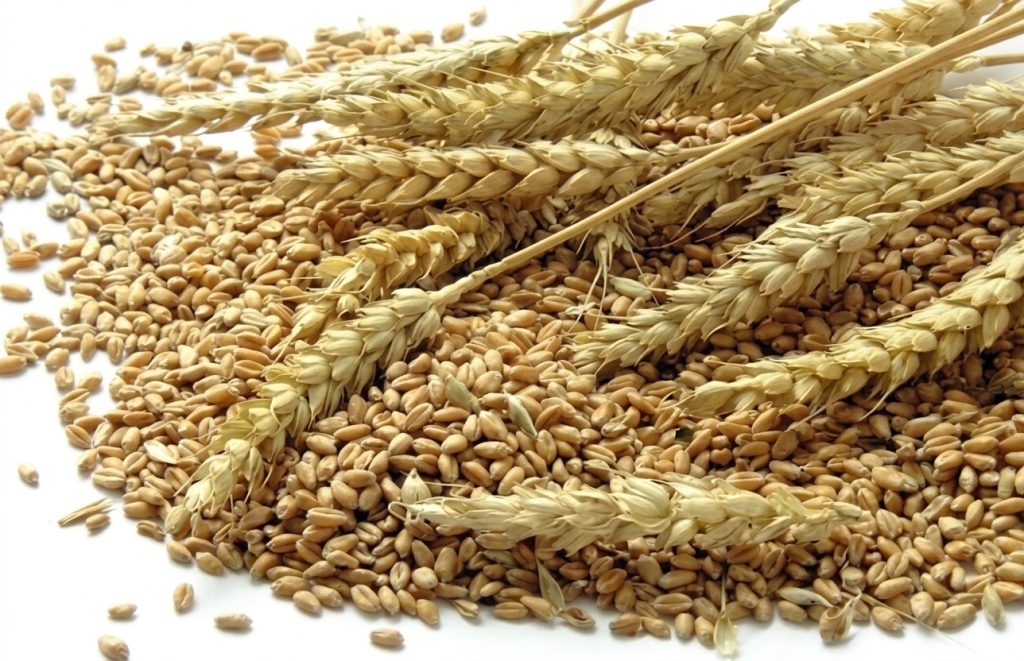
Nigeria’s reported rise in wheat production is more than an agricultural statistic. If sustained, it could have implications for food security, farmer incomes, import dependence and the resilience of one of the country’s most important food value chains.
According to figures attributed to the Federal Government, Nigeria’s wheat production has increased from about 120,000 tonnes to 420,000 tonnes under the National Agricultural Growth Scheme and Agro-Pocket (NAGS-AP), representing a significant increase in domestic production.
The development comes at a time when food prices, agricultural input costs and Nigeria’s dependence on imported food commodities continue to put pressure on households and businesses.
Wheat is particularly important because it sits behind many everyday foods consumed across the country, including bread, noodles, pasta and other flour-based products.
For Nigeria, therefore, producing more wheat locally is not simply about growing another crop. It is about how much of the food Nigerians consume can be produced within the country, how much farmers can earn from participating in the value chain, and whether agricultural programmes can create improvements that last beyond government intervention.
From farm support to higher production
NAGS-AP was designed to support agricultural production by providing farmers with access to inputs and other forms of assistance aimed at increasing productivity.
The reported wheat increase suggests that targeted support can make a difference when farmers have access to the resources needed to produce at scale.
For many smallholder farmers, the challenge is not necessarily a lack of willingness to farm. It is the cost and availability of the inputs required to make farming commercially viable.
Quality seeds, fertilizer, access to finance, irrigation, mechanization, extension services and reliable markets can determine whether a farmer produces enough to feed a household or generates a meaningful income from agriculture.
When those constraints are addressed, productivity can improve.
But production figures alone do not tell the whole story.
The more important question is whether farmers are actually better off as a result.
A farmer can produce more wheat and still struggle if production costs remain high, farm-gate prices are poor or there is no reliable market for the harvest.
This is where agricultural development begins to intersect with the broader conversation around corporate social responsibility, sustainability and inclusive economic growth.
What does higher wheat production mean for food security?
Nigeria has faced persistent food security challenges, with rising food prices affecting household purchasing power and increasing pressure on vulnerable communities.
Higher domestic wheat production could help reduce some of the pressure associated with dependence on imports, particularly if local production becomes more competitive and reliable.
However, increased production should not automatically be interpreted as food security.
Food security also depends on affordability, availability, access and the stability of supply.
If Nigeria produces more wheat but the cost of getting that wheat from farms to processors remains high, consumers may not immediately feel the benefit.
The same applies if farmers increase output but lack adequate storage facilities and are forced to sell immediately after harvest.
This means that Nigeria’s wheat strategy cannot stop at the farm.
The entire value chain matters.
Farmers need access to markets. Processors need dependable supplies. Transport infrastructure needs to function. Storage capacity needs to improve. And consumers ultimately need to be able to afford the food produced.
A sustainable agricultural system must therefore connect production with processing, distribution and consumption.
The smallholder farmer must remain at the center
One of the strongest measures of the success of an agricultural intervention should be what happens to the farmers participating in it.
If increased wheat production is accompanied by higher and more predictable farmer incomes, better access to markets and improved livelihoods, the impact becomes much more significant.
This is particularly important because smallholder farmers make up a substantial part of Nigeria’s agricultural economy.
For these farmers, access to subsidized inputs can provide an important starting point. But subsidies alone cannot build a resilient agricultural economy.
Farmers also need knowledge.
Extension services can help farmers understand improved production methods, climate-smart practices, pest management, soil health and efficient use of inputs.
They also need financing that allows them to invest in their farms without becoming trapped by unsustainable debt.
And perhaps most importantly, they need predictable markets.
A farmer who knows where and at what price a crop can be sold is in a much stronger position to plan production than one who simply hopes to find a buyer after harvest.
The sustainability question
The reported increase in production is encouraging, but it raises an important question: can the gains continue when government support changes or ends?
This is one of the biggest tests facing agricultural intervention programmes.
Short-term input support can increase production. Long-term agricultural transformation requires systems that allow farmers to remain productive without depending indefinitely on government assistance.
That means improving irrigation, research and development, access to finance, mechanization, rural roads, storage and agricultural extension.
It also means strengthening local value chains so farmers can benefit from the economic activity created by their crops.
If Nigeria wants to become less dependent on imported wheat, it will need more than a successful planting season.
It will need an agricultural ecosystem capable of consistently producing competitive wheat at scale.
That requires investment from government, financial institutions, processors, agribusinesses and other private-sector players.
There is also a climate dimension
Agriculture cannot be separated from climate change.
Changes in rainfall patterns, increasing temperatures, droughts, flooding and other climate-related risks can affect crop yields and farmers’ incomes.
Wheat production, like other agricultural activities, therefore needs to become more resilient to changing environmental conditions.
This makes access to irrigation and climate-smart agricultural practices particularly important.
If production increases today but farmers remain highly exposed to unpredictable weather conditions, the gains could be difficult to maintain.
Sustainability therefore means asking not only how much wheat Nigeria can produce this year, but how effectively farmers can continue producing it in the years ahead.
The numbers need to be understood carefully
The reported increase from 120,000 tonnes to 420,000 tonnes has attracted attention because of its size.
But agricultural statistics should always be examined within the context of how they were measured, the period covered and whether they align with other available estimates.
That matters because production figures can differ depending on the methodology, crop season and source of the data.
For policymakers, researchers and industry stakeholders, transparent and consistent agricultural data is essential.
Without reliable data, it becomes difficult to determine whether interventions are genuinely improving productivity or whether reported gains are temporary.
It also becomes harder for businesses to make informed investment decisions across the agricultural value chain.
Nigeria therefore needs not only more agricultural production, but better agricultural data.
Beyond wheat: building a stronger food system
The significance of the reported wheat increase ultimately goes beyond wheat.
Nigeria’s food security challenge requires a broader approach to agricultural development.
The country needs to increase productivity while reducing post-harvest losses, improve rural infrastructure, strengthen agricultural financing and make farming more attractive as a sustainable livelihood.
It also needs stronger links between farmers and the industries that depend on agricultural raw materials.
For wheat, this includes flour millers, bakeries, food manufacturers and other businesses that form part of the wider value chain.
When these connections work effectively, agricultural growth can create jobs and income far beyond the farm.
That is where the real economic and social impact of programmes such as NAGS-AP can be measured.
The bigger picture
Nigeria’s reported wheat production increase is an encouraging development, particularly at a time when food security and the cost of living remain major concerns.
But the real measure of success will not be the size of the production figure alone.
It will be whether farmers earn more.
Whether consumers gain access to more affordable food.
Whether Nigeria becomes less vulnerable to external supply shocks.
Whether agricultural businesses can invest with greater confidence.
And whether the gains can survive beyond a particular government programme.
For Nigeria, the opportunity is bigger than producing more wheat.
It is about building a food system where farmers can earn sustainable incomes, businesses can access reliable local supplies, and households can depend on a more resilient domestic food chain.
That is the difference between simply increasing agricultural output and building sustainable agricultural growth.
[give_form id="20698"]