Norfund Invests $30 Million to Push Solar-powered Telecom Infrastructure Across Mali, South Sudan and CAR
 admin
admin 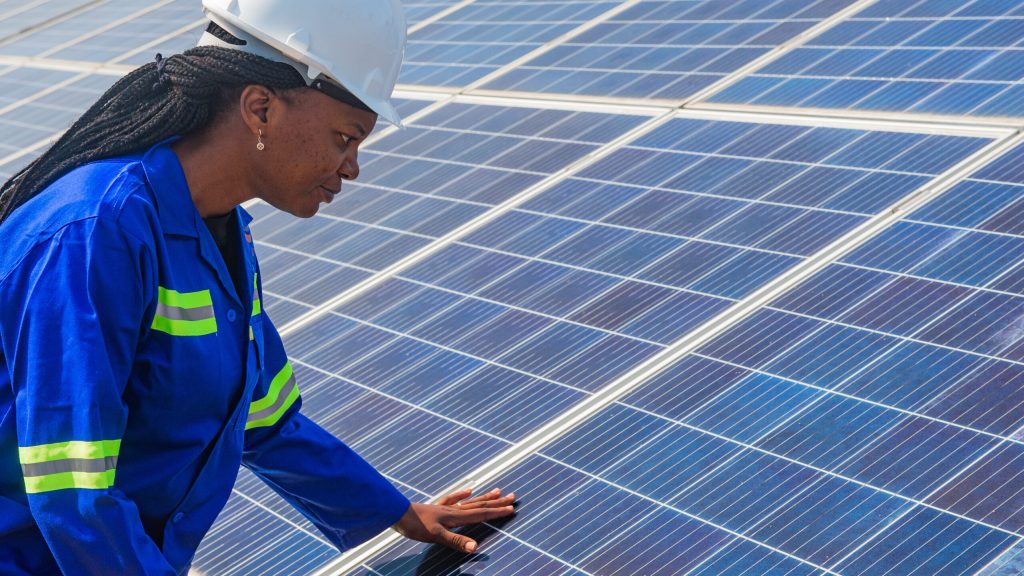
Photo credit: Copperbelt Energy Corporation
Norway’s development finance institution, Norfund, is leading a $30 million investment that is set to accelerate the deployment of renewable energy-powered telecommunications infrastructure across Mali, South Sudan and the Central African Republic.
The funding, marking one of the most significant efforts yet to decarbonise digital connectivity, will support Communication and Renewable Energy Infrastructure (CREI), a specialist energy services company that develops, owns and operates hybrid power systems for telecommunications networks.
The investment seeks to reduce the sector’s dependence on diesel generators by replacing conventional power systems with solar photovoltaic installations and battery energy storage solutions, ESG Now reports.
The investment forms part of a broader financing partnership involving the Facility for Energy Inclusion (FEI), a debt fund managed by Cygnum Capital that focuses on expanding access to renewable energy across Africa. Norfund also invested $23 million in the FEI platform, allowing development capital to be channelled into commercially sustainable infrastructure projects that deliver measurable social and environmental benefits
Commenting on the development, Project Manager of the investment at Norfund, Reza Mardanghom, reiterated the critical role of affordable and reliable access to mobile connectivity for communication as a foundation for economic activity and security.
“Affordable and reliable access to mobile connectivity is crucial for communication as a foundation for economic activity and security, and investments like these are essential contributions to development in countries facing challenging situations,” Mardanghom said.
Targeting World’s Least Connected Economies
The initiative targets three countries that rank among the world’s least connected and most infrastructure-constrained economies.
Fewer than half of the South Sudanese population have access to mobile connectivity, according to the DataReportal South Sudan Digital 2025 Reporting, with approximately 5.9 million mobile connections representing just 48.1 per cent penetration, while internet usage remains between 13 and 16 per cent of the population, respectively.
In the Central African Republic, only 616,600 people (about 10.6 per cent of the population) were internet users in 2024, while nearly 90 per cent of citizens remained offline, according to DPI Africa. Exceptionally low electricity access, at around 14 per cent, makes reliable power one of the greatest barriers to digital connectivity.
For Mali, it is a different challenge. According to DataReportal Mali Digital 2025 Report, mobile penetration in the country exceeds 100 per cent, reflecting widespread use of multiple SIM cards. However, telecommunications infrastructure remains “barely adequate” outside major urban centres. Vast distances, insecurity, sparse populations and limited grid infrastructure mean thousands of telecom towers continue to depend on diesel generators operating far from reliable power networks.
Addressing Economic and Operational Challenges
The introduction of renewable energy as the primary source of power for telecommunications sites will help the CREI project to address both economic and operational challenges facing network operators.
Chief Investment Officer at CREI, Ghada Ghotmeh, said by modernising and managing its partners’ telecom sites with hybrid energy infrastructure, CREI would be making renewables the primary source of power at these sites.
“The result is lower costs for our partners, greater energy security and improved network availability,” Ghotmeh said.
The Economics Behind the Investments
Mobile telecommunications infrastructure has become a critical component of economic development across Africa, enabling access to mobile banking, digital payments, e-commerce, healthcare services, education platforms and emergency communications. In countries where fixed-line infrastructure remains limited, mobile networks often serve as the primary gateway to the digital economy.
Evidence from South Sudan demonstrates the potential impact of the CREI model. The company has already modernised approximately 490 telecommunications sites serving more than four million mobile users in the country. As a result of these upgrades, population coverage increased from 69 to 80 per cent, while carbon emissions associated with network operations fell by 43 per cent.
Perhaps most notably, the share of renewable energy powering telecommunications infrastructure in South Sudan increased from just 11 to 42 per cent following CREI’s intervention, highlighting the substantial opportunity to reduce diesel dependence across the sector.
The scale of deployment planned in Mali is equally significant. Project documentation by Norfund indicates that renewable energy systems will ultimately support approximately 2,876 telecommunications towers across the country. Such a rollout represents one of the largest distributed renewable energy deployments linked to telecommunications infrastructure in West Africa.
Why It Matters
Telecommunications operators across Africa spend an estimated $4 billion to $5 billion annually on diesel fuel and diesel-powered electricity generation, with fuel accounting for up to 40 per cent of network operating costs in some off-grid markets, according to GSMA infrastructure reports. Fuel transportation costs, maintenance requirements and theft-related losses often add further financial pressure, particularly in remote regions.
Solar photovoltaic systems combined with battery storage offer a practical alternative. Once installed, they can significantly reduce fuel consumption while improving energy reliability, lowering maintenance requirements and insulating operators from fuel price volatility. For network providers operating thousands of sites, even modest reductions in diesel consumption can translate into substantial cost savings.
[give_form id="20698"]