Eche Munonye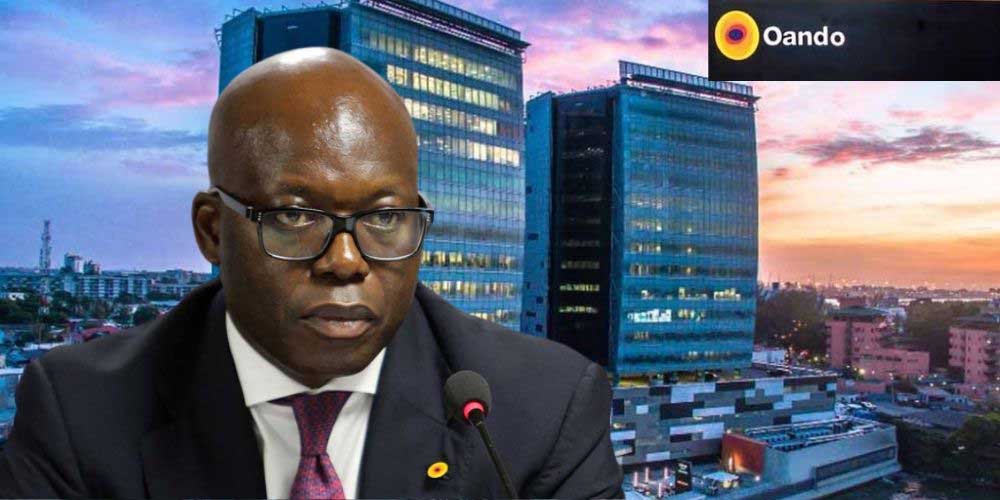
Oando's ₦204.8bn Headline: What the Profit Number Doesn't Say
Oando Plc closed its 2025 financial year with a story built for a press release: a ₦204.8 billion profit after tax, a 32 per cent jump in average daily production to 32,482 barrels of oil equivalent per day, and a 24 per cent rise in crude trading volumes to 25.7 million barrels. Group Chief Executive Wale Tinubu called it an important milestone, the year Oando moved from acquisition-led growth into full operational execution of the Nigerian Agip Oil Company Joint Venture assets it took control of in 2024.
That headline is accurate. It is also incomplete. Read alongside the same audited results, a different picture emerges — one of a company whose core trading business lost money before a naira of overhead was counted, whose operating profit fell by more than half, whose equity position is deeply negative, and whose auditors flagged a working capital deficiency serious enough to warrant a formal going-concern note. The profit line that dominated the headlines was carried almost entirely by a single non-cash accounting adjustment, not by cash generated from selling oil and gas.
The Operational Story: Real, and Worth Crediting
Some of what Oando reported is genuine operational progress, and an accountability platform should say so plainly rather than only looking for what’s wrong. Crude oil production rose 36 per cent. Gas production rose 24 per cent. Natural gas liquids production surged 715 per cent following a processing plant revamp. The company brought the Obiafu-44 gas-condensate well onstream, its first self-operated development well since assuming operatorship of the NAOC assets, and reported zero fatalities, zero lost-time injuries, and a recordable incident rate of 0.05 for the year.
Operating cash flow reached ₦258.3 billion, and cash and cash equivalents nearly tripled to ₦422.9 billion. Oando also upsized its Reserve-Based Lending facility to $375 million through an Afreximbank-led arrangement, giving it room to fund a 2026 development programme targeting 40,000 to 50,000 boepd across OMLs 60–63. For a company that spent years as a fuel marketer before rebuilding itself around indigenous upstream assets, integrating a portfolio of this scale without a safety lapse is a credible operational achievement.
Where the Story Changes: Revenue, Margins, and the Profit’s True Source
Set against that operational gain is a revenue line that moved in the opposite direction. Group revenue fell 22.2 per cent, from ₦4.09 trillion in 2024 to ₦3.18 trillion in 2025, driven by weaker trading activity following an unusually strong prior year. More striking is what happened beneath revenue: Oando reported a gross loss of ₦2.8 billion for the year, compared with a gross profit of ₦93.3 billion in 2024. Before financing costs, tax, or overheads were even applied, the core business of producing and trading oil and gas cost the company more than it earned.
Operating profit fell 57.7 per cent, to ₦240.9 billion from ₦569.7 billion, a decline the company attributes to the absence of the one-off ₦784.8 billion bargain-purchase gain booked in 2024 when it acquired the NAOC assets. Excluding that one-off, Oando maintains underlying performance improved. But the ₦204.8 billion after-tax profit that made headlines was not primarily a product of stronger trading or production economics. Reporting on the results, Businessday found that the bottom line rested almost entirely on a ₦441.5 billion reversal of impairment on financial assets — a non-cash accounting entry that added nothing to the company’s actual cash position.
A single, non-cash accounting adjustment — not stronger sales, not tighter margins — did most of the work in turning Oando’s numbers positive.
The Balance Sheet Auditors Flagged
The clearest sign that this was not simply a strong year is what the company’s own auditor, BDO Professional Services, wrote in the notes to the accounts: that the group faces a significant working capital deficiency and financing constraints. Total group equity stood at negative ₦566.9 billion at year-end, an improvement from negative ₦361 billion in 2024, but still a position in which, on paper, the company owes more than it owns. Net current liabilities swelled to roughly ₦3.76 trillion against cash of ₦439.9 billion at the parent level — a gap far wider than the company’s liquid resources can currently cover.
The picture at the parent-company level raises its own questions. Oando Plc reported ₦468.6 billion in profit for 2025 — nearly four times its 2024 figure — on zero revenue from contracts with customers, with the parent-level profit driven almost entirely by other income and intercompany transactions. Reporting also identified that Oando Servco forgave an additional ₦447.9 billion owed by the parent company during the year, a transaction the auditors said may have amounted to a distribution out of capital rather than realised profits, potentially in contravention of Sections 426–427 of the Companies and Allied Matters Act 2020.
Set against this backdrop, the RBL upsizing and improved cash position are real, but they sit inside a group that has now gone five consecutive years — from 2021 through 2025 — without paying shareholders a dividend, despite reporting profits in several of those years.
Why This Matters Beyond One Company’s Numbers
Oando’s results arrive as three of Nigeria’s leading indigenous operators — Oando, Seplat Energy, and Aradel Holdings — each report their first full year of results following major international-oil-company divestments, and the industry narrative has understandably centred on indigenous capacity: that Nigerian-owned companies can not only acquire world-class assets but operate and sustain them. That narrative is not false. Production gains, safety performance, and reserve growth across all three companies suggest real institutional capability.
But capability and financial resilience are not the same thing, and conflating them does a disservice to investors, regulators, and the public interest that accountability journalism exists to protect. A profit figure produced primarily by a non-cash impairment reversal, sitting atop a gross loss and negative equity, is not evidence of the same underlying strength as a profit produced by growing margins on growing sales. The distinction matters for how investors price the stock, how regulators assess disclosure quality, and how the market judges whether Nigeria’s energy transition story is being built on operational substance or on accounting optics.
The test of Oando’s 2025 story is not whether the headline number is accurate — it is whether the underlying business can fund itself without leaning on non-cash adjustments and shareholder forbearance.
Oando’s own framing for 2026 — production of 40,000 to 50,000 boepd, $90–100 million in capital spending, continued expansion of the RBL facility — is a credible and specific plan. Whether it converts into the kind of cash-generative, dividend-capable business the current equity position urgently needs is the question that will define whether 2025 was a genuine inflection point or simply a year in which the accounting cushioned a business still working through real financial strain.
If your organisation wants to move from random CSR activities to structured, measurable impact, CSR REPORTERS helps organisations:
- Conduct community needs assessments
- Track and measure CSR impact
- Document and report social investments
- Communicate CSR efforts transparently and independently
Responsible business should not begin when companies become big. It should begin the day the business starts.
[give_form id="20698"]