


 csrreporters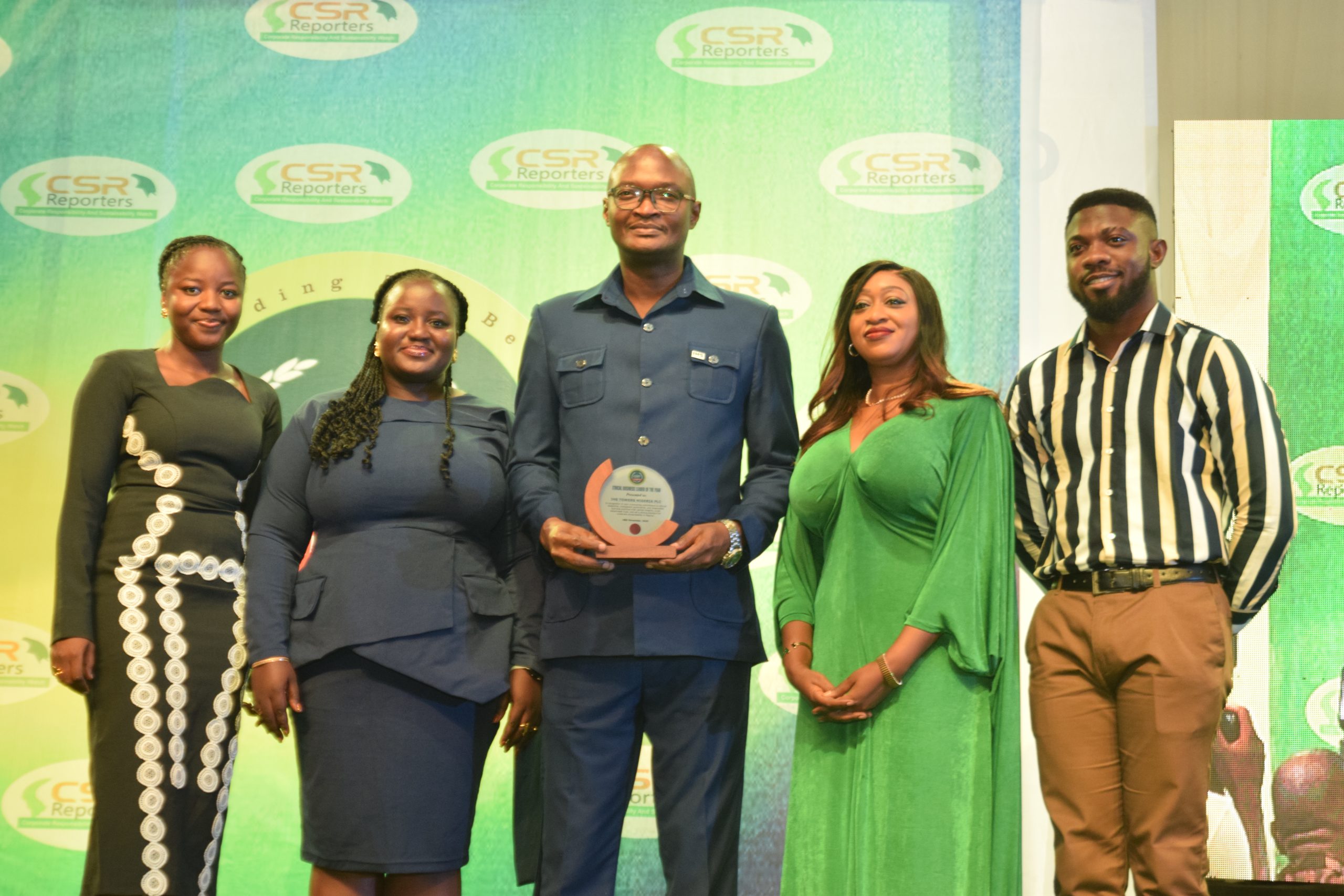
Past Impact Stories from SISA Winners: What Endures Beyond Recognition
There is always a moment when recognition feels complete—when the stage is set, the applause settles, and an organisation is acknowledged for the work it has done. But in reality, that moment is only a pause. What truly matters is what happens after—what continues, what deepens, and what endures.
At the Social Impact and Sustainability Awards (SISA), recognition has never been positioned as a conclusion. It is a marker of progress, a reflection of work already in motion, and in many ways, a signal of expectation. Because the true measure of impact is not in the moment it is recognised, but in its ability to sustain relevance long after attention has shifted.
Over the years, organisations such as MTN Nigeria, Access Bank Plc, FirstBank Nigeria, Nestlé Nigeria, TotalEnergies, IHS Towers, Axxela Group, Rite Foods Limited, Lotus Bank, Air Peace, Lagos Free Zone, Oil and Gas Free Zones Authority, Segilola Resources, Aradel Plc, and Seven-Up Bottling Company have, at different points, been recognised for their contributions to corporate responsibility, sustainability, and social impact.
Yet, what becomes clear in reflecting on these organisations is that their significance does not lie in the award itself, but in the trajectory of their work.
In earlier years, corporate responsibility in many organisations was often defined by isolated interventions—projects that were well-intentioned but not always embedded within a broader strategic framework. Impact was frequently measured in terms of visibility rather than depth, and success was often associated with activity rather than outcomes.
What we have seen over time, however, is a gradual but important shift. Among organisations that have been recognised at SISA, there is an increasing movement away from one-off initiatives toward more structured, system-driven approaches to impact. Sustainability is no longer treated as an appendage to business; it is becoming part of how business itself is understood and executed.
For institutions such as MTN Nigeria and Access Bank Plc, this has meant aligning sustainability priorities with core business strategy, ensuring that impact is not just reported, but integrated. In sectors where operational impact is inherently complex, organisations like TotalEnergies and Axxela Group have had to navigate the delicate balance between industrial activity and environmental responsibility, gradually strengthening their ESG frameworks in response to both local realities and global expectations.
At the same time, companies such as Nestlé Nigeria and Seven-Up Bottling Company illustrate how impact often resides within complex ecosystems. Their influence extends beyond direct operations into supply chains, agricultural communities, and distribution networks, where the effects of corporate decisions are felt in ways that are not always immediately visible but are nonetheless significant.
For infrastructure and development-driven entities, including Lagos Free Zone and IHS Towers, impact is embedded in the systems they enable—connectivity, industrial access, and economic activity that supports broader development. Meanwhile, financial institutions such as FirstBank Nigeria and Lotus Bank continue to shape inclusion through access to finance, influencing how individuals and businesses participate in the economy.
What ties these varied experiences together is not uniformity of approach, but a shared progression toward greater intentionality. Impact, in this context, is no longer accidental. It is increasingly designed, tracked, and refined.
However, this evolution also brings with it a more demanding landscape. Stakeholders are no longer satisfied with broad statements of commitment. There is a growing expectation for clarity—around what has been done, what has changed as a result, and how that change can be verified. The conversation is shifting from narrative to evidence, from activity to outcomes, and from visibility to credibility.
This is where the role of platforms such as CSR REPORTERS becomes particularly important. Documenting these journeys is not simply about recognition; it is about building a credible record of what impact looks like in practice. It is about asking the difficult questions, highlighting both progress and gaps, and ensuring that the conversation around sustainability remains grounded in accountability.
Looking back at past SISA winners, therefore, is not an exercise in nostalgia. It is an opportunity to understand how far the ecosystem has come, and how much further it needs to go. Because while recognition acknowledges progress, it also sets a standard—one that organisations must continue to meet and, ideally, exceed.
In the end, what distinguishes meaningful impact is not the moment it is recognised, but the extent to which it endures. It is found in systems that continue to function, programmes that continue to deliver, and decisions that continue to shape outcomes long after the initial investment has been made.
That is the real story behind SISA. Not the awards themselves, but the work that continues beyond them.
And as more organisations step forward to be recognised, the expectation remains unchanged: that impact must not only be seen, but sustained—and ultimately, trusted.
[give_form id="20698"]