


 csrreporters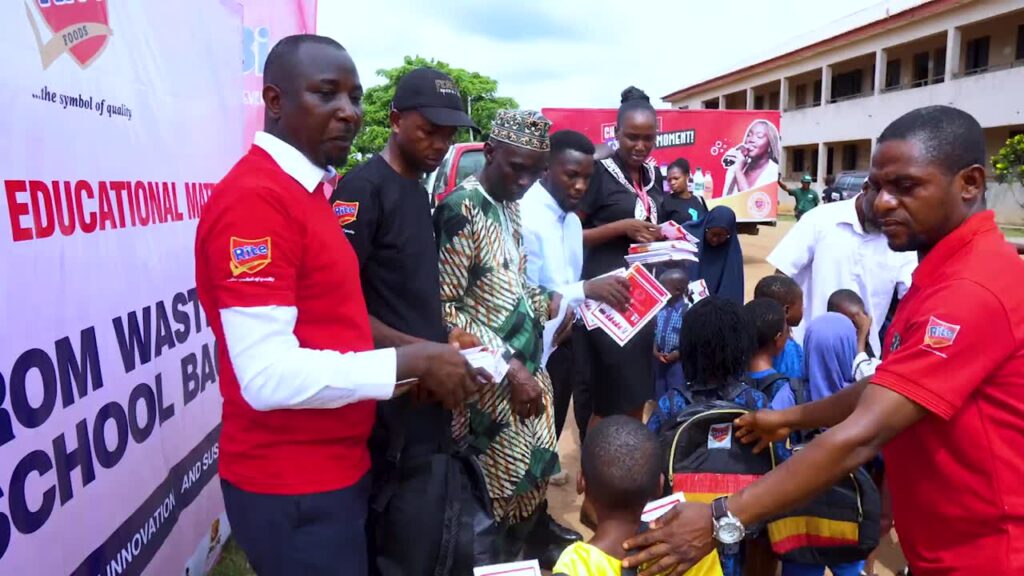
Rite Foods’ Education Impact: School Outreach, Recycling and Sustainability
As conversations around corporate responsibility shift from intention to impact, initiatives that combine education, environmental stewardship, and measurable community benefit are increasingly under scrutiny. On the 2025 International Day of Education, Rite Foods Limited offered a practical case study of how education-focused CSR can be structured to deliver both social and sustainability outcomes.
The Nigerian food and beverage company marked the day by reinforcing its education support programmes across underserved public primary schools in Lagos and Ogun States. Beyond symbolic gestures, the intervention highlighted an approach that links access to learning with environmental responsibility—two pillars often treated separately in corporate sustainability strategies.
Education Access as a Development Imperative
Rite Foods’ education outreach aligns with a growing recognition that access to quality education remains one of Nigeria’s most pressing development challenges. Learning gaps, poor infrastructure, and limited access to basic school materials continue to undermine educational outcomes, particularly in low-income communities.
Through its CSR framework, the company distributed essential learning materials such as school bags and exercise books to pupils in selected public primary schools. While modest in scale, such interventions address a real barrier to school participation—reducing the financial burden on families and improving learning readiness for pupils.
Education, when approached strategically, is not just a social investment but a long-term economic one. Improved educational access strengthens human capital, supports workforce readiness, and contributes to social stability—outcomes that ultimately benefit both society and business.
Recycling and Circular Economy Integration
What distinguishes Rite Foods’ initiative from conventional education-focused CSR is its integration of environmental sustainability. The school bags distributed to pupils were produced from recycled post-consumer packaging waste sourced from the company’s own product lines, including Bigi Soft Drinks, Fearless Energy Drinks, bottled water, and sausage packaging.
This approach reflects circular economy thinking in action: waste materials are reintroduced into the value chain as functional products, reducing environmental leakage while delivering social value. In a country grappling with plastic waste management and urban pollution, such interventions demonstrate how corporate waste streams can be repurposed for community benefit.
For sustainability practitioners, this linkage matters. CSR initiatives that connect core business operations—such as packaging and waste—to social programmes are more likely to be scalable, replicable, and defensible under ESG scrutiny.
Sustainability Education Beyond Materials
The outreach went beyond the distribution of physical items. Each school engagement included interactive learning sessions, environmental awareness activities, and practical demonstrations on recycling and responsible consumption. Pupils were introduced to basic concepts of waste segregation, reuse, and environmental care—early lessons that shape long-term behaviour.
Embedding sustainability education at the primary school level addresses a critical gap in Nigeria’s environmental awareness ecosystem. When young people understand the lifecycle of products and the impact of waste, they are better positioned to become responsible citizens in a climate-stressed economy.
Corporate Perspective on Education and Sustainability
Speaking on the initiative, Ekuma Eze, Head of Corporate Affairs and Sustainability at Rite Foods, underscored the company’s broader philosophy:
“Education is the foundation upon which sustainable societies are built. At Rite Foods, our focus is not only on improving access to learning, but on nurturing responsible citizenship and environmental consciousness.”
He added that the company’s education strategy is designed to empower young minds with the confidence, values, and practical knowledge required to thrive in a rapidly changing world.
Such framing reflects an important shift in corporate CSR narratives—from charity-based interventions to programmes that emphasise capability building, values, and long-term impact.
Measuring Impact Beyond Visibility
From a CSR and sustainability standpoint, the relevance of initiatives like this lies in their outcomes, not their optics. Key questions remain central: How many pupils were reached? Can the recycling model be scaled across more communities? How is behavioural change tracked over time?
While Rite Foods’ intervention demonstrates thoughtful alignment between education and environmental sustainability, long-term impact will depend on consistency, scale, and transparent reporting. Corporate education programmes achieve their strongest results when embedded within multi-year strategies rather than isolated calendar events.
A Signal for Responsible Corporate Practice
As Nigeria and other African economies confront intersecting challenges—youth population growth, environmental degradation, and pressure on public education systems—the role of the private sector becomes increasingly significant. Education-focused CSR that incorporates sustainability principles offers a pathway for companies to contribute meaningfully while aligning with ESG expectations.
Rite Foods’ International Day of Education activities serve as a reminder that responsible corporate action is most credible when it connects social needs, environmental realities, and business operations into a coherent impact strategy.
In today’s accountability-driven environment, such alignment is no longer optional—it is fast becoming the baseline for credible corporate sustainability in Nigeria.
[give_form id="20698"]