csrreporters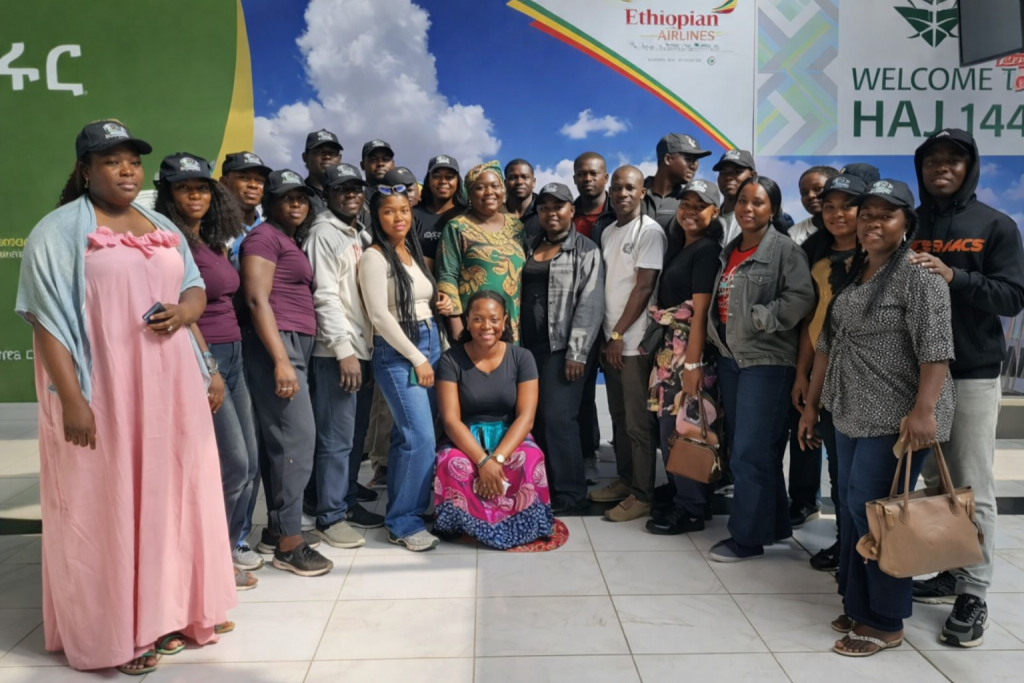
The Taraba State Government has sent 30 youths to Hyderabad, India, for advanced training in seed production and processing technologies, in a strategic move aimed at strengthening agricultural productivity, improving seed quality systems, and building a new generation of agribusiness professionals.
The initiative forms part of a broader agricultural transformation agenda focused on repositioning the state as a leading hub for seed innovation, improved crop productivity, and agro-industrial development.
Officials say the program is designed not only to transfer technical knowledge but also to deepen the capacity of young people to participate in modern agricultural value chains, particularly in seed multiplication, certification, processing, and distribution systems that are critical to food security.
Building a modern seed ecosystem
The 20-day training programme is being implemented through a partnership involving the State Government, Prasad Seeds of India, and AgTech Innovation of the United States, under the framework of a state-backed seed development initiative.
The programme exposes participants to both classroom learning and practical field experience, covering key areas such as seed science, quality control, processing systems, packaging, storage techniques, and emerging agricultural technologies used in high-efficiency seed production systems.
According to organisers, the training is intended to bridge the gap between traditional agricultural practices and modern seed systems that drive higher yields, improved resilience, and better farmer outcomes.
Seed production experts involved in the programme emphasise that improved seed systems remain one of the most critical drivers of agricultural productivity, particularly in developing economies where yield gaps are often linked to poor seed quality, limited access to certified varieties, and weak distribution systems.
Strengthening Nigeria’s seed value chain
Nigeria’s agricultural sector continues to face challenges linked to low productivity, inconsistent seed quality, and limited access to improved crop varieties. These gaps have contributed to lower-than-expected yields across key staple crops, despite the country’s vast agricultural potential.
The seed sector, however, has been identified as a strategic entry point for addressing these challenges. With increasing private sector participation and government-backed initiatives, the industry is gradually evolving toward a more structured and commercially driven ecosystem. See the National Agricultural Seed Council.
Recent sector assessments indicate growing involvement of seed companies and research institutions in developing hybrid and improved seed varieties tailored to Nigeria’s diverse agro-ecological zones, with a focus on rice, maize, sorghum, cowpea, and other staple crops.
The current training initiative aligns with this broader shift by equipping young participants with practical technical skills required to operate within a modern seed production system.
Youth as drivers of agricultural transformation
A central objective of the programme is youth empowerment through agribusiness development. By engaging young participants in advanced agricultural training, the initiative seeks to create a pipeline of skilled professionals capable of driving innovation across the seed value chain.
Agriculture experts note that youth inclusion is critical to the long-term sustainability of food systems, particularly in Africa where a significant proportion of the population is under the age of 35.
Through structured training programmes such as this, governments and development partners are increasingly positioning young people not only as beneficiaries of agricultural policies but also as active contributors to productivity, innovation, and rural economic transformation.
In addition to technical training, the programme also exposes participants to agribusiness models that demonstrate how seed production can evolve into viable commercial enterprises.
Investment in agro-industrial development
The initiative is closely linked to a wider investment programme in seed infrastructure, including the development of a modern seed processing facility estimated at over $20 million in the state.
The facility, located in Lau Local Government Area, is expected to serve as a key hub for seed multiplication, processing, and distribution once fully operational.
Officials say the investment represents a long-term strategy to reduce dependence on imported seeds, improve local production capacity, and strengthen food security through a more resilient agricultural base.
The project is also expected to attract private sector participation, support agribusiness expansion, and generate employment opportunities across multiple segments of the agricultural value chain.
Capacity building and technical collaboration
The training programme is being implemented in collaboration with international agricultural partners, including seed technology firms and innovation-focused organisations based in India and the United States.
Participants are undergoing intensive sessions facilitated by agricultural scientists and seed production specialists, with emphasis on both theoretical knowledge and practical application.
Areas of focus include seed genetic quality, field management practices, post-harvest handling, processing standards, storage systems, and compliance with international seed certification protocols.
Experts involved in the training describe the programme as a strategic investment in human capital development, noting that modern agriculture increasingly depends on scientific approaches, technology adoption, and efficient production systems.
Linking skills development to economic outcomes
Beyond technical capacity building, the initiative is expected to have broader socio-economic impacts, particularly in employment generation, rural development, and youth entrepreneurship.
Officials say participants are expected to return with enhanced skills that will enable them to contribute to the establishment and expansion of a structured seed industry within the state.
The programme is also designed to create pathways for self-employment and agribusiness development, particularly in rural communities where agriculture remains the primary source of livelihood.
By integrating youth into structured seed systems, the initiative is expected to support productivity growth, improve farmer access to certified seeds, and strengthen local agricultural markets.
Food security and long-term sustainability
Food security remains a central policy priority, and improved seed systems are widely recognised as a foundational component of sustainable agricultural development.
Stakeholders argue that investments in seed quality, distribution networks, and production capacity are essential for increasing crop yields and reducing vulnerability to food shortages.
The training programme is therefore positioned within a broader national effort to modernise agriculture, enhance resilience to climate and market shocks, and improve overall food system performance.
Challenges and implementation considerations
While the initiative has been widely welcomed, experts note that long-term success will depend on how effectively trained participants are integrated into the broader agricultural ecosystem upon their return.
Key challenges include access to land, financing, equipment, and market linkages, all of which are critical to translating training into practical outcomes.
There is also the need for sustained policy support to ensure continuity, scalability, and private sector participation in the seed industry.
Without these supporting structures, stakeholders caution that the impact of capacity-building programmes may remain limited to short-term gains rather than long-term systemic transformation.
Conclusion
The deployment of 30 youths for advanced seed production training in India represents a strategic step toward strengthening agricultural innovation, youth empowerment, and food system resilience.
By combining international exposure, technical training, and local investment in seed infrastructure, the initiative reflects a growing recognition of agriculture as a knowledge-driven and technology-enabled sector.
As the participants complete their training, attention will now shift to how effectively their newly acquired skills are deployed in building a more productive, sustainable, and competitive agricultural sector in the state.
Further Reading: Can Better Seeds Solve Nigeria’s Food Production Challenge?.
[give_form id="20698"]