csrreporters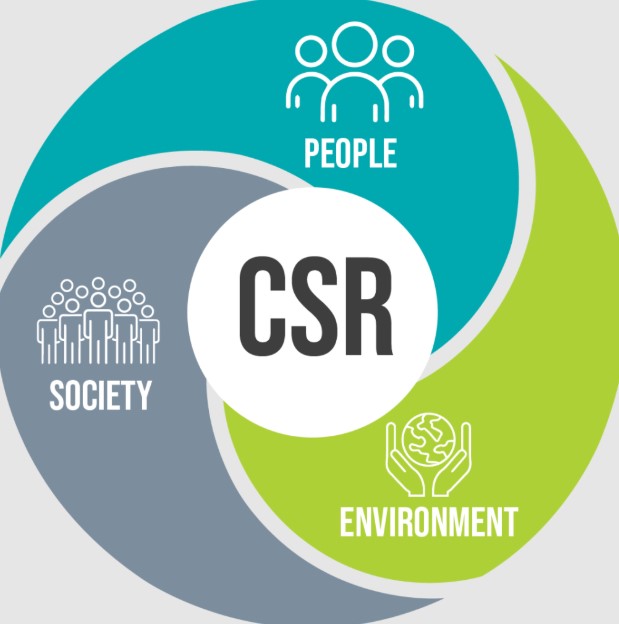
Who’s Really Giving Back?
It has become one of the most fashionable buzzwords in corporate communications: “We are giving back.”
From the glittering billboards of multinationals to the modest press releases of local firms, the phrase has almost become a shield, a cloak of virtue. Companies trumpet the commissioning of boreholes, donation of branded exercise books, or the distribution of food packs to widows as proof of their commitment to Corporate Social Responsibility. Yet when stripped down to its essence, the uncomfortable question remains: who, in truth, is really giving back?
The origins of Corporate Social Responsibility, or CSR, tell a story far different from the cosmetic exercises we so often see today. The concept, which began to gain traction globally in the mid-20th century, was built on the idea that businesses, beyond pursuing profit, owe a duty to the societies from which they draw resources and in which they operate. In its true sense, CSR was never meant to be about sporadic charity or public relations stunts; it was designed as a corporate philosophy where responsibility is woven into the fabric of business operations. It encompasses ethical labour practices, environmental stewardship, fair governance, and long-term investments that uplift communities in sustainable ways.
Tracing the early history of CSR reveals that it was largely born out of necessity. In the United States, the Industrial Revolution created enormous wealth but also inflicted immense harm, child labour, unsafe working conditions, and polluted cities. Businesses that ignored these social externalities soon faced public backlash. Over time, governments and citizens began demanding accountability, giving rise to what we now call CSR. Across Europe, this ethos was mirrored, and by the 1970s and 1980s, CSR had evolved into an expected part of business conduct. Today, ESG (Environmental, Social, and Governance) metrics are building on that foundation to measure how corporations integrate responsibility into their operations.
But when we return to contexts like Nigeria and much of Africa, the conversation seems to have been hijacked. Instead of integrating CSR into their very DNA, many companies treat it as a side attraction, a box to be ticked, or a cost centre to be reduced. For instance, the annual ritual of companies distributing branded school bags and books every September is often celebrated as CSR. But is giving out 200 exercise books in a community where the local school has no roof or qualified teachers really “giving back”? Or is it a convenient way to generate headlines at minimal cost?
Consider also the infamous cases where companies pollute rivers, degrade farmlands, or displace entire communities, only to turn around and donate motorcycles or sewing machines as “empowerment.” True CSR demands that companies do not harm in the first place. You cannot destroy livelihoods on one hand and claim to be restoring them on the other. Genuine giving back is not compensation for corporate harm but an intentional effort to create shared value for business and society alike.
Globally, we have seen examples that demonstrate what real CSR looks like. Unilever, for instance, embedded sustainability into its core business model with the Sustainable Living Plan, aiming to reduce environmental footprint while improving health and livelihoods worldwide. Similarly, Patagonia, the outdoor apparel company, is celebrated for integrating environmental activism into its operations, even donating a significant percentage of its profits to environmental causes. These are not acts of charity; they are deliberate strategies that align with business goals while advancing social good.
In Nigeria, though examples are fewer, there are sparks of genuine CSR. Some banks have gone beyond donations to implement literacy and financial inclusion programmes that empower future customers while addressing systemic inequality. Telecom companies, when they invest in digital literacy hubs and youth tech empowerment initiatives, are not just donating—they are planting seeds for a more prosperous digital economy that they will benefit from in the long run. This is the true spirit of CSR: creating mutual, sustainable value.
The problem, however, is that without clear frameworks and accountability, it becomes easy for companies to claim the CSR badge while practicing mere philanthropy or, worse, image laundering. This is why many CSR experts argue that Nigeria needs stronger legislative backing for CSR and ESG integration. The National Assembly once flirted with the idea of making CSR compulsory, but the conversation fizzled out, lost in the noise of more “politically profitable” debates. Yet as the world faces climate change, inequality, and unsustainable development, the urgency of embedding real CSR into corporate governance has never been greater.
So when we ask, “who is really giving back?”, the answer lies in scrutinizing the intent, scope, and impact of what businesses call CSR. Is it aligned with the company’s core operations? Does it solve systemic issues rather than merely scratching the surface? Is it sustainable, measurable, and designed to empower communities for the long haul? Or is it simply a token gesture meant to distract from deeper harms or to score reputational points?
For the business sector in Nigeria and across Africa, the challenge is clear: abandon the shallow theatrics of token donations and embrace CSR as a philosophy that runs through the veins of the organisation. Communities deserve more than ribbon-cutting ceremonies for boreholes that break down after two years; they deserve partnerships that improve education, healthcare, and livelihoods for generations. Employees deserve workplaces where diversity, inclusion, and fairness are not afterthoughts but guiding principles. The environment deserves businesses that pursue profits responsibly, reducing waste and emissions while exploring renewable alternatives.
True giving back is not about charity, it is about justice, sustainability, and shared progress. As consumers become more conscious and as global investors demand stronger ESG commitments, companies that fail to embrace authentic CSR risk being left behind. For Nigeria, the real revolution in CSR will come when our corporate boardrooms and legislative chambers realise that giving back is not optional, it is existential.
So the next time a company proudly declares that it is “giving back,” perhaps we should ask harder questions. Giving back to whom? Giving back what? And most importantly, who is really giving back?
SISA 2025 IS HERE! For sponsorships, partnerships, participation, and other inquiries, kindly reach us via sisa@csrreporters.com , enquiries@csrreporters.com or call +2349136779152; +234804012198; +2349093555449.
[give_form id="20698"]