csrreporters
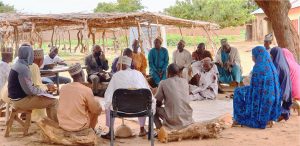
JIgawa Governmen official
Jigawa State Government has confirmed the recipient of 10,000 water pump machines from the Federal Government as a support for dry season rice production.
Technical Adviser to the Governor on Agriculture and Food Security, Dr Sefullahi Umar, announced this while speaking to journalsits.
He said the State Government also procured 10,000 solar-powered water pumps for distribution to dry-season rice farmers across 27 local government areas.
The Technical Adviser explained that the state made a provision of 20,000 water pumps to support dry season farmers to improve the irrigation scheme to achieve the national food security policy by the present administration.
Umar added that this is under the Rice Value Chain Development Project (RVCDP) established by Malam Umar Namadi to transform and improve Rice production, aimed at creating job opportunities and economic Sustainability, particularly for teaming youth.
READ ALSO: Foundation Donates N1.4m Items to Special Needs Pupils
According to him, Under the Rice Value Chain Development Project (RVCDP) the state government intended to support 58,000 rice irrigation farmers to cultivate a target of about 200,000 hectares with subsidised agricultural inputs on the current dry season rice production.
“The state government would distribute 20,000 solar and gasoline water pump machines, 2500, improve Rice seedlings, 200,000 bags NPK 15-15-15, 150,000 Urea fertilizers, 50,000 liters of herbicide, 50,000 sachets of fungicide and 100,000 liters harp cite and pesticide each”.
Umar maintained: “We have established an ambitious target of 3.6 million metric tonnes of annual rice production, and I am confident that with diligent farmers, committed stakeholders, and supportive partners, this goal can be achieved”.
“For the current dry season alone, over 58,500 farmers across 27 localities will cultivate more than 130,000 hectares using improved seed varieties, modern cultivation techniques including fertilization, weed control, and irrigation”.
“This initiative aims not simply for increased output but complete transformation. Through the Rice Value Chain Development project, we will roll out full mechanization, processing hub development, and improved access to local and global markets. We pledge to transform Jigawa into Nigeria’s leading rice producer and a vibrant agribusiness and rural prosperity centre”.
The Technical Adviser stated further that 50,000 of the beneficiaries are smallholder farmers cultivating between 0.5 and 1 hectare, while approximately 8,500 are cultivating between 2 and 5 hectares.
Overall, more than 80% of the beneficiaries are smallholders who will enjoy subsidies ranging from 20% to 30%, while large-scale farmers will receive a 10% subsidy.
[give_form id="20698"]