csrreporters
Corporate social responsibility leaders in Nigeria often emerge from communications, law, or foundation management. However, Itoro Udo followed a different route into the sector. His background sits closer to programme operations and nonprofit systems than corporate branding.
Since joining OPay in 2023, Udo has played a visible role in the company’s expanding education and youth-focused CSR programmes. Although OPay remains best known for digital payments and financial services, its social investment footprint has grown steadily across universities and community projects in recent years.
Rather than positioning CSR as occasional philanthropy, OPay has increasingly tied its interventions to education access, digital inclusion, and youth development. Consequently, Udo’s role has become more prominent as the company deepens partnerships with tertiary institutions nationwide.
A Career Rooted in Community Development
Before moving into fintech, Udo worked across nonprofit and development-focused organisations. He spent several years at FATE Foundation, where he handled alumni engagement and programme support activities. He also served at Cece Yara Foundation, an organisation focused on child protection and support services.
Those experiences appear to have shaped his approach to programme delivery. Instead of focusing heavily on publicity, many of the initiatives connected to his work at OPay emphasise measurable outputs, institutional partnerships, and long-term timelines.
That operational style has become increasingly important as Nigerian companies face growing scrutiny over the credibility of their ESG and CSR commitments. In many cases, firms now face pressure to show evidence of sustained impact rather than one-off donations or highly publicised campaigns.
Against that backdrop, OPay’s education strategy has expanded rapidly since 2024.
The Scholarship Programme That Expanded Quickly
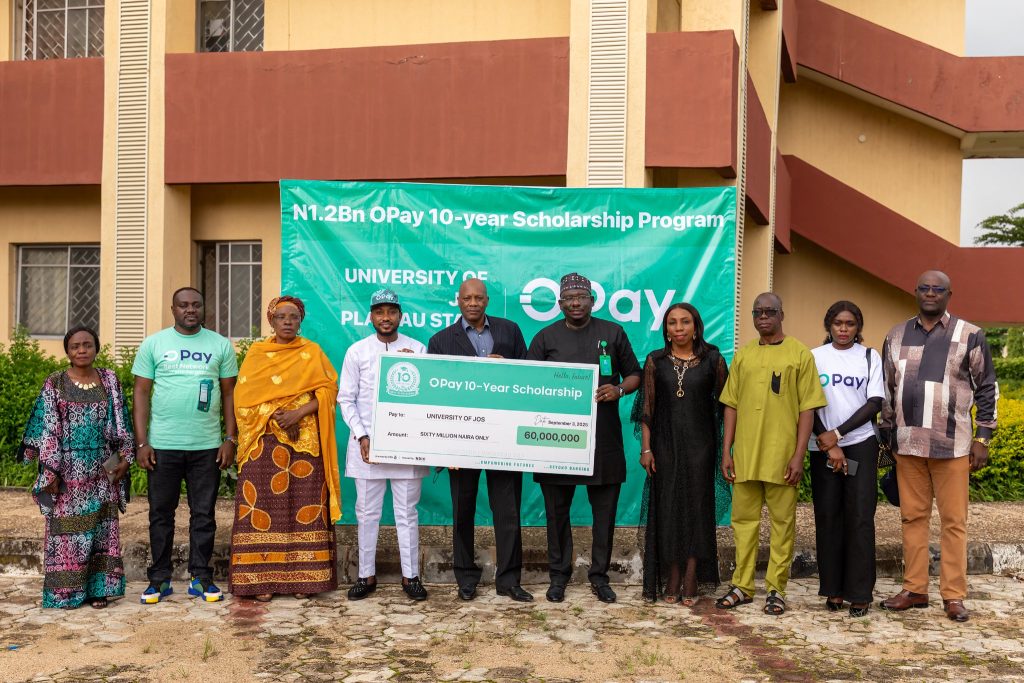
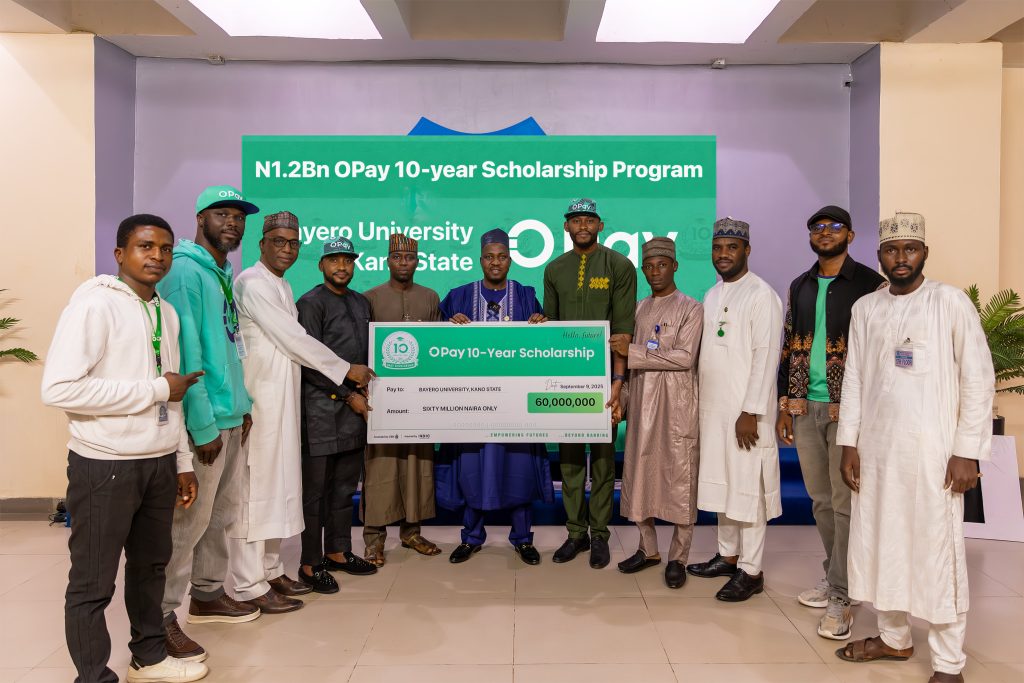
One of the company’s biggest interventions remains the ₦1.2 billion, 10-year scholarship programme launched across Nigerian tertiary institutions. The initiative supports students through a combination of merit and financial need assessments.
By late 2025, OPay announced that it had disbursed ₦126 million to 420 students across 20 institutions during the programme’s first phase. Several universities, including the University of Ilorin, University of Nigeria Nsukka, Lagos State University, University of Jos, and Bayero University Kano, later confirmed partnership agreements connected to the programme.
The intervention also arrived during a difficult economic period for many Nigerian households. Rising inflation and increasing education costs have placed additional pressure on university students across the country. Therefore, corporate-backed scholarship schemes have received wider public attention over the last two years.
At Bayero University Kano, Udo said the initiative reflected the company’s focus on youth empowerment through education. Meanwhile, administrators at partner institutions described the scholarships as timely support for students facing financial pressure.
Still, the long-term success of the programme will likely depend on continuity, transparency, and whether beneficiaries receive support consistently over the full duration promised.
CyberLabs and the Push into Digital Skills
OPay’s CSR efforts have also moved into digital skills development. In 2025, the company unveiled plans to establish a cybersecurity laboratory at the University of Calabar as part of its CyberLabs initiative.
During a visit to the university’s Vice Chancellor, Udo said the project reflected OPay’s commitment to fulfilling promises made to partner institutions. He also disclosed that representatives of the firm expected to implement the project, joined the delegation to demonstrate the seriousness of the initiative.
According to Udo, OPay’s relationship with the University of Calabar began in 2023 and has continued to expand through education-focused projects and institutional support. Beyond the cybersecurity laboratory, he also announced that OPay would support the university’s hosting of the 2026 Nigeria University Games scheduled for August.
The CyberLabs project signals a broader shift in how some fintech firms now approach CSR. Rather than limiting interventions to financial donations alone, companies are increasingly exploring projects tied to workforce readiness, technology access, and employability. This is necessary considering recent conversations about employability and workforce readiness.
See Also: Talent Gap or Pay Gap? Nigerians React to Moniepoint CEO
Although many organisations support education initiatives, fewer attempt to combine scholarships with practical technology exposure inside universities. Consequently, OPay’s expanding university partnerships continue to attract attention within Nigeria’s CSR and fintech space.
Community Projects Beyond Universities
Outside tertiary institutions, OPay has also maintained smaller community-focused interventions. Since 2023, the company has supported projects aimed at school children through partnerships and back-to-school initiatives in Lagos, Ogun, and Oyo states.
These programmes include the Play4aChild initiative as well as collaborations with REEL Foundation and Brace Up The Young Foundation.
While those projects operate on a smaller scale than the scholarship programme, they contribute to OPay’s wider attempt to maintain visibility across different levels of education support.


Financial Literacy and the Push for Inclusion
More recently, OPay expanded its social impact focus beyond scholarships and digital infrastructure into financial education.
In partnership with the Central Bank of Nigeria, the company participated in the Global Money Week 2026 Financial Literacy Fair and Exhibition. This initiative is aimed at helping secondary school students develop stronger money management habits and financial awareness. It brought together students from across the FCT for interactive sessions on savings, budgeting, responsible spending, and digital finance.
For OPay, the partnership with the Central Bank aligned with a wider education-focused strategy already visible through its scholarship programme and CyberLabs initiative. However, this intervention placed stronger emphasis on behavioural knowledge rather than infrastructure or tuition support alone.
The initiative also added a national policy dimension to the company’s CSR efforts. By supporting a programme tied to early financial education, OPay positioned itself within a growing movement that treats financial capability as part of long-term economic resilience.
Globally, similar collaborations have gained traction in countries such as Kenya and India. Here regulators and private firms increasingly support financial literacy programmes in schools. Nigeria’s challenge remains scale and consistency, particularly in underserved communities where access to financial education remains limited.
Against that backdrop, the Global Money Week partnership helped reinforce why OPay’s recent CSR activities have attracted growing attention. Rather than concentrating on a single intervention area, the company has steadily expanded into scholarships, digital skills, technology infrastructure, and financial education within a relatively short period.
For Udo, whose public role increasingly centres on coordinating and communicating these programmes, the initiative also reflected a broader approach to CSR. One that connects education, technology, and financial capability rather than treating them as isolated interventions.
Recognition and Growing Expectations
As OPay’s CSR profile expanded, industry recognition followed. In late 2025, the company received awards linked to social impact and human capacity development efforts.
However, awards alone rarely determine whether CSR programmes create meaningful outcomes. More importantly, companies are increasingly judged by consistency, scale, and measurable follow-through.
That shift has changed expectations for CSR leaders across Nigeria’s fintech sector. Public attention now extends beyond headline donations toward questions around implementation, sustainability, and transparency.
In Udo’s case, much of the public record surrounding his work points to programme coordination, institutional partnerships, and expansion efforts tied to education access. While it remains too early to fully measure the long-term outcomes of several projects launched under OPay’s CSR strategy, the company’s education-focused interventions have clearly grown in visibility and reach since 2023.
As Nigeria’s fintech industry matures, that broader movement toward structured and measurable social investment may become increasingly difficult for major companies to ignore.
Further Reading: Inside Nigeria’s Fintech Growth: The ESG Gap Exposed
Follow CSR Reporters for more stories shaping social impact in Nigeria, Africa and the World.
[give_form id="20698"]