Illegal Mining: The ESG Risks That Are Rarely Talked About – and Why Nigeria Must Act Fast
 CHUKS OLUIGBO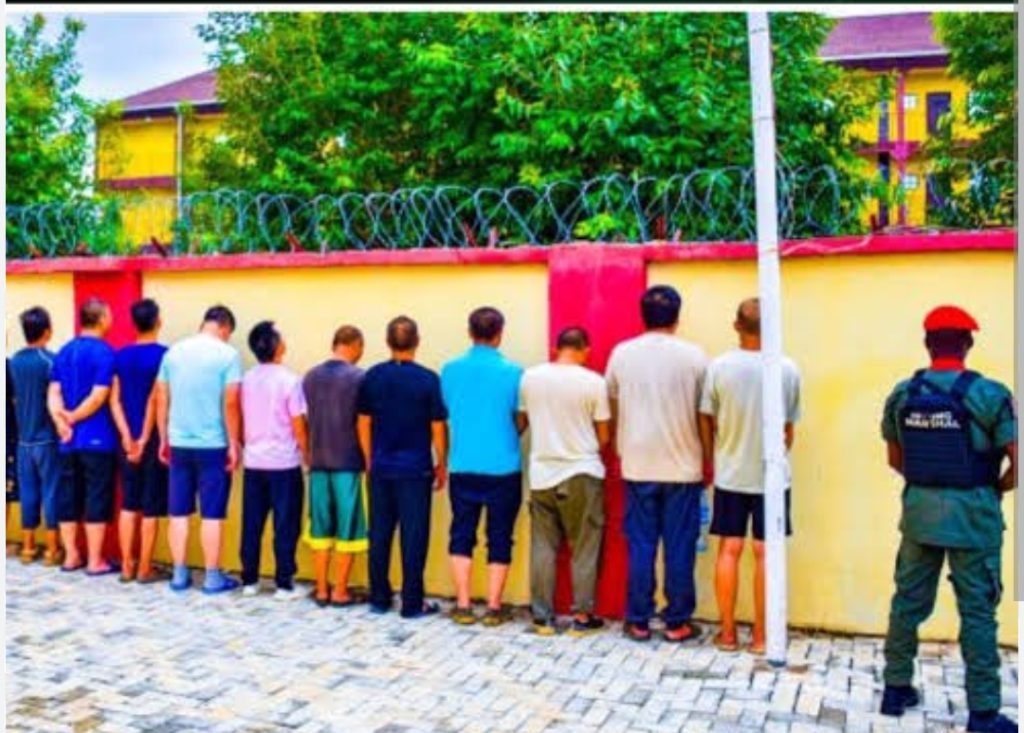
The recent arrest and arraignment of 15 Chinese nationals and nine Nigerians before a Federal High Court in Abuja over alleged illegal lithium mining activities in the north-central state of Nasarawa is not just a story of another criminal prosecution. It points to a much deeper challenge confronting Nigeria’s extractive sector: the growing environmental, social and governance (ESG) risks posed by illegal mining.
Across Nigeria, illegal mining has evolved into a complex ecosystem driven by poverty, weak regulation, criminal networks, and rising global demand for critical minerals.
There are 1,759 illegal mining sites across the country, according to official estimates. Most of these sites are concentrated in the North-Central and North-West regions. In the latter, an estimated 80 per cent of mining is being carried out illegally and on an artisanal basis by local populations. What appears on the surface as a law enforcement issue is, in reality, an ESG crisis with far-reaching implications for environmental sustainability, community welfare, public health, investor confidence, and national security.
The Global Demand Driving Illegal Mining
Lithium, a soft, silvery-white, lightweight metal, has emerged as one of the world’s most sought-after minerals. Lithium powers the global production of rechargeable lithium-ion batteries used in electric vehicles (EVs), smartphones, laptops, and renewable grid systems. It is also used in manufacturing and aerospace, industrial applications, medical treatments, air purification, and other specialty uses.
The global lithium market, estimated at $37.50 billion, is projected to reach $96.45 billion by 2033, as countries pursue decarbonisation targets and accelerate the transition to cleaner energy sources. This growing demand has increased the strategic importance of lithium-rich countries, including Nigeria.
However, where governance structures are weak, rising demand for critical minerals can create incentives for illegal extraction, mineral smuggling, and organised criminal activity. Nigeria’s experience demonstrates how global sustainability ambitions can unintentionally fuel local environmental degradation and social instability when adequate safeguards are absent.
The Social Drivers Behind Illegal Mining
A key driver of illegal mining is the scarcity of economic opportunities.
Grinding poverty, youth unemployment, limited access to education, and weak rural development programmes continue to push vulnerable populations towards informal and unregulated mining activities. For many communities, artisanal mining has become a survival strategy rather than a deliberate criminal enterprise.
This reality reflects broader socioeconomic challenges facing Nigeria, where poverty rate is estimated at 62 per cent, with approximately 141 million people living below the poverty line. In many mining communities, the absence of viable means of livelihood creates a ready labour pool for illegal mining operators and their sponsors, and young people become vulnerable to recruitment by armed groups seeking control of mineral-rich territories.
As a result, illegal mining has become closely interlinked with insecurity, violent conflict, and displacement. Many resource-rich communities have been transformed into high-risk zones controlled by criminal networks.
The Environmental Cost
Illegal mining carries severe and often long-lasting environmental consequences.
Unregulated mining activities contribute to deforestation, biodiversity loss, land degradation, water contamination, and air pollution. The indiscriminate use of explosives and excavation equipment destroys ecosystems, damages agricultural land, and undermines food production.
For rural communities that depend heavily on farming, the destruction of arable land translates directly into declining incomes, reduced food security, and increased vulnerability to poverty.
These environmental impacts extend beyond local communities. They represent a significant sustainability challenge with implications for ecosystem resilience, natural resource management, and long-term economic development.
Public Health and Community Wellbeing
The public health implications of illegal mining cannot be ignored.
Nigeria’s experience with lead poisoning outbreaks linked to artisanal mining activities demonstrates the devastating human cost of weak environmental controls. At least 400 children died from lead poisoning epidemic in Zamfara State in 2010, while hundreds of others developed permanent neurological disabilities, from blindness to paralysis and brain damage, according to a report by the African Field Epidemiology Network (AFENET). Nigeria is among the countries most heavily impacted by the global lead burden, with an estimated 80 million of its children currently exposed to lead.
Communities located near illegal mining sites also face increased risks of respiratory illnesses, skin diseases and contaminated water supplies. Women and children often bear a disproportionate share of these burdens, making illegal mining not only an environmental issue but also a major public health and social justice concern.
Governance Failures at the Core
At its core, illegal mining is a governance challenge.
The persistence of illegal mining raises important questions about regulatory effectiveness, institutional accountability, and the enforcement of existing laws. Illegal mining networks continue to operate across several states despite repeated crackdowns and security operations.
Reports linking illegal mining to organised criminal groups, banditry and mineral smuggling further expose weaknesses in oversight and enforcement mechanisms. A report by ENACT Africa said sponsors of illegal mining routinely fund banditry and cattle rustling in mining communities to orchestrate violent conflicts and displace local populations to gain unhindered access to mineral deposits.
Political interference, jurisdictional disputes between federal and state authorities, and allegations of protection by influential actors have complicated efforts to dismantle these networks.
The result is a significant governance deficit that undermines investor confidence, deprives government of legitimate revenue, and weakens public trust in institutions.
From Promises to Measurable Outcomes – What Government Must Do
The Federal Government has framed the recent arraignment of alleged illegal miners as a demonstration of its renewed determination to disrupt illegal mining networks and ensure that mineral exploitation is carried out in accordance with Nigerian law.
Indeed, its recent initiatives, including the establishment of the Mining Marshals unit of the Nigeria Security and Civil Defence Corps (NSCDC) in March 2024, the recent launch of eight operational gun trucks for the unit, and plans to deploy satellite surveillance and advanced monitoring technology, suggest a renewed commitment to addressing illegal mining.
However, lasting progress will depend on more than arrests and public announcements. What needs to happen now is matching words with action and turning promises into measurable outcomes.
The government must now strengthen enforcement, improve transparency in the mining sector, expand economic opportunities in mining communities, address the out-of-school crisis, and ensure that prosecutions are pursued to their logical conclusion.
It is equally important to resolve the long-standing governance gap between federal ownership of mineral resources, per Section 1(1) of the Nigerian Minerals and Mining Act, 2007, and the role of state governments as custodians of land. Without clear coordination and accountability, illegal operators will continue to exploit regulatory loopholes.
Ultimately, the costs of illegal mining are not limited to lost revenue. They include environmental destruction, public health crises, insecurity, social dislocation, and weakened governance. Addressing these challenges requires a comprehensive ESG approach that recognises illegal mining as a threat not only to Nigeria’s mineral resources but also to its long-term sustainable development.
[give_form id="20698"]