TARYN POUNCETT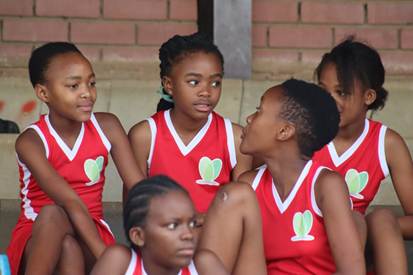
Nokuphila learners in their PE kits.. Image credit: The Love Trust
Every year, Youth Day invites South Africans to remember the courage of the young people who took to the streets on 16 June 1976 in pursuit of a better education and a better future. Their protest highlighted the inequalities that shaped access to learning at the time.
Fifty years later, the challenges look different, but the conversation remains relevant. While many young people now have access to schooling, this alone doesn’t translate into opportunity. Resources, support systems, early childhood development, and learning environments continue to influence a child’s educational journey.
One of the most important questions we can ask during Youth Month is this: what happens over time when a child is given consistent support, encouragement, and opportunity?
For 12-year-old Grade 7 learner Boikanyo Selemela, the answer is beginning to unfold.
Selemela started school in Grade 000 and has spent her entire educational journey in an environment designed to support not only academic growth, but also personal development. Looking back, she can pinpoint the moment she began to understand how education could shape her future.
“Last year, we were helped through the process of applying for an Allan Gray Scholarship,” she says. “It was then that I realised that every time I work hard, something good can happen.”
When asked what has made the biggest difference in her life, Selemela does not mention facilities or programmes. She talks about people.
“The teachers have always supported and encouraged us to do the right thing,” she says. “The social worker once came to our house to check if everything was alright at home.”
That support extended beyond the classroom and helped both her and her family. It is a reminder that education is rarely only about what happens behind a desk. Learners thrive when the adults around them take an interest in their wellbeing as well as their academics.
This philosophy sits at the heart of the school she attends in Thembisa, Nokuphila, where learners receive a bursary from Grade 000 through to Grade 9. Since its inception, 741 learners have enrolled at the school, with 163 progressing beyond Grades 7, 8 and 9 into higher grades.
More than 40 former learners have already matriculated, but the most significant outcome cannot be captured in numbers alone. It is the growing belief among young people that their future is worth investing in and that education can help them shape it.
Beyond the numbers, school leadership has observed something equally important: improved attendance, stronger academic performance, growing confidence and leadership skills, and higher aspirations for further education and future careers.
Principal Mabel Sikhakhane believes these outcomes are linked to the importance of early intervention. The early years of education, she explains, lay the foundation for literacy, numeracy, emotional development, and problem-solving. Equally important is the concept of dignity. At Nokuphila, dignity means ensuring that every learner feels valued, respected, and supported. Practical interventions such as nutritious meals, safe transport, psychosocial support, and a secure learning environment help create the conditions in which children can learn and grow with confidence.
For Selemela, the future is already taking shape. One of her proudest achievements this year has been applying for the Oprah Winfrey Scholarship. When asked what she hopes for young people in South Africa today, her answer feels particularly fitting: “I hope that young people never drop out of school because school can change your life.”
She also reflects on the significance of Youth Day itself: “Even on 16 June 1976, young people fought for the right to learn in their own languages because they wanted to continue their education. Young people today should also stay in school because education is important for their future. With hard work, your life can change.”
Youth Day is about more than remembering the past. It is about recognising potential wherever it exists and creating the conditions for it to flourish. When young people are given opportunity, support and dignity over time, the impact reaches far beyond the individual learner. It strengthens families, communities and, ultimately, the future of the country itself.
[give_form id="20698"]