STATE’S ELECTRIC BUS EXPANSION: WHAT CLEANER TRANSPORT COULD MEAN FOR NIGERIA’S FUTURE
 ONYINYECHI NWAIGBA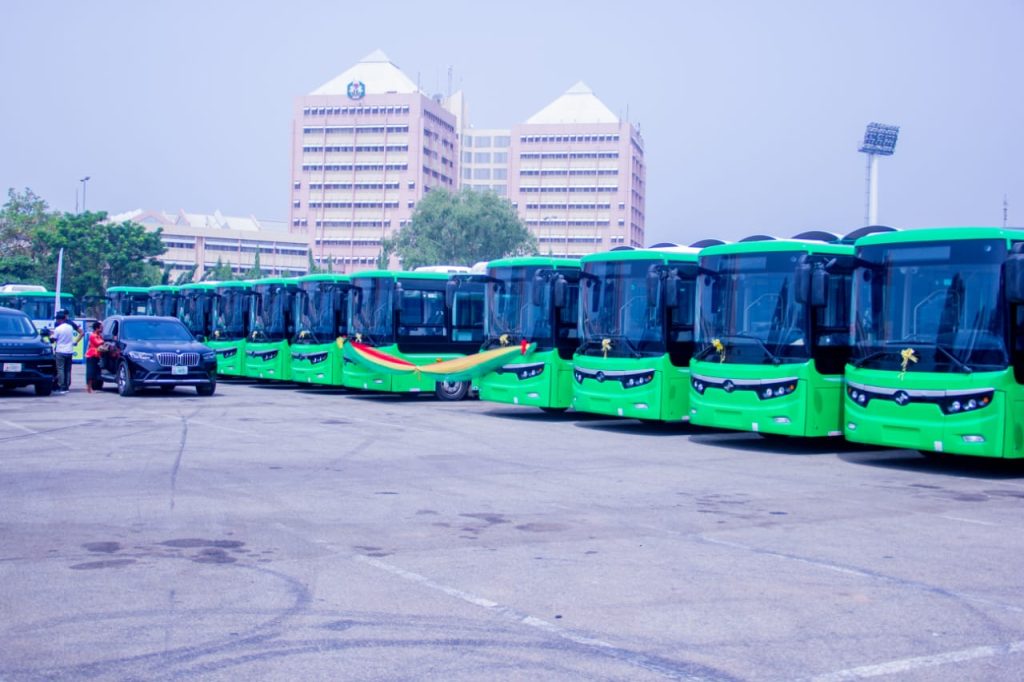
Public transportation is often discussed in terms of fares, traffic and access. But increasingly, it is also becoming part of a much bigger conversation about sustainability, energy and the future of Nigerian cities.
The Abia State Government has strengthened its collaboration with the Presidential Initiative on Compressed Natural Gas and Electric Vehicles (Pi-CNG & EV), the Ministry of Finance Incorporated (MOFI) and the Rural Electrification Agency (REA) to accelerate clean energy and sustainable transportation development.
The commitment was made during a working visit led by the Chief Executive Officer of MOFI, Dr Armstrong Takang, who was received by Abia State Governor, Dr Alex Otti.
State added 20 electric buses to its public transport system, bringing its electric bus fleet to 40 since the state introduced its Green Shuttle Transport Scheme in December 2025. The latest buses were commissioned on August 6, 2026, as the state continues its push towards cleaner public transportation.
The development is more than an expansion of a bus fleet.
It offers a useful opportunity to examine what the transition to electric mobility could mean for Nigeria not only in terms of reducing reliance on fossil fuels, but also in relation to urban mobility, energy infrastructure, affordability, jobs and the country’s broader sustainability ambitions.
WHY TRANSPORTATION MATTERS TO THE SUSTAINABILITY CONVERSATION
Transportation is deeply connected to how cities function.
People need to move to work, schools, markets, hospitals and businesses every day. Goods also have to move between producers, suppliers and consumers.
For decades, much of this movement in Nigeria has depended on petrol and diesel-powered vehicles.
That comes with environmental and economic implications.
Fuel-powered transportation contributes to air pollution and greenhouse gas emissions, while fluctuations in fuel prices can also increase the cost of moving people and goods.
The transition to cleaner transportation therefore has the potential to address more than one challenge at the same time.
Electric buses, for example, produce no tailpipe emissions while operating. Their overall environmental advantage, however, depends partly on how the electricity used to charge them is generated and how the vehicles and batteries are managed throughout their lifecycle.
This distinction matters.
Electric mobility is not automatically sustainable simply because a vehicle is electric. The supporting energy system, infrastructure, maintenance practices and end-of-life management all influence its environmental performance.
That is why Abia’s development should be viewed as part of a larger transition rather than simply the purchase of new buses.
ABIA’S MOVE FROM CNG TO ELECTRIC MOBILITY
Abia’s transport transformation initially included compressed natural gas-powered buses before the state moved toward electric buses.
When the first 20 electric buses were introduced in December 2025, the state government said the decision reflected its ambition to move toward zero-emission transportation. The buses were also designed to be accessible to persons with disabilities.
The latest addition brings the fleet to 40.
According to reports on the August commissioning, the new buses include larger cargo compartments and facilities designed to improve accessibility for persons living with disabilities. The state says the buses are intended to provide affordable, safe and reliable transportation within and beyond Abia.
Those details are important because sustainability is not only about emissions.
A truly sustainable transport system must also consider who can access it, how affordable it is, how reliable it becomes and whether it serves different groups within society.
THE INFRASTRUCTURE QUESTION
Perhaps the most important question surrounding electric mobility in Nigeria is not simply how many electric vehicles can be introduced.
It is whether the infrastructure exists to support them.
Electric buses need charging infrastructure, reliable power, technical expertise, maintenance systems and appropriate route planning.
This means that expanding electric public transport can create demand for an ecosystem that goes beyond the buses themselves.
Charging stations have to be installed and maintained. Technicians need to understand electric drivetrains and battery systems. Transport operators need to understand charging schedules and fleet management. Energy providers and technology companies can also become part of the emerging value chain.
Nigeria’s Presidential Initiative on Compressed Natural Gas and Electric Vehicles has similarly positioned clean transportation as part of a wider effort to transform the country’s transport energy mix and develop economic opportunities around the energy transition. The initiative currently reports more than 120,000 vehicle conversions, over 400 conversion centres and more than 10,000 direct and indirect jobs across its broader energy-transition value chain.
This suggests that the clean-mobility transition could eventually involve far more people and businesses than those directly operating vehicles.
CLEAN MOBILITY COULD CREATE NEW SKILLS AND JOBS
The shift from conventional vehicles to electric ones changes the skills required to operate and maintain transportation systems.
Electric buses require expertise in areas such as battery technology, electrical systems, diagnostics, software, charging infrastructure and energy management.
As more electric vehicles enter Nigeria’s transport system, demand for these skills could grow.
That creates an opportunity for governments, educational institutions, technical training providers and private companies to prepare young Nigerians for emerging roles within the electric-mobility ecosystem.
The opportunity is particularly important because a sustainability transition should not only be measured by the environmental benefits it produces.
It should also be examined through the economic opportunities it creates.
Can local technicians be trained?
Can charging infrastructure support local businesses?
Can Nigerian companies participate in vehicle maintenance and component supply?
Can new technical careers emerge around battery management and energy systems?
These questions will determine whether the transition becomes a wider economic opportunity or remains largely dependent on imported technology and external expertise.
AFFORDABILITY MUST REMAIN PART OF THE CONVERSATION
There is another issue that cannot be ignored: affordability.
Cleaner transportation is only truly inclusive when ordinary residents can access it.
For many Nigerians, transportation costs already represent a significant part of household expenditure. A transition to electric mobility therefore needs to be accompanied by transport policies that keep public transportation accessible.
The goal should not simply be to replace one type of bus with another.
It should be to build a public transport system that is cleaner, reliable, safe, accessible and affordable.
This is also where public transportation can have a wider sustainability impact.
When mass transit works effectively, it can provide people with a practical alternative to relying on individual cars and motorcycles for every journey.
A well-designed public transport system can therefore support cleaner urban mobility while improving access to economic and social opportunities.
ELECTRIC BUSES ARE NOT A COMPLETE SOLUTION
It is important not to present electric buses as a magic solution to Nigeria’s transportation challenges.
Nigeria still faces major infrastructure and mobility issues, including poor road conditions in some areas, congestion, limited public transport networks and inconsistent electricity supply.
Electric buses themselves require significant upfront investment and supporting infrastructure.
There are also questions around battery lifespan, maintenance, replacement costs and the eventual recycling or disposal of batteries.
These challenges do not mean electric mobility should be dismissed.
Instead, they highlight why the transition needs careful planning.
The success of electric transportation should be measured not only by the number of vehicles purchased, but by how effectively those vehicles operate over time.
WHAT OTHER STATES CAN LEARN
Abia’s experience could provide useful lessons for other Nigerian states considering cleaner public transportation.
One lesson is that transport policy and energy policy cannot be separated.
Another is that infrastructure needs to develop alongside vehicle deployment.
There is also a need for strong data collection.
States should be able to measure how their electric fleets perform compared with conventional vehicles — including energy consumption, operating costs, passenger numbers, reliability and environmental impact.
That evidence can help governments make better decisions about whether and where to expand electric transportation.
It can also help answer a question that will become increasingly important:
What does a successful clean mobility transition actually look like in a Nigerian city?
FROM ELECTRIC BUSES TO A BROADER SUSTAINABILITY TRANSITION
Abia’s addition of 20 electric buses may appear relatively small when compared with the size of Nigeria’s transportation system.
But sustainability transitions often begin with individual projects that demonstrate what is possible.
The first 20 electric buses were introduced in December 2025. Less than a year later, the fleet has doubled to 40.
The significance of the development, however, will ultimately depend on what happens next.
Will charging infrastructure expand alongside the fleet?
Will maintenance capacity grow?
Will more Nigerians gain access to the skills required to support electric mobility?
Will the buses remain affordable and accessible?
And can the model be adapted by other cities facing similar transportation and environmental challenges?
These are the questions that matter beyond the commissioning ceremony.
Nigeria’s transition to cleaner transportation will not happen through electric buses alone. It will require investment, policy, infrastructure, technical skills, reliable energy systems and long-term planning.
But developments such as Abia’s Green Shuttle initiative show that the conversation is moving from what cleaner mobility could look like to what it can look like in practice.
The real opportunity now is to ensure that these investments do more than put electric buses on the road.
They should help build a transportation system that is cleaner, more accessible, more resilient and better prepared for Nigeria’s future.
See: FG Plans CNG and EV Hubs in Katsina for Transport Energy Transition
[give_form id="20698"]