CSR Reporters Editorial Team
SPECIAL REPORT | Tinubu 2027: An Honest Reckoning
A comprehensive, evidence-based assessment of what the Tinubu administration has achieved, what it has failed to deliver, and what the 2027 election landscape actually looks like — beyond the talking points of both government and opposition.
On May 29, 2023, Bola Ahmed Tinubu was sworn in as Nigeria’s 16th President amid enormous expectation, fierce controversy over his election, and a country already under severe economic and security stress. Three years later, as the 2027 general election approaches, Nigeria faces a defining question — one articulated not by opposition voices but by a member of the President’s own party: “For millions of Nigerians, the election may revolve around one question: Are we better off than we were four years ago?”
This CSR Reporters assessment is neither a defence of the administration nor a political prosecution. It is an honest accounting — grounded in verified data, independent analysis, and the lived reality of over 200 million Nigerians — of what has been done, what has been left undone, and what it means for 2027.
“For millions of Nigerians, the election may revolve around one question: Are we better off than we were four years ago?” — APC Chieftain Jamiu Ekungba
Part One: What He Has Done Well
Any honest assessment must begin here. The Tinubu administration has made structural economic decisions that three previous governments refused to make — and on those specific decisions, the macroeconomic record is real, even if the human cost has been severe.
1. The Structural Courage of Subsidy Removal
On inauguration day itself, Tinubu announced the end of Nigeria’s fuel subsidy regime — a policy that had become a fiscal black hole consuming the nation’s resources for decades. At its height, the subsidy regime was costing Nigeria N18.4 billion daily — over N4 trillion in 2022 alone. Resources that could have built hospitals, roads, and schools were instead being burned to artificially suppress petrol prices, with the bulk of the benefit flowing to the wealthy and to subsidy fraudsters, not to the poor.
Three previous administrations had considered this reform and retreated under political pressure. Tinubu did not. Whatever the execution flaws, the decision itself was economically necessary and politically courageous.
2. Revenue Transformation
The fiscal numbers are among the strongest arguments for the administration. Aggregate government revenues more than doubled in the first half of 2024 compared to the same period in 2023 — an increase of over N9.1 trillion. More significantly, for the first time in Nigeria’s modern history, non-oil revenue overtook oil earnings as a share of total government income. This matters enormously for a country whose dependence on crude exports has made it structurally vulnerable to every fluctuation in global oil markets.
The tax-to-GDP ratio rose from 10% to over 13.5% by end of 2024, and the fiscal deficit narrowed from 5.4% of GDP in 2023 to 3.0% in 2024. The debt service-to-revenue ratio dropped from nearly 100% in 2022 to under 40% by 2024 — a dramatic improvement in the government’s fiscal headroom.
| Macroeconomic Indicator | Change Under Tinubu |
| Government revenue growth (H1 2023 vs H1 2024) | +N9.1 trillion |
| Tax-to-GDP ratio | 10% → 13.5%+ |
| Fiscal deficit (% of GDP) | 5.4% → 3.0% |
| Debt service-to-revenue ratio | ~100% → under 40% |
| Net foreign exchange reserves | $3.99bn → $23.11bn |
| Stock Exchange All-Share Index | 53,000 → 250,000+ |
| Market capitalisation | N30tn → N160tn |
| Oil production increase | +400,000 bpd (highest in 20 years) |
| GDP growth (Q2 2025) | 4.23% year-on-year |
| Fitch credit rating | Upgraded B- → B |
3. Foreign Reserves and Investor Confidence
Net foreign exchange reserves rose from $3.99 billion in 2023 to $23.11 billion by 2024 — an increase of nearly 500%. The government has secured over $50 billion in new Foreign Direct Investment commitments, and international credit rating agency Fitch upgraded Nigeria’s long-term foreign-currency issuer default rating from B- to B with a stable outlook, reflecting restored confidence in Nigeria’s reform trajectory. The World Bank reported that Nigeria’s economy grew at its fastest rate in nearly a decade in 2024.
4. Capital Market Transformation
The Nigerian Exchange Group’s All-Share Index surpassed 250,000 — up from 55,000 in May 2023. Equity market capitalisation rose five-fold to N160 trillion. Companies are declaring record profits and dividends. For investors with exposure to Nigerian equities, this has been a remarkable three-year run.
5. Banking Sector Recapitalisation
One of the most underreported structural reforms of this administration is the successful recapitalisation of the Nigerian banking sector. Banks were required to significantly increase their capital base, with international banks mandated to raise minimum capital thresholds to N500 billion. Thirty-three out of 36 banks complied before the March 31, 2026 deadline, increasing aggregate banking sector capital by over 60 percent. This has real long-term implications for credit availability, resilience, and economic growth.
6. Infrastructure Commitments
Over 2,700 kilometres of highways and major roads are under construction, reconstruction or rehabilitation nationwide, including the Lagos-Calabar Coastal Highway, the Sokoto-Badagry Super Highway, the Abuja-Kaduna-Zaria-Kano Road, and the long-neglected East-West Road. Oil production increased by 400,000 barrels per day between 2023 and 2025, delivering the highest onshore production level in 20 years.
7. State Police
The establishment and implementation of State Police represents a constitutional reform long demanded by governors, security experts, and civil society across Nigeria’s political spectrum. The principle is sound: security architecture that is rooted in local communities, responsive to local conditions, and not imposed through a single federal command structure that has repeatedly failed. Whether implementation matches the principle remains to be seen — but the reform itself is significant.
8. Social Intervention Programmes
Over 900,000 Nigerians have benefited from the Presidential Loan and Grant Scheme, and 300,000 students have accessed the Students’ Loan Scheme. A N70,000 minimum wage was introduced to cushion the effects of subsidy removal. The three-million Technical Talent Programme targets Nigeria’s digital economy gap. These programmes exist and are reaching some Nigerians — though as we will examine, their scale has been wildly inadequate relative to the depth of the crisis they are meant to address.
Part Two: The Devastating Failures
Here is where honest assessment demands honesty without softening. The macroeconomic architecture described above has been constructed on the backs of ordinary Nigerians who have paid a price with no equivalent in modern Nigerian history. This is not opposition rhetoric. It is the verdict of the World Bank, the United Nations, independent economists, and the lived experience of more than 140 million people.
1. Reform Without a Human Face
The central indictment of this administration is not the reforms themselves — it is how they were executed. The fuel subsidy removal came without meaningful social protection for ordinary Nigerians. President Tinubu promised that the funds saved would be redirected to public infrastructure and improving people’s lives. More than a year after that promise, there was no public transparency about how much money had been saved or how it was being utilized. What Nigerians saw instead was the purchase of a presidential jet and reported plans for a luxury yacht — symbols of extraordinary tone-deafness from an administration asking citizens to endure extraordinary sacrifice.
The N70,000 minimum wage — touted as a palliative — can barely purchase a 50kg bag of rice. Real wages have not kept pace with inflation. Parents are pulling children from private schools. Transport unions hike fares weekly. The reform had no human face, and in a democracy, that absence carries an enormous political cost.
The reform had a macroeconomic face but no human face. And in a democracy, it is humans who vote.
2. A Poverty Crisis of Historic Proportions
The numbers are staggering and must be stated plainly. The World Bank’s Nigeria Development Update documented that poverty rose from 56% in 2023 to 63% in 2025 — approximately 140 million Nigerians living below the national poverty line. The United Nations projected that approximately 30 million more Nigerians would move into poverty in 2026 alone. UN agencies warned that 35 million Nigerians could face acute hunger, especially in the North-East and North-West, where farms lie abandoned to bandits.
More than three-quarters of Nigerians are now living in multi-dimensional poverty. In 2024 alone, approximately 11 million Nigerian children under five experienced severe food poverty. These are not statistics from opposition party press releases. These are World Bank, UN, and National Bureau of Statistics figures.
| Human Welfare Indicator | Reality Under Tinubu |
| Poverty rate (World Bank) | 56% (2023) → 63% (2025) |
| Nigerians in multidimensional poverty | Over 140 million |
| Projected new poor in 2026 (UN) | ~30 million additional |
| Children under 5 in severe food poverty (2024) | ~11 million |
| National debt (Q1 2024) | N87tn → N121.67tn |
| National debt (mid-2026 estimate) | N152tn – N159tn |
| Debt servicing cost (2026) | ~$11.6 billion |
| Nigeria’s Global Terrorism Index ranking (2026) | 4th most terrorised country |
| Naira depreciation since 2023 | Over 70% of value lost |
| Minimum wage (N70,000) purchasing power | Cannot buy a 50kg bag of rice |
3. Inflation and the Cost of Living Crisis
Nigeria is grappling with its worst cost of living crisis in nearly 30 years. When Tinubu assumed office, inflation was already elevated at 22.2%. It surged to 34.19% by mid-2024, with food inflation exceeding 40%. The simultaneous removal of the fuel subsidy and the floatation of the naira — both arguably necessary — were implemented without sequencing or cushioning, creating a compounding shock that the Nigerian economy and Nigerian households were not prepared to absorb.
The naira’s trajectory tells the story starkly. Before Tinubu assumed office, the naira exchanged at approximately N450 to the dollar. It hit N1,800 to the dollar at its nadir in 2024. By 2026 it had found some stability, but only after losing over 70% of its value. Garri, rice, beans — staples once within reach of daily-wage earners — now force families to cut meals or trade down to less nutritious alternatives.
4. Insecurity: A Nation Under Siege
If the economy is the administration’s most complex liability, security is its most morally acute one. Nigeria ranked as the world’s fourth most terrorised country in 2026, compared to eighth in 2024 and sixth in 2025. The trajectory is worsening, not improving, three years into an administration that inherited a crisis and has presided over its deepening.
The incidents are not abstractions. In early 2026, over 1,100 people were abducted in a single period. On May 15, 2026, gunmen hit three schools in Oriire Local Government Area in Oyo State — pupils and teachers were marched into the bush, one teacher was beheaded on camera, and toddlers were beaten. Development partners estimate over 10,000 people were killed in the first two years of the Tinubu administration alone.
What has compounded the security failure is the political response to it. When receiving victims’ families following a terrorist attack, the President reportedly told stakeholders they were “playing into the hands of his enemies who want to use insecurity to get rid of him.” He declared himself “a stubborn politician” who would not go. That framing — treating mass murder as a political inconvenience — has alienated Nigerians across partisan lines. Organised labour, in its May 2026 Workers’ Day statement, declared that Nigeria is effectively in a state of war: “The scale of violence, the frequency of attacks, and the mounting loss of lives place Nigeria among the most dangerous places to live on earth.”
When leaders cannot distinguish between national security and political survival, citizens pay with their lives.
5. Soaring National Debt
The administration’s fiscal reforms have improved revenue, but borrowing has continued at an alarming rate. National debt grew from N87.38 trillion in 2023 to N121.67 trillion by Q1 2024, to N149.39 trillion by Q1 2025, and crossed N152 trillion mid-year. By 2026, estimates put it between N153 trillion and N159 trillion. Nigeria will spend approximately $11.6 billion servicing its debt in 2026 — nearly half of its projected government revenue. This is not sustainable, and it crowds out the very spending on social services, security, and infrastructure that the reforms were supposed to unlock.
6. Democratic Erosion and Shrinking Civic Space
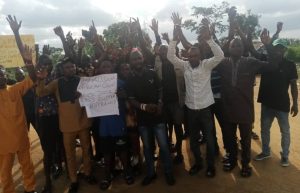
A dimension that receives less coverage than it deserves is the quiet narrowing of democratic space. Activists and journalists who criticised government policy have faced harassment or arbitrary arrest. In February 2026, hundreds of Nigerians marched on the National Assembly to protest proposed changes to the Electoral Act that would weaken real-time electronic transmission of results — widely seen as an attempt to undermine the transparency mechanism that gave the 2023 elections a degree of credibility. Public trust in institutions has declined. The Global Terrorism Index’s deteriorating scores for Nigeria coincide with declining scores on democratic indicators including freedom of expression and assembly rights.
7. The Power Sector: Unchanged
The administration has claimed progress on electricity, citing cleared legacy debts, transmission infrastructure expansion, and renewable energy investment. Independent observers have described these assessments as detached from reality. Frequent national grid collapses continue to plunge millions into darkness. Electricity tariff hikes have added to household cost burdens without commensurate improvement in supply. For the average Nigerian business or household, the power situation in June 2026 is not meaningfully better than it was in May 2023.
Part Three: What Was Not Done At All
Beyond what was done well and what was done badly lies a third category: structural gaps where the administration made noise but delivered nothing.
| Unfulfilled Priority | The Gap |
| Poverty Emergency | Tinubu formally declared poverty a national emergency. No coherent anti-poverty plan followed. The declaration remained rhetorical. |
| Subsidy Savings Transparency | Promised public accounting of savings from subsidy removal. Never delivered. Nigerians do not know where the trillions went. |
| Reliable Electricity | Three years in, grid collapses remain frequent. Power supply has not meaningfully improved for households or businesses despite tariff hikes. |
| Anti-Kidnap Strategy | No coherent national anti-kidnapping framework — no rapid-reaction forces, no intelligence-driven rescue operations, no clear protocol on ransom. Communities are left to fund vigilantes or ransom payments themselves. |
| Youth Employment at Scale | With over 70% of Nigeria’s population below 35, no administration can claim success without a meaningful dent in youth unemployment. Initiatives exist; structural impact is minimal. |
Part Four: The 2027 Political Landscape
Understanding the electoral terrain requires separating policy performance from political mechanics. In Nigerian democracy, these are often different conversations.
Why Tinubu Could Win
The single most important factor in Tinubu’s re-election prospects is not his record — it is his opposition. Nigeria’s opposition coalition has fractured, turning from uneasy cooperation into open rivalry in a split that significantly boosts the President’s chances. In 2023, the major opposition candidates — Atiku Abubakar with 6.98 million votes, Peter Obi with 6.10 million, and Rabiu Kwankwaso with 1.49 million — collectively received far more votes than Tinubu’s 8.79 million. Tinubu won because Nigeria’s electoral system rewards national spread and structural coordination, not aggregate opposition totals. That strategic advantage remains intact.
The political landscape now shows Atiku contesting under the African Democratic Congress, Obi under the National Democratic Congress, and a third-way candidacy potentially from Oyo State Governor Seyi Makinde. If this fragmentation persists to election day, the arithmetic of 2023 may simply repeat itself.
Additional factors favouring incumbency include: zoning sentiment — many Southern political actors believe power should remain in the South for a full two terms; APC’s governor-level machinery across multiple states; and Tinubu’s reputation as a political strategist who has never lost an election.
| TINUBU’S ELECTORAL STRENGTHS | TINUBU’S ELECTORAL VULNERABILITIES |
| =Fragmented, divided opposition =Incumbency advantages and party machinery =Southern zoning sentiment =Strong APC governor network =Macro reforms beginning to show early gains =Never lost an election — master political strategist | =140m+ Nigerians in poverty =Worsening insecurity trajectory =Cost of living crisis — worst in 30 years =Massive reform fatigue among voters =Perception of elite enrichment amid mass suffering =Declining public trust and democratic erosion |
Why He Could Lose
Three years of compounding hardship, worsening insecurity, and governance scandals have significantly eroded the “Renewed Hope” brand. Tinubu won in 2023 with fewer than nine million votes out of a voting-age population of over 90 million. Low voter turnout, not positive enthusiasm, was his structural advantage. If economic pain radicalises voter turnout among the young and the poor — the two groups most devastated by his reforms — the arithmetic changes dramatically.
Reform fatigue is real and dangerous. Three years of sacrifice without visible relief for the majority of Nigerians is politically unsustainable. The macro wins — GDP growth, foreign reserves, the capital market index — do not feed children in Kafanchan or reduce transport costs in Oshodi. The gap between what economists celebrate and what voters experience has rarely been wider in Nigeria’s democratic history.
Should the opposition manage to consolidate — even partially — around a single strong candidacy with a credible Northern-Southern coalition, Tinubu’s path narrows considerably. The 2023 combined opposition vote exceeded his total by a significant margin. The structural question for 2027 is whether grief, anger, and a fourth year of hardship will finally produce the discipline that Nigerian opposition politics has historically been unable to sustain.
The CSR REPORTERS Verdict: A Better Economist Than Governor of Human Welfare
Bola Tinubu has been, in macroeconomic terms, a more consequential reformer than any Nigerian president since Obasanjo’s first term. The structural changes to the foreign exchange regime, the subsidy removal, the banking recapitalisation, the tax reform, and the revenue transformation are real. Economists and international financial institutions have largely validated this record.
But economics is not the same as governance. Governance is the management of a social contract between the state and its citizens. And on that measure, the Tinubu administration has been deficient in ways that cannot be papered over with capital market indices or FDI commitment figures. A social contract is broken when a teacher is beheaded on camera going to school in Oyo State and the President’s first instinct is to frame it as a political attack on himself. It is broken when poverty rises from 56% to 63% in two years and the government’s most visible procurement decision is a presidential jet. It is broken when inflation consumes the wages of millions and the official response is an invitation to patience.
Tinubu has been a better economist than he has been a governor of human welfare. And in a democracy, it is humans — not economists — who vote.
The 2027 election will not be decided in the boardrooms of international investors who have warmed to Nigeria’s reform story. It will be decided in the market stalls of Onitsha and the farms of Zamfara and the classrooms of Kaduna — by Nigerians who have waited three years for the promise of “Renewed Hope” to translate into something they can eat, something that keeps their children safe, something that makes tomorrow feel more secure than today.
Whether the opposition is coherent enough to channel that feeling into a winning coalition is the other half of the 2027 equation — and on that question, Nigeria’s chronic opposition dysfunction gives the incumbent a second chance he has not entirely earned on merit.
That, in the end, may be the most honest summary of Tinubu as he seeks reelection: a reform administration with genuine macro achievements, a catastrophic human welfare deficit, and a political lifeline provided not by its own performance, but by the enduring failure of Nigerian opposition politics to get out of its own way.
[give_form id="20698"]