ROSEMARY IMOBHIO
The government may not be accusing anyone of wrongdoing yet, but its warning has reopened a familiar debate about what marketers owe consumers when the market shifts in their favour.
The Federal Government has warned petroleum marketers against exploiting Nigerians by keeping petrol prices high despite falling global crude oil prices. That warning has sparked fresh questions about consumer protection and corporate accountability within the country’s deregulated downstream petroleum sector.
Of note is that officials stopped short of accusing any specific company of wrongdoing. Instead, they are flagging a pattern they consider troubling and asking the industry to correct course before it hardens into a bigger problem.
Government Raises Concerns Over Pump Prices
On Monday, June 29, 2026, the Minister of State for Petroleum Resources (Oil), Senator Heineken Lokpobiri, addressed the issue directly. This was at the 2026 General Counsel and Legal Advisers’ Forum organised by the Nigerian Midstream and Downstream Petroleum Regulatory Authority (NMDPRA) in Abuja. He explained that the recent de-escalation of tensions between Iran and the United States had eased pressure on global oil markets. Consequently, Nigerians should ordinarily be seeing lower petrol prices as a result.
This expected relief has not materialised at most filling stations. However, rather than issuing outright accusations, Lokpobiri framed his comments as a caution. He was urging marketers not to treat deregulation as a licence for excessive profit.
The minister also raised a related concern that often escapes public attention: fuel dispensing accuracy. According to him, a customer who pays for ten litres should receive exactly that amount. Even small shortfalls at scale represent real losses for ordinary Nigerians.
Worthy of note is that the minister’s tone throughout was less punitive than cautionary. This signals that the government wants voluntary compliance rather than a drawn-out confrontation with the industry.
Why Petrol Prices Have Not Fallen Yet
To appreciate the government’s frustration, it helps to look at the numbers. Brent crude climbed to nearly $120 per barrel in April, driven by fears of a wider Middle East conflict, before dropping to around $72 per barrel once the ceasefire held and shipping resumed through the Strait of Hormuz. That represents a decline of close to 40 percent in a matter of weeks. A swing large enough that, in a fully competitive market, consumers would expect to feel it quickly.
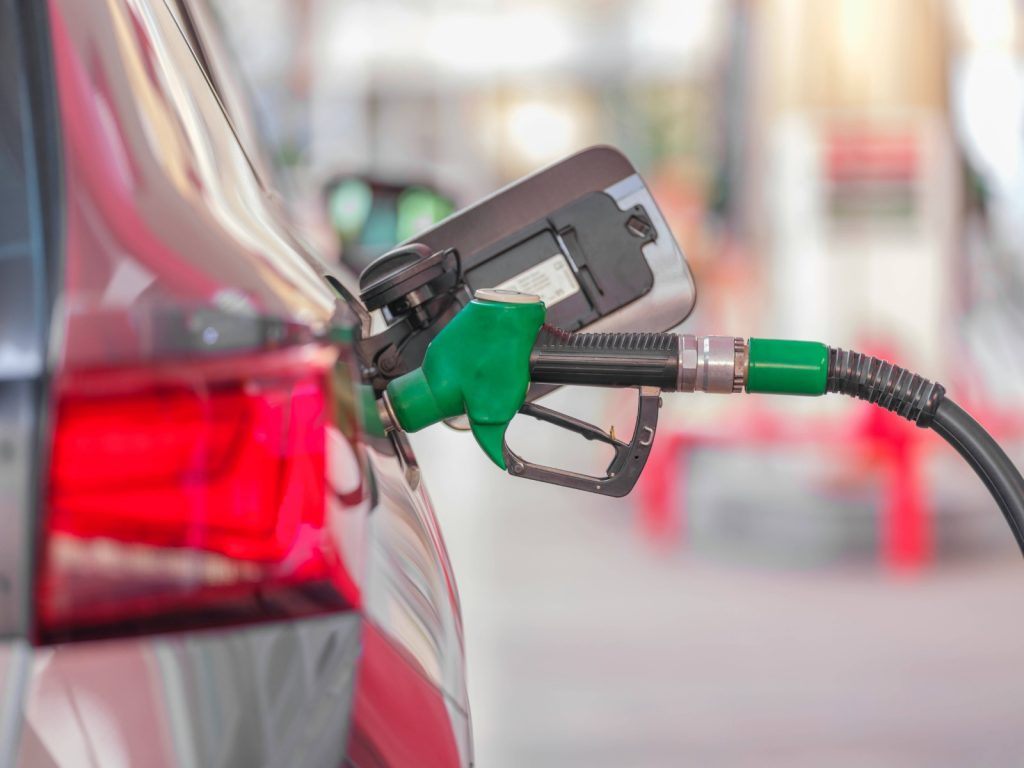
In practice, petrol at Nigerian filling stations has remained close to N1,200 on average, with only marginal adjustments in some locations. Marketers point to several practical constraints.
Existing inventory was often bought at higher prices, and selling below cost would mean absorbing losses. Currency fluctuations, storage costs, and distribution logistics also shape how fast a price cut can filter through the supply chain.
Still, observers have noticed a recurring pattern in Nigeria’s fuel market. Retail prices tend to rise almost as soon as crude costs climb. Yet they fall far more slowly when crude costs retreat. That asymmetry is exactly what has drawn scrutiny this time.
Can Government Penalise Marketers?
Because the downstream sector is now fully deregulated, the government cannot simply order marketers to sell at a fixed price. What it can do is monitor conduct and act against practices that cross into exploitation or anti-competitive behaviour. The NMDPRA retains that regulatory mandate under the Petroleum Industry Act 2021, and Lokpobiri reiterated that the authority intends to use it.
Separately, the Federal Competition and Consumer Protection Commission (FCCPC) had already sounded a similar alarm days earlier. After reviewing gantry prices from refiners, depot operators, and retail outlets, the commission found reductions that did not match the scale of the drop in international crude prices. Its leadership stated clearly that market liberalisation does not remove a company’s duty to compete fairly, nor does it diminish a consumer’s right to fair treatment.
Where credible evidence points to exploitation, the FCCPC has said it will investigate and act. Taken together, these signals suggest that deregulation was never intended as a free pass. It comes with an expectation of restraint, backed by regulators who are willing, at least on paper, to intervene when that restraint appears to be missing.
The Cost of High Fuel Prices for Nigerians
For households and small businesses, none of this is theoretical. Petrol touches nearly every part of daily commerce in Nigeria. From tricycles and buses to the generators that many businesses still depend on for power. When pump prices rise, transport fares typically follow within days. The cost of moving food and goods across the country climbs soon after.
Small business owners often feel the squeeze hardest. Many run on thin margins already. A spike in fuel costs can force them to either raise prices, a move that risks losing customers, or absorb the loss themselves. Transport operators face a similar bind, caught between rising fuel bills and passengers who cannot easily pay more.
What makes the current moment particularly frustrating is the mismatch in timing. Costs went up quickly when crude prices spiked earlier in the year. However, the relief that should follow a 40 percent drop in crude has been slow to appear.
For households already managing tight budgets amid persistent inflation, that lag is not a minor inconvenience. It represents money that could have gone toward food, school fees, or savings instead.
When Pricing Becomes a Corporate Responsibility Issue
This is where the conversation shifts from energy policy into corporate ethics. Deregulation gives marketers legal room to set prices as they see fit. However, legality alone does not settle the question of fairness. A company can stay within the law while still disappointing the basic expectations consumers have of it. Particularly when cost savings appear available but are not passed along promptly.
Responsible business conduct, many analysts CSR Reporters spoke to argue, should go further than the legal minimum. It includes clear communication about how prices are set, timely adjustment when input costs genuinely decline, and honesty with the public when delays are unavoidable. Because fuel is an essential good rather than a discretionary purchase, the ethical stakes are higher than they would be in a less essential sector.
Furthermore, when price movements across an entire industry look strikingly similar, questions about coordinated behaviour tend to surface. Even in the absence of formal collusion. Trust in the downstream sector, once shaken, does not rebuild quickly. Marketers who ignore that reality risk lasting reputational damage well beyond this particular price cycle.
What Consumers and Regulators Expect Next
Looking forward, a few developments suggest change may be on the way, even if gradually. Reports indicate the landing cost of imported petrol has fallen to roughly N1,003 per litre. Both local refiners and the Dangote Refinery have already trimmed their gantry prices to some extent. As domestic refining capacity grows and competition intensifies, retail prices could see more meaningful downward movement in the weeks ahead.
At the same time, continued attention from the NMDPRA and FCCPC may push the pace faster than market forces alone would achieve. Consumers, meanwhile, are being encouraged to watch not just the price per litre but also dispensing accuracy. An issue the minister raised specifically because it quietly costs Nigerians money at every fill-up.
Ultimately, how marketers respond in the coming weeks will say a great deal about the character of Nigeria’s deregulated fuel market. If savings are passed on promptly and transparently, it would suggest that corporate accountability can genuinely coexist with market freedom.
If prices remain sticky, however, the public will likely conclude that fairness in this sector still depends on government pressure rather than voluntary responsibility. Either outcome will shape consumer trust for a long time to come. Rebuilding that trust, once it erodes, tends to take far longer than any single price adjustment.
[give_form id="20698"]