Jason Arday: The Extraordinary Life, the Controversy and the Questions He Leaves Behind
 Eche Munonye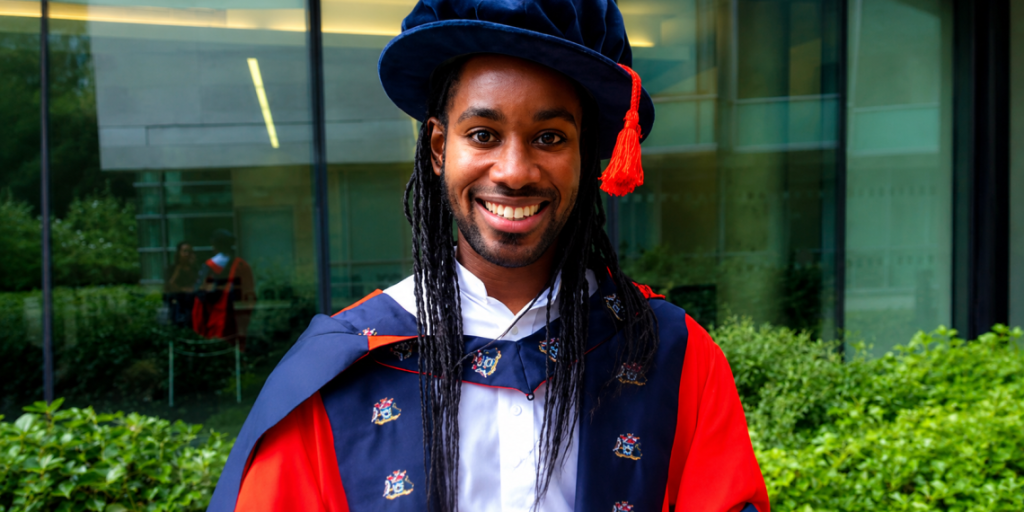
Jason Arday: The Extraordinary Life, the Controversy and the Questions He Leaves Behind
Jason Arday was 41.
Yesterday, the news broke that the former University of Cambridge professor had been found dead at his home in Battersea, London.
It is difficult to process the news because, only a few years ago, Arday’s name was being celebrated as one of the most remarkable stories of achievement in British academia.
His life was, in many ways, extraordinary.
Born in London to Ghanaian parents and raised on a council estate in Clapham, South London, Jason Arday was diagnosed as a child with autism and global developmental delay.
According to the account that shaped much of his public story, he was unable to speak until he was 11 and did not learn to read and write until he was 18.
Yet the boy who had been expected by some professionals to require lifelong support would go on to university, earn degrees, complete a PhD and build an academic career focused on race, inequality, education, mental health and neurodiversity.
He studied at St Mary’s University, completed his PhD at Liverpool John Moores University and subsequently held academic positions at institutions including Durham and Glasgow.
Then came March 2023.
At 37, Jason Arday was appointed Professor of Sociology of Education at the University of Cambridge, becoming the youngest Black professor in the university’s history.
It was a moment bigger than an individual appointment.
For many people, particularly young Black people and those living with disabilities or neurodiversity, his story represented something powerful:
That the barriers placed around a person’s potential do not necessarily have to determine where that person eventually arrives.
His mother, Gifty, a mental health nurse and anti-racism activist, was an important influence in his life. Arday grew up surrounded by books, activism and conversations about race and inequality.
And he carried those experiences into his scholarship.
His research examined the experiences of Black students and academics, racism in higher education, social inequality, mental health and neurodiversity.
That is why his story matters to those of us who work in social impact.
Because social impact is ultimately about people.
It is about asking what happens to those who are left behind, what barriers prevent people from reaching their potential, and what institutions can do to open doors that have historically remained closed.
But Jason Arday’s story also became complicated.
In recent weeks, serious allegations were raised about aspects of his academic work, including accusations of plagiarism, while questions were also raised about some claims surrounding his personal and professional history.
Arday denied deliberate plagiarism and disputed aspects of the criticism. Cambridge subsequently launched an investigation, and he resigned from the university only days ago.
Those questions should not simply disappear because he has died.
Neither, however, should they be used to erase the entirety of his life.
A human being can leave behind achievement, controversy, inspiration, unanswered questions and mistakes all at the same time.
Perhaps that is one of the uncomfortable lessons in the story of Jason Arday.
We often turn people into symbols.
The inspirational Black professor.
The neurodivergent academic who overcame impossible odds.
The champion of inclusion.
And later, the controversial academic whose story came under intense scrutiny.
But behind all those labels was a human being.
A son.
A husband.
A father.
A scholar.
A man whose life touched many people.
His death is a tragedy, whatever one’s views about the controversies that surrounded the final chapter of his career.
And perhaps the most responsible thing we can do now is resist the temptation to rush to a simplistic conclusion about either his life or his death.
We can acknowledge the achievements.
We can acknowledge the questions.
We can demand truth and accountability where necessary.
And we can still recognise the humanity of the person at the centre of it all.
Rest in peace, Jason Arday.
Your story was extraordinary.
Your final chapter is painful.
And your life leaves us with much to reflect on about education, opportunity, inclusion, institutional responsibility, public scrutiny and, ultimately, what it means to be human.
[give_form id="20698"]