


Dangote Refinery Launches Fuel Distribution Initiative to Strengthen Energy Access and Support Economic Growth
 ONYINYECHI NWAIGBA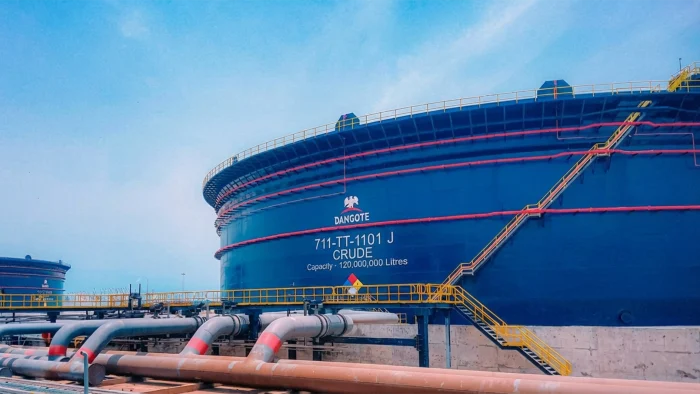
Dangote Refinery has launched a new fuel distribution initiative aimed at improving the supply of petroleum products across Nigeria, a move that could have far-reaching implications for businesses, transportation networks, and economic productivity.
Access to reliable energy remains one of the most critical drivers of economic development. Across Nigeria, businesses, transport operators, manufacturers, farmers, and households depend heavily on petroleum products to power operations and sustain daily activities.
Despite the country’s position as a major oil-producing nation, fuel supply disruptions, distribution bottlenecks, and logistical challenges have often affected access to petroleum products in various parts of the country. These challenges frequently translate into higher operating costs, supply uncertainty, and reduced productivity for businesses and consumers alike.
Against this backdrop, Dangote Refinery’s decision to launch a fuel distribution initiative represents more than a commercial expansion. It reflects an effort to strengthen the movement of refined petroleum products across the country and improve access to energy resources that remain central to economic activity.
As Nigeria continues to pursue industrial growth and economic diversification, initiatives that improve energy accessibility are increasingly being viewed as important contributors to national development.
Why Fuel Distribution Matters
While refining capacity often attracts significant public attention, the effectiveness of fuel distribution systems is equally important in determining whether energy products reach businesses and consumers efficiently.
A refinery may produce sufficient volumes of fuel, but without effective distribution networks, supply challenges can still emerge across regions and communities.
Fuel distribution serves as the link between production and consumption. It determines how quickly products reach markets, how efficiently they are transported, and how accessible they become to businesses and end users.
For many sectors of the economy, reliable fuel availability is essential.
Transportation companies rely on fuel to move goods and people. Manufacturers depend on energy to maintain production schedules. Agricultural businesses require fuel to support mechanised farming, processing, and logistics operations.
When distribution systems function efficiently, economic activities are less likely to experience disruptions caused by supply shortages.
Supporting Business Productivity
One of the most significant potential benefits of improved fuel distribution is increased business productivity.
Across Nigeria, many enterprises operate in an environment where energy costs represent a substantial portion of operating expenses. Uncertainty in fuel supply can create additional challenges, including delays, increased transportation costs, and disruptions to service delivery.
Businesses that depend on generators for electricity are particularly sensitive to fuel availability and pricing.
By improving fuel accessibility and strengthening supply networks, distribution initiatives can help reduce some of the operational challenges associated with energy procurement.
More reliable access to fuel enables businesses to plan more effectively, manage costs with greater certainty, and maintain operational continuity.
This is particularly important for enterprises operating in sectors where logistics, transportation, and energy consumption play a central role in daily operations.
The Link Between Energy Access and Economic Development
Energy access has long been recognised as a critical factor in economic development.
Countries with reliable energy systems are generally better positioned to support industrial growth, attract investment, and improve living standards.
In Nigeria, access to affordable and reliable energy continues to influence productivity across multiple sectors.
The relationship between energy and development is especially evident in industries that require consistent power supply for production, storage, transportation, and service delivery.
Improving fuel distribution contributes to this broader energy ecosystem by helping ensure that petroleum products remain available to support economic activities.
While discussions about energy transition and renewable energy continue to gain momentum globally, petroleum products remain an important component of Nigeria’s current energy mix.
Ensuring their efficient distribution therefore remains a practical necessity for sustaining economic activity in the short to medium term.
Supply Chain Efficiency and Market Stability
Fuel distribution also plays an important role in supply chain management.
Efficient distribution networks can reduce delays, improve inventory management, and enhance market stability.
When fuel products move more smoothly through the supply chain, businesses are better able to anticipate supply conditions and make informed operational decisions.
Improved distribution systems may also help reduce some of the inefficiencies that contribute to regional disparities in fuel availability.
In many cases, communities located farther from supply hubs experience greater challenges in accessing fuel products. Strengthening distribution networks can help address these imbalances and improve accessibility across wider geographic areas.
From a development perspective, more efficient supply chains contribute to stronger economic resilience and greater market confidence.
The Private Sector’s Role in Addressing Infrastructure Gaps
The launch of the fuel distribution initiative also highlights the increasingly important role of the private sector in addressing infrastructure and logistics challenges.
Across many developing economies, private sector investments have become critical drivers of improvements in transportation, energy, telecommunications, and industrial infrastructure.
Large-scale investments in distribution systems can complement public-sector efforts by expanding capacity, improving efficiency, and accelerating service delivery. Such investments also reflect the broader vision of business leaders who view industrial development as a catalyst for social and economic progress, as highlighted in Aliko Dangote at 69: Building Beyond Self, Shaping a Continent.
This reflects a broader trend in which businesses are increasingly participating in solutions that extend beyond their immediate commercial interests and contribute to wider economic outcomes.
While profitability remains an important objective, investments that improve infrastructure and supply chains can also create broader social and economic value.
This intersection between business performance and development impact is becoming an increasingly important component of corporate sustainability discussions.
Implications for Transportation and Logistics
Transportation remains one of the sectors most directly affected by fuel availability.
Road transport serves as the primary means of moving goods and people across Nigeria. Consequently, disruptions in fuel supply can have widespread effects on economic activities.
Improved distribution systems may help support greater stability within the transportation sector by enhancing access to fuel products and reducing supply uncertainties.
For logistics operators, reliable fuel access supports route planning, delivery schedules, and operational efficiency.
Given the central role of transportation in connecting markets, facilitating trade, and supporting economic participation, improvements in fuel distribution can generate ripple effects across multiple sectors.
The ability to move products efficiently remains fundamental to economic competitiveness and market integration.
Balancing Immediate Needs and Long-Term Sustainability
The discussion around fuel distribution also exists within the broader context of sustainability and energy transition.
Globally, governments and businesses are increasingly investing in renewable energy solutions and low-carbon development pathways. Nigeria is also pursuing strategies aimed at diversifying its energy mix and expanding access to cleaner energy sources.
However, energy transitions are gradual processes.
For the foreseeable future, petroleum products will continue to play an important role in supporting transportation, industrial activity, and economic development.
This reality creates a dual challenge: ensuring efficient access to current energy resources while simultaneously preparing for a more sustainable energy future.
Fuel distribution initiatives therefore represent part of a broader conversation about how countries can manage existing energy needs while pursuing long-term sustainability objectives.
Economic Inclusion Through Energy Accessibility
Access to energy is closely linked to economic inclusion.
Businesses cannot operate effectively without reliable energy resources, and communities cannot fully participate in economic opportunities when essential services are disrupted by energy shortages.
Improved fuel distribution has the potential to strengthen economic participation by supporting commercial activities, reducing operational disruptions, and enabling more consistent service delivery.
This impact extends beyond large corporations to include transport operators, market traders, service providers, manufacturers, and countless individuals whose livelihoods depend on energy availability.
In this sense, fuel accessibility becomes more than a logistical issue. It becomes a development issue with implications for productivity, income generation, and economic opportunity.
Conclusion: Strengthening the Foundations of Economic Activity
Dangote Refinery’s fuel distribution initiative represents an important development within Nigeria’s energy landscape.
While the initiative is primarily focused on improving the movement and accessibility of petroleum products, its potential impact extends far beyond fuel supply.
Reliable energy access remains a foundational requirement for economic growth, business productivity, transportation efficiency, and industrial development.
By strengthening fuel distribution networks, the initiative has the potential to support greater supply chain efficiency, improve energy accessibility, and contribute to broader economic resilience.
As Nigeria continues to navigate the challenges of development, industrialisation, and energy transition, investments that strengthen critical infrastructure and improve access to essential resources will remain important drivers of sustainable economic progress.
Ultimately, the significance of the initiative lies not only in the distribution of fuel but in its potential to support the systems, businesses, and communities that depend on energy to thrive.
[give_form id="20698"]


1 thought on “Dangote Refinery Launches Fuel Distribution Initiative to Strengthen Energy Access and Support Economic Growth”